

Introduction
The promotional product industry is undergoing a significant transformation. For decades, promotional products were mainly evaluated by factors such as price, quantity, and delivery speed. However, global brands are now looking beyond traditional purchasing criteria. They are searching for products that reflect their values, strengthen customer relationships, and support their sustainability goals.
This shift has created a new demand for sustainable promotional products that combine responsible materials, practical functionality, and strong brand storytelling. A reusable bottle, recycled fabric bag, or eco-friendly notebook is no longer simply a giveaway item. It becomes a daily touchpoint between a brand and its audience.
For promotional distributors and corporate buyers, understanding this change is essential. Selecting the right products requires more than choosing environmentally friendly materials. Buyers need to consider product lifecycle, user experience, customization possibilities, and the overall brand message behind each item.
As sustainability continues to influence purchasing decisions worldwide, companies that adopt innovative promotional solutions will have stronger opportunities to create memorable and meaningful brand experiences.

1. Why Sustainability Is Reshaping The Promotional Product Industry
Sustainability has moved from a niche market requirement into a global business priority.
Many companies are incorporating environmental responsibility into their corporate strategies, including packaging decisions, supply chain management, and marketing activities. Promotional products are becoming an important part of this movement because they directly represent a company’s public image.
Traditional promotional products often focused on short-term visibility. A product was created mainly to distribute a logo to as many people as possible. Today, buyers increasingly evaluate whether a product has long-term value and whether recipients will continue using it after an event or campaign.
A reusable product creates repeated brand exposure while reducing unnecessary waste. A well-designed notebook used during meetings, a sustainable bottle carried daily, or a recycled fabric bag used for shopping can generate ongoing brand impressions over months or even years.
This change has encouraged brands to move from quantity-focused purchasing toward value-focused purchasing.
Key Changes In Buyer Expectations
| Previous Purchasing Focus | Current Buyer Expectations |
| Low unit price | Balanced value between cost, quality, and sustainability |
| Large quantity giveaways | Products with long-term usability |
| Standard catalogue items | Customized solutions with brand identity |
| Traditional materials | Responsible and innovative materials |
2. Sustainable Materials Are Creating New Product Possibilities
The development of sustainable promotional products depends heavily on material innovation.
In the past, environmentally friendly products were sometimes associated with limited design options or basic appearances.
Modern material development has changed this perception. Today, sustainable materials can support premium finishes, functional structures, and creative product designs.
For buyers, choosing the right material is not only an environmental decision. It is also a branding decision.
Different materials communicate different brand messages.
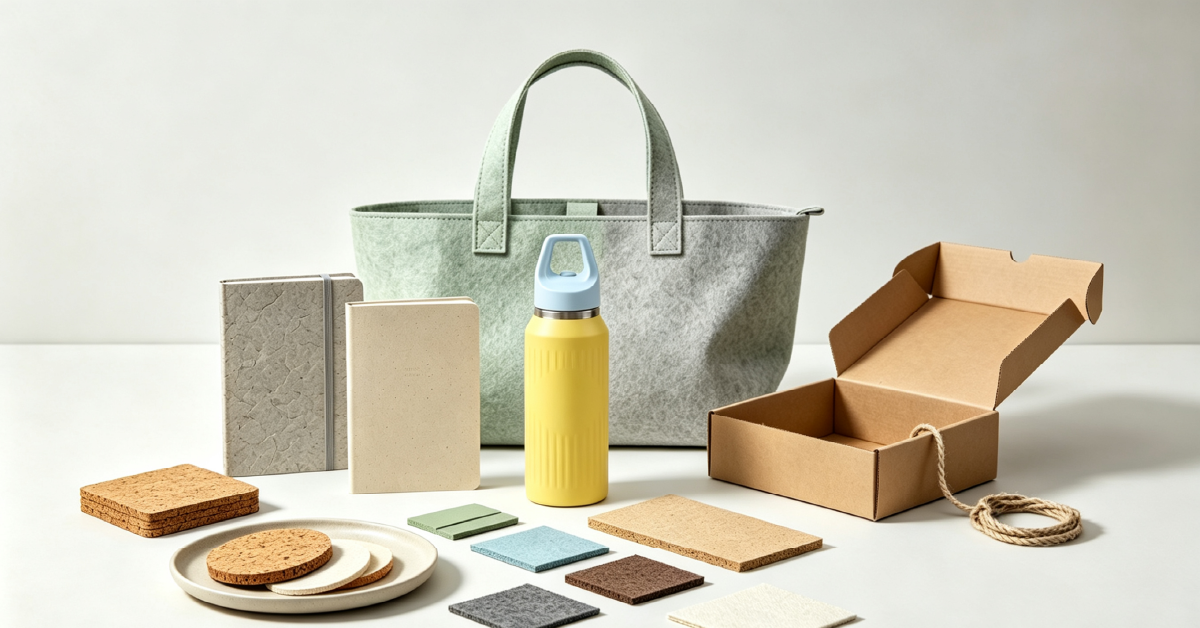
For example, recycled materials represent circular economy concepts, bamboo creates a natural lifestyle impression, and innovative materials made from agricultural residues demonstrate creativity and sustainability.
| Material | Common Applications | Brand Message |
| RPET | Bags, notebooks, accessories | Transforming recycled materials into useful products |
| Bamboo | Pens, bottle accessories, lifestyle items | Natural, renewable, and premium appearance |
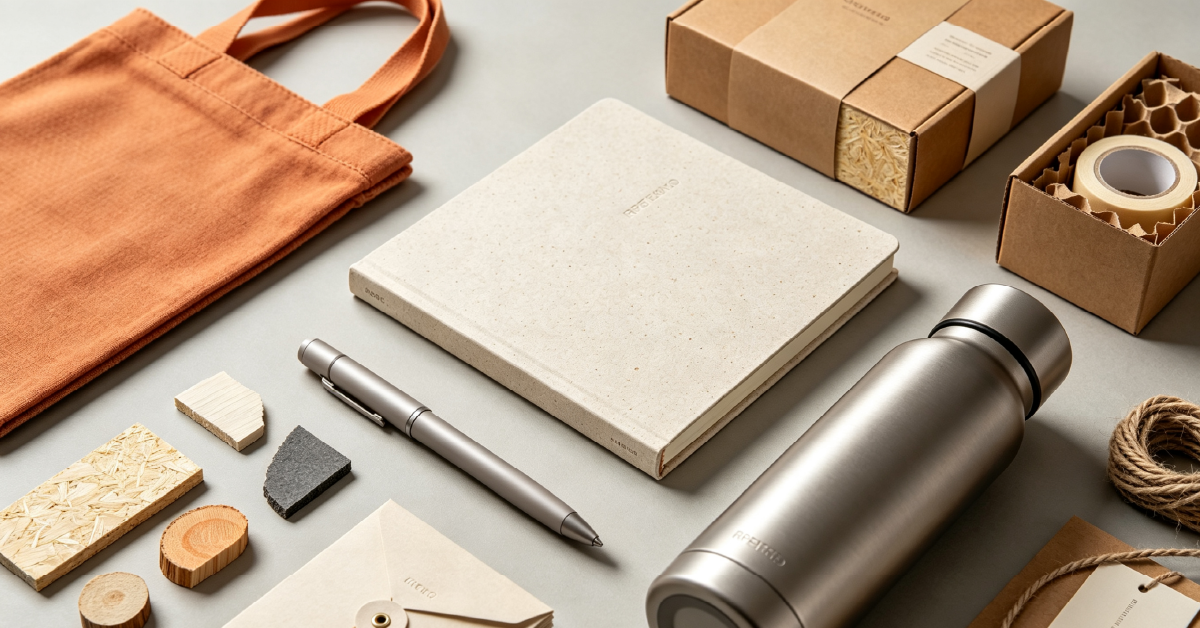
| Stone Paper | Notebooks and stationery | Innovative alternative material solution |
| Sugarcane Paper | Packaging and stationery | Agricultural waste utilization |
| Coffee Residue Material | Notebooks and accessories | Circular design and unique storytelling |
| Tea Residue Material | Lifestyle products and stationery | Connection between nature and innovation |
The increasing use of these materials demonstrates how sustainable promotional products are evolving from simple environmental alternatives into sophisticated branding solutions.
A notebook made with stone paper tells a different story from a conventional notebook.
A pen made with bamboo communicates a natural and responsible lifestyle.
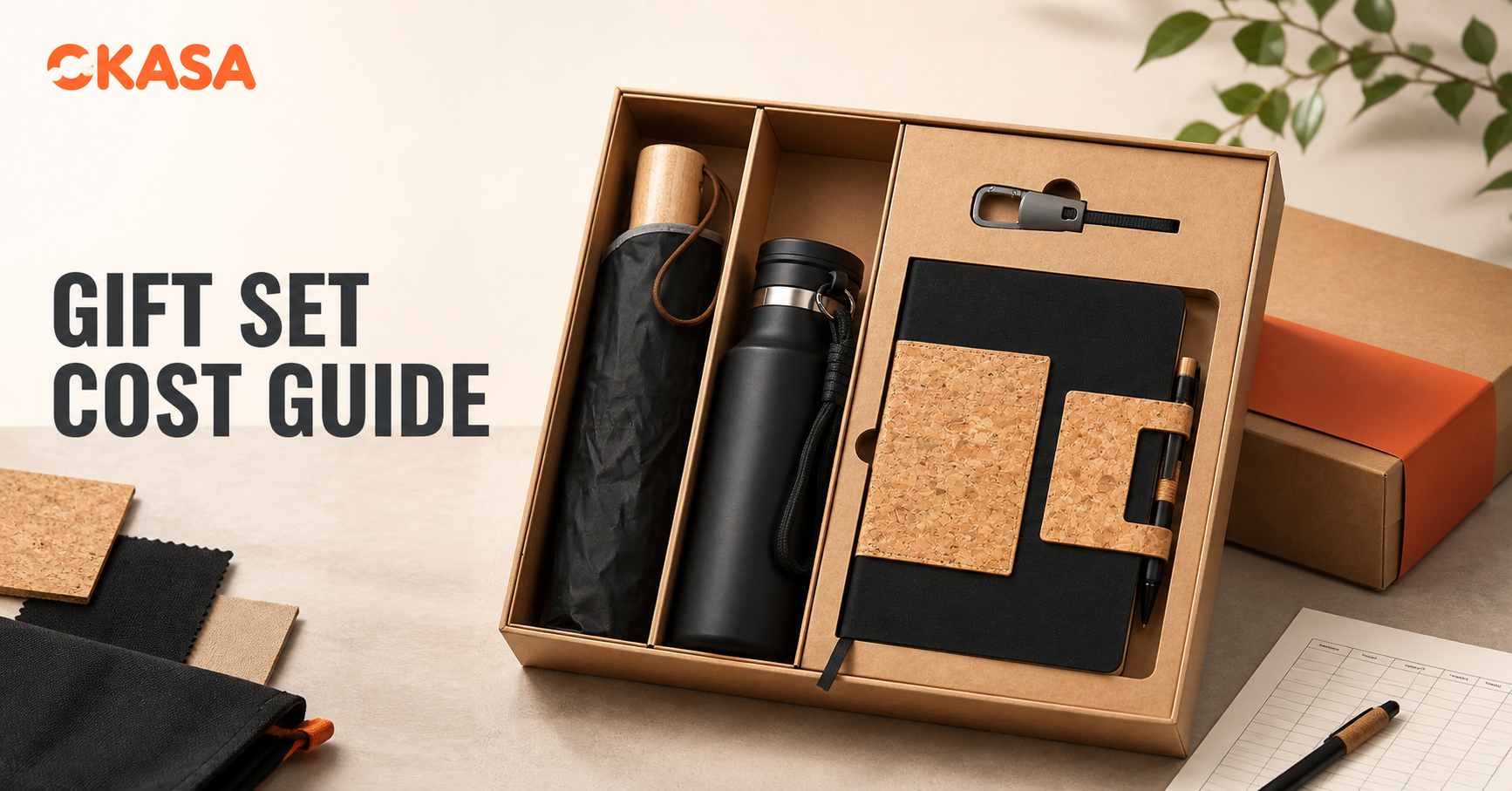
A gift set combining recycled materials creates a complete sustainability experience rather than a single promotional message.
3. From Eco-Friendly Products To Meaningful Brand Experiences
Successful promotional campaigns are no longer built around individual products. They are built around experiences.
A strong promotional product should answer three questions:
Will people use it? | Does it represent the brand? | Does it create a lasting impression?
This is why customized gift sets and coordinated product collections are becoming increasingly popular.
Instead of providing unrelated items, brands are creating product combinations with a clear theme.
For example, a sustainable office collection may combine:
1.A recycled notebook designed for daily planning. 2.A bamboo pen that reinforces natural material storytelling 3.A reusable bottle that encourages long-term usage
Together, these products create a consistent message around sustainability and modern workplace culture.
4. How Buyers Should Evaluate Sustainable Promotional Products
Choosing sustainable promotional products requires a broader evaluation process.
A product should not be considered sustainable only because it uses recycled materials. Buyers should also consider durability, production quality, customization methods, and practical application.
A poorly designed product that is rarely used may create less environmental value than a durable product that remains part of someone’s daily routine.
Buyer Evaluation Framework
| Evaluation Area | Questions Buyers Should Consider |
| Material Selection | Does the material support the brand’s sustainability goals? |
| Product Function | Will recipients use the product regularly? |
| Customization | Can branding be integrated naturally into the design? |
| Product Lifecycle | Is the product durable enough for long-term use? |
5. The Role Of Customization In Sustainable Promotional Products
Customization remains one of the most important factors in promotional product development.
However, modern customization is moving beyond simply adding a logo.
Brands are increasingly looking for products where the design, material, color, and branding elements work together.
For sustainable promotional products, customization creates an opportunity to strengthen the connection between material story and brand identity.
For example:
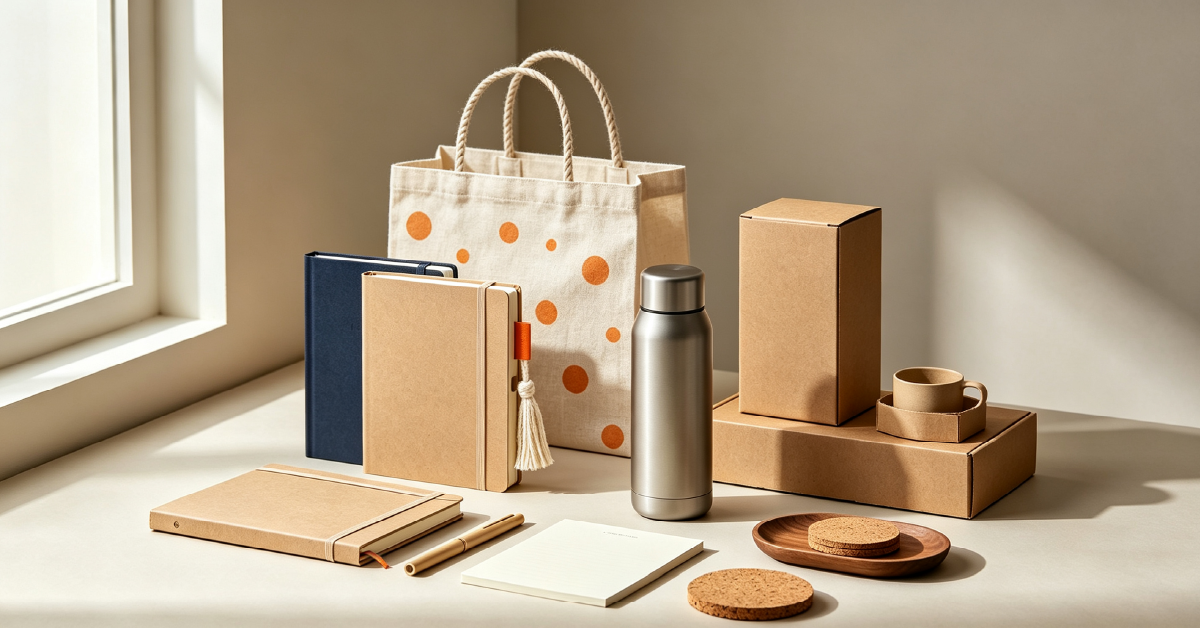
An embossed logo on a sustainable notebook highlights craftsmanship.
A laser-engraved logo on stainless steel drinkware creates a premium feeling.
A custom recycled fabric color helps brands maintain consistent visual identity.
The most successful promotional products are those where sustainability and branding naturally support each other.
6. How OKASA Supports Sustainable Product Innovation
At OKASA, sustainable product development focuses on combining material innovation, functional design, and customized branding solutions.
With experience in promotional products, OKASA works with global customers to develop products that meet both sustainability expectations and practical market requirements.
Our sustainable product solutions include:
Recycled fabric bags,Eco-friendly notebooks,Sustainable drinkware,Custom gift sets,Innovative material applications
By working closely with customers from concept development to final production, OKASA helps brands transform sustainable ideas into practical promotional solutions.
The future of promotional products is not simply about replacing traditional materials. It is about creating products that deliver stronger brand connections while supporting responsible business practices.
FAQ
1-What are sustainable promotional products?
Sustainable promotional products are branded products designed with responsible materials, durable construction, and long-term usability in mind.
2-Are sustainable promotional products suitable for corporate campaigns?
Yes. Sustainable promotional products are widely used for employee programs, customer appreciation campaigns, trade shows, and corporate events.
3-Can sustainable promotional products be customized with logos?
Yes. Many sustainable materials support customization methods including printing, embroidery, embossing, and laser engraving.
Conclusion
The future of promotional products is moving toward sustainability, functionality, and meaningful brand experiences.
For global buyers, selecting the right sustainable promotional products requires understanding materials, product applications, customization possibilities, and long-term value.
Companies that choose responsible promotional solutions can create stronger connections with customers while demonstrating their commitment to sustainability.
By combining innovative materials with thoughtful design, sustainable promotional products are becoming powerful tools for modern brand communication.
CTA
Looking For Sustainable Promotional Product Solutions?
OKASA helps global brands develop customized sustainable promotional products with innovative materials, functional designs, and professional production support.
Contact our team to explore your next project.