

Introduction
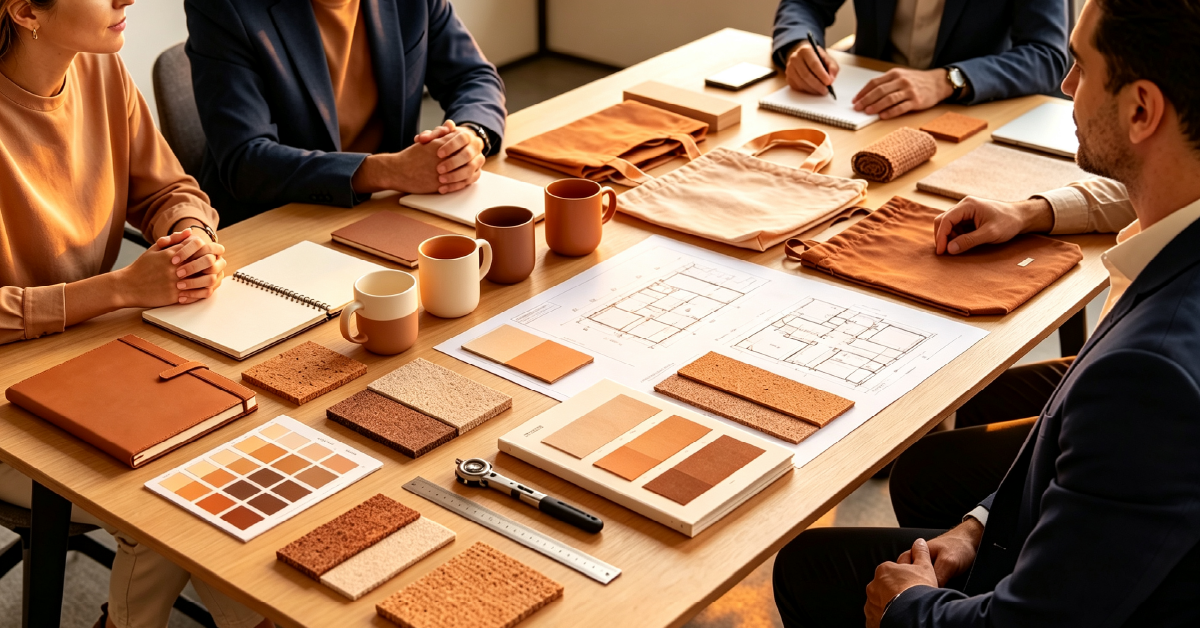
The promotional product industry is undergoing a significant transformation.
For many years, promotional products were primarily viewed as marketing giveaways designed to increase brand visibility. Companies often focused on quantity, cost efficiency, and simple logo application.
However, the expectations of global buyers are changing. Today, brands are looking for products that create stronger connections with recipients. They want items that are useful, visually appealing, environmentally responsible, and aligned with their brand values. This evolution is reshaping the future of promotional products.
From sustainable material innovation and multifunctional design to personalized experiences and premium packaging, the industry is moving toward higher-value solutions rather than simple promotional items. For distributors, brands, and corporate buyers, understanding these trends is essential for developing products that remain competitive in an increasingly demanding market.
1. Promotional Products Are Becoming Brand Experiences
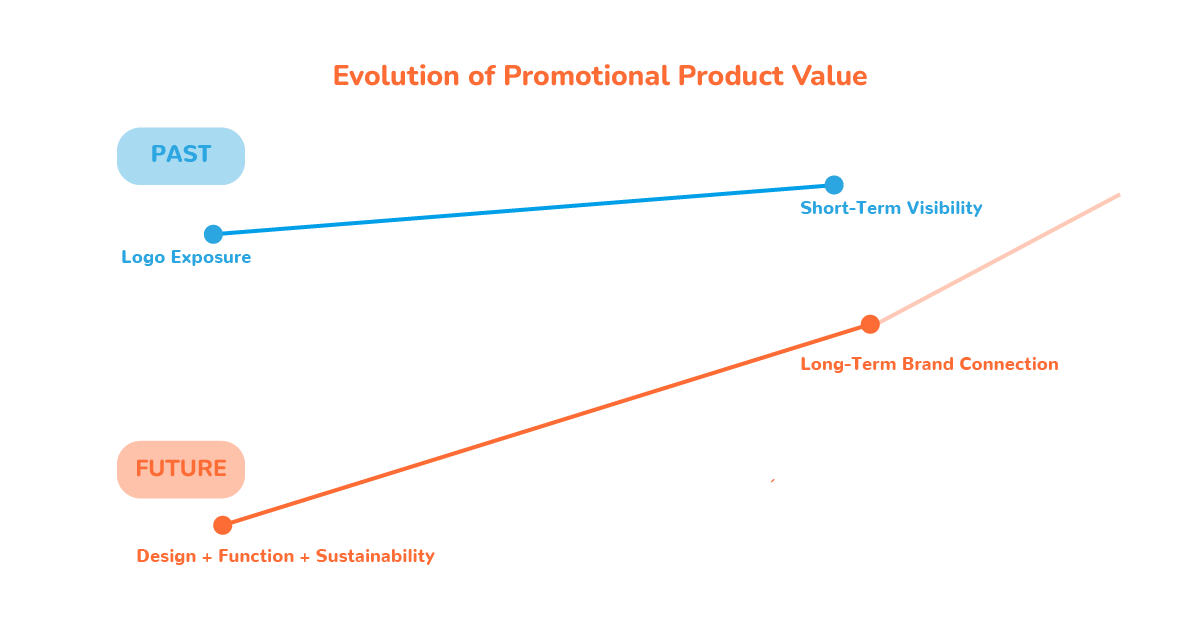
The role of promotional products has changed significantly.
Previously, the main purpose of a promotional item was exposure. A logo printed on a product was often considered enough to achieve marketing value. Today, successful brands understand that products need to create a stronger emotional connection.
A product becomes more valuable when recipients: 1.Use it frequently 2.Appreciate its design 3.Understand its story 4.Associate it with the brand
This means promotional products are becoming closer to lifestyle products. A well-designed notebook used during business meetings. A reusable bottle carried every day. A sustainable gift set received during an important event. These products create continuous interaction between the brand and the user. The future of promotional products will focus less on simple distribution and more on meaningful brand experiences.
2. Sustainability Will Continue Driving Product Innovation
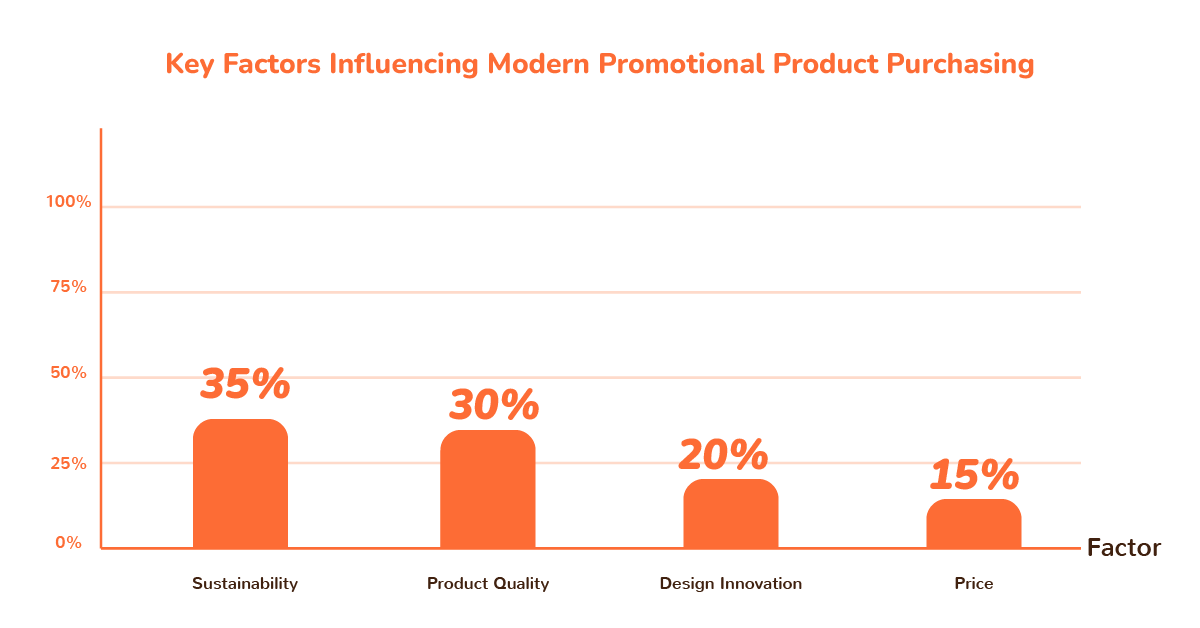
Sustainability has become one of the most important forces influencing promotional product development.
Companies are increasingly evaluating not only what products they purchase, but also how those products are made. This has created growing demand for: 1.Recycled materials 2.Renewable resources 3.Low-impact packaging 4.Long-lasting reusable products
Sustainable materials are no longer considered a niche option. They are becoming a mainstream requirement for many international campaigns. Brands are choosing materials that can support their environmental message while maintaining product quality.
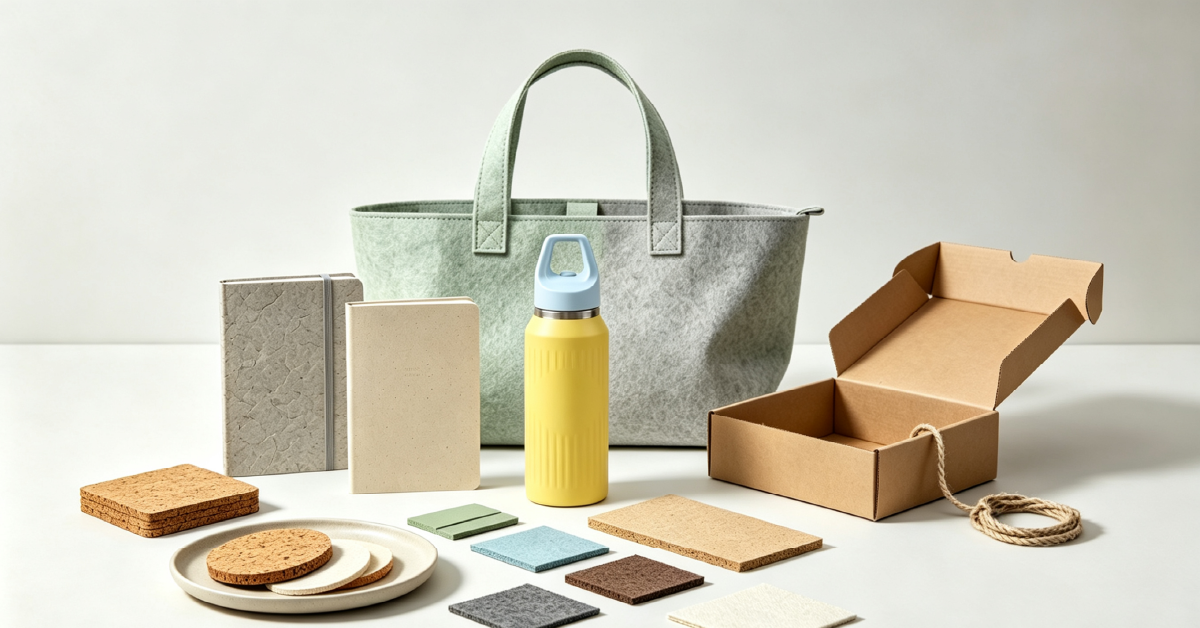
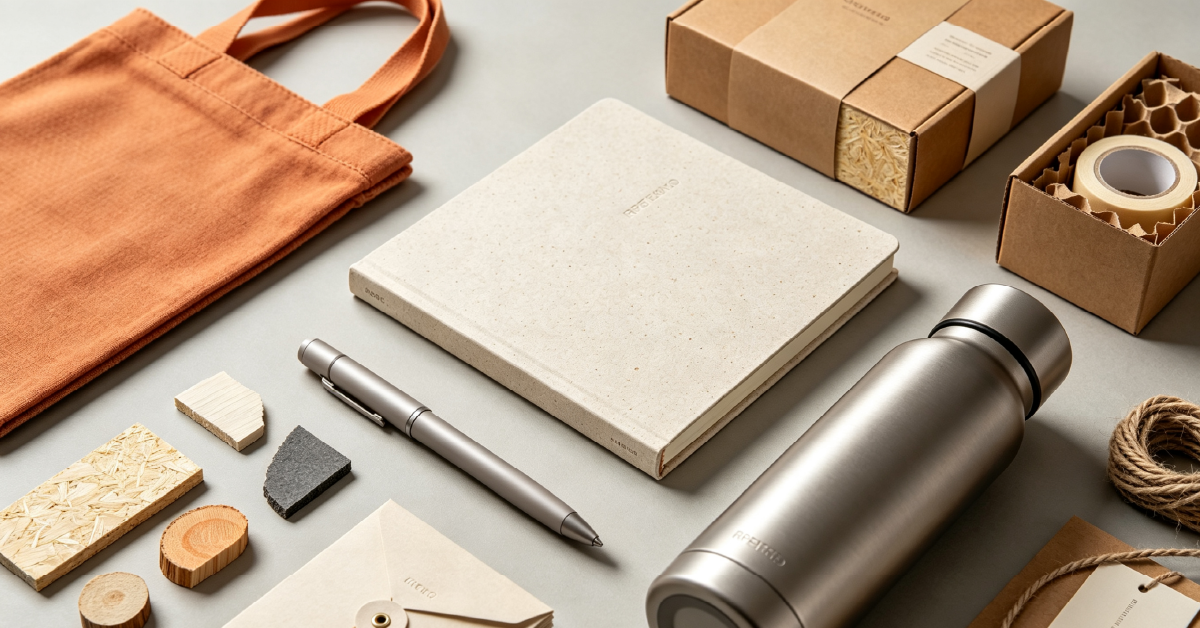
Examples include: RPET fabrics for bags and accessories. Stone paper and sugarcane paper for stationery. Bamboo components for lifestyle products. Coffee residue and tea residue materials for innovative product storytelling. The future of promotional products will increasingly combine sustainability with design value.
Sustainable Material Application Examples
| Material | Product Application | Brand Message |
| RPET | Bags, accessories, notebooks | Circular economy and recycling |
| Bamboo | Pens, drinkware components | Natural and renewable resources |
| Stone Paper | Notebooks and stationery | Innovative sustainable solutions |
| Sugercane Paper | Packaging and stationery | Agricultural resource utilization |
3. Functional Design Will Create Higher Product Value
Modern consumers are surrounded by countless promotional items. Products that provide additional functions are more likely to be remembered and reused.
This is why multifunctional design is becoming an important trend. A successful promotional product can solve everyday problems while communicating brand value.
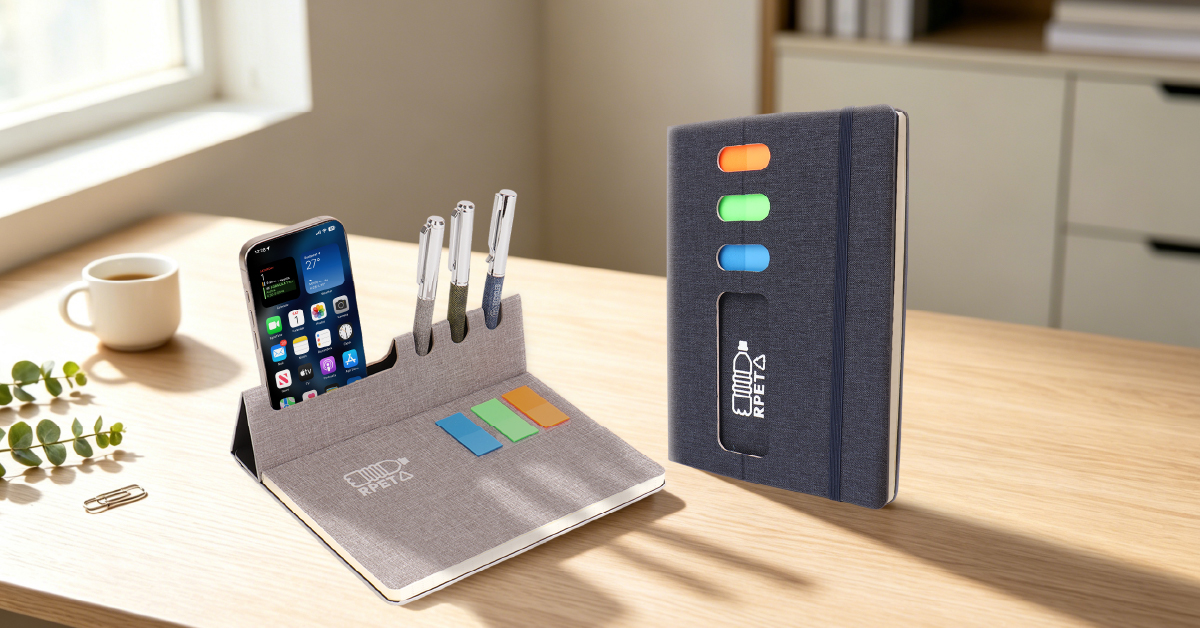
Examples include: Notebooks with phone stand functions , Drinkware with improved opening systems , Bags with smart storage solutions , Gift sets combining multiple useful products
Functional design creates stronger user engagement because the product becomes part of daily routines. For buyers, selecting products with practical features can significantly improve campaign effectiveness.
4. Personalization Is Moving Beyond Logo Printing
Customization has always been important in promotional products, but the definition of personalization is changing. Traditional customization usually focused on adding a company logo. Today, brands are exploring deeper customization options. These include: Custom colors matching brand identity , Unique product structures , Special material combinations , Customized packaging , Limited campaign editions
A product that feels specifically designed for a brand creates a stronger impression than a standard item with a logo. For example, a notebook with a customized sustainable cover material and matching accessories creates a complete brand experience. A bottle with a unique lid design and color coordination becomes more recognizable. Personalization allows promotional products to become an extension of brand identity.
| Traditional Approach | Future Approach |
| Logo printing | Integrated brand design |
| Standard products | Customized structures |
| Basic packaging | Premium experience packaging |
| Single material | Innovative material combinations |
5. Premium Packaging Will Become More Important
Packaging is becoming an increasingly important part of promotional product strategy. The first impression of a gift often comes from the packaging before the product itself is revealed. Premium packaging can improve: Perceived product value, Brand recognition , User experience ,Campaign impact
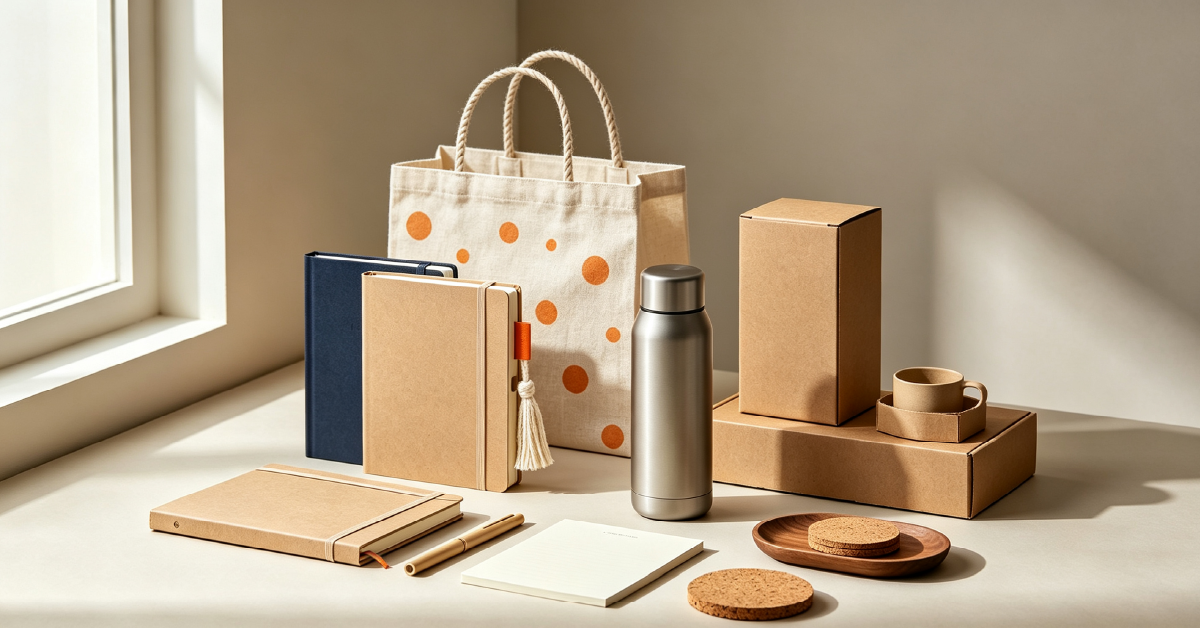
At the same time, sustainability requirements are influencing packaging design. Brands are looking for solutions that combine: Attractive appearance , Responsible materials , Efficient transportation , Reusable functions Examples include: Kraft paper packaging , Corrugated paper boxes , Reusable containers , Minimal packaging concepts
The future of promotional products will focus on the complete experience from packaging to product usage.
6. Corporate Sustainability Goals Are Influencing Purchasing Decisions
More companies are integrating sustainability into their business strategies. This directly affects how they select promotional products.
Corporate buyers are increasingly asking suppliers about: Material sources , Production processes , Environmental certifications , Product durability , Sustainable alternatives
Suppliers who can provide transparent information and responsible solutions will have stronger advantages. Sustainability is becoming not only a product feature but also a supplier capability.
7. The Rise Of Complete Promotional Gift Solutions
Another important trend is the movement from individual products toward complete solutions. Instead of selecting separate promotional items, companies increasingly prefer coordinated collections.
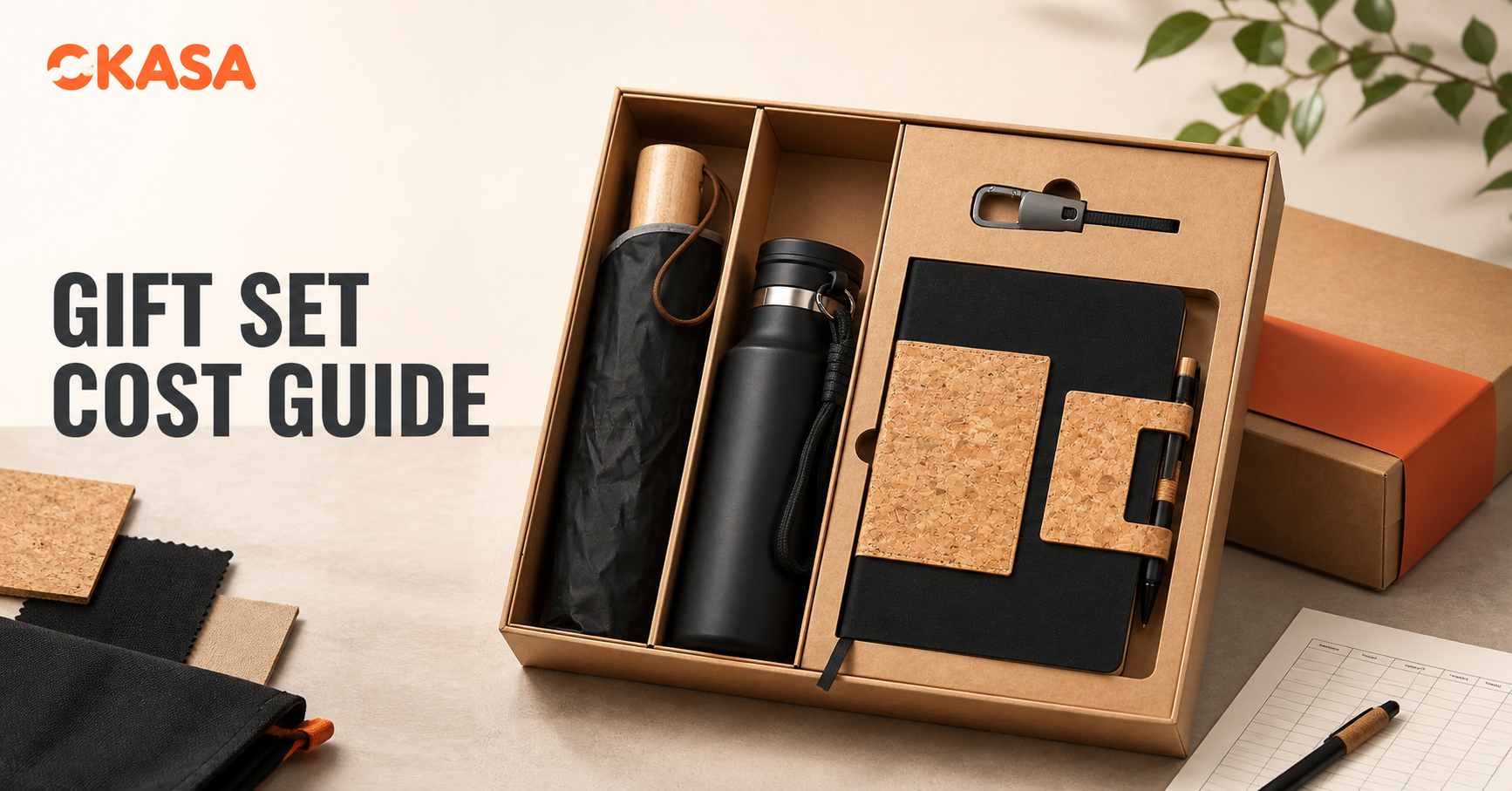
These combinations create stronger visual consistency and provide a more memorable gifting experience. For example, a sustainable office collection can combine recycled stationery, reusable drinkware, and eco-friendly accessories to communicate a complete workplace sustainability concept. This approach allows brands to tell a stronger story through multiple products working together.
8. How OKASA Responds To The Future Of Promotional Products
At OKASA, we focus on developing promotional products that combine sustainability, innovation, and practical value. We work with materials including RPET, bamboo, recycled paper, stone paper, sugarcane paper, coffee residue materials, tea residue materials, and other innovative sustainable materials. By combining material innovation with thoughtful design, OKASA helps global brands create promotional products that are not only environmentally responsible but also valuable in everyday use. The future of promotional products belongs to solutions that create meaningful connections between brands and people.
FAQ
1.What are the biggest trends in promotional products for 2026?
Key trends include sustainable materials, functional product design, deeper customization, premium packaging, and complete gift solutions.
2.Why are sustainable promotional products becoming more popular?
Companies are increasingly focusing on environmental responsibility and choosing products that align with their sustainability goals.
3.How can brands make promotional products more memorable?
Brands can improve impact through unique design, useful functions, customized details, and meaningful product storytelling.
Conclusion
The promotional product industry is moving toward a future defined by sustainability, innovation, and stronger brand experiences. The most successful products will no longer be simple giveaways. They will become carefully designed solutions that combine practical value with brand communication. For global buyers, choosing the right products and development partners will be essential to creating campaigns that stand out. With expertise in sustainable materials, product innovation, and customized solutions, OKASA helps brands develop promotional products designed for the future.
CTA
Build Future-Ready Promotional Products With OKASA
From sustainable materials to innovative product design, OKASA helps global brands create customized promotional solutions that deliver lasting value.
Contact our team to explore your next project.