

Introduction
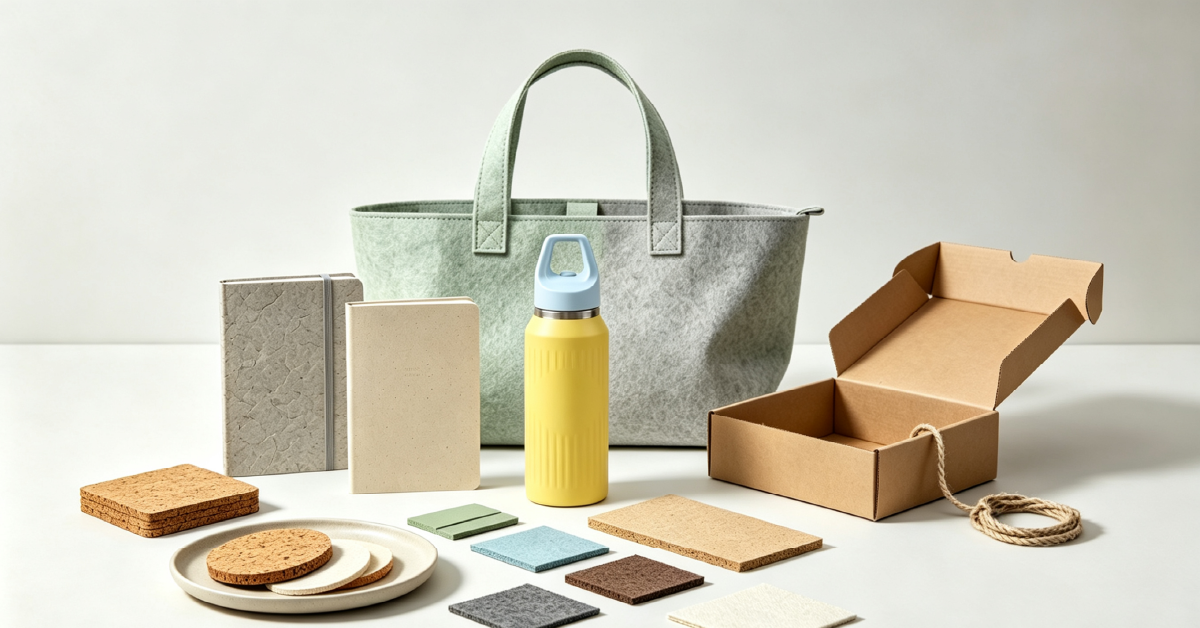
The promotional product industry is entering a new stage of development. While products have traditionally been selected based on cost, availability, and branding space, global buyers are now placing greater emphasis on material responsibility, product lifecycle, and environmental impact.
This change is driving the rapid growth of sustainable promotional products, where material selection has become one of the most important factors influencing purchasing decisions.
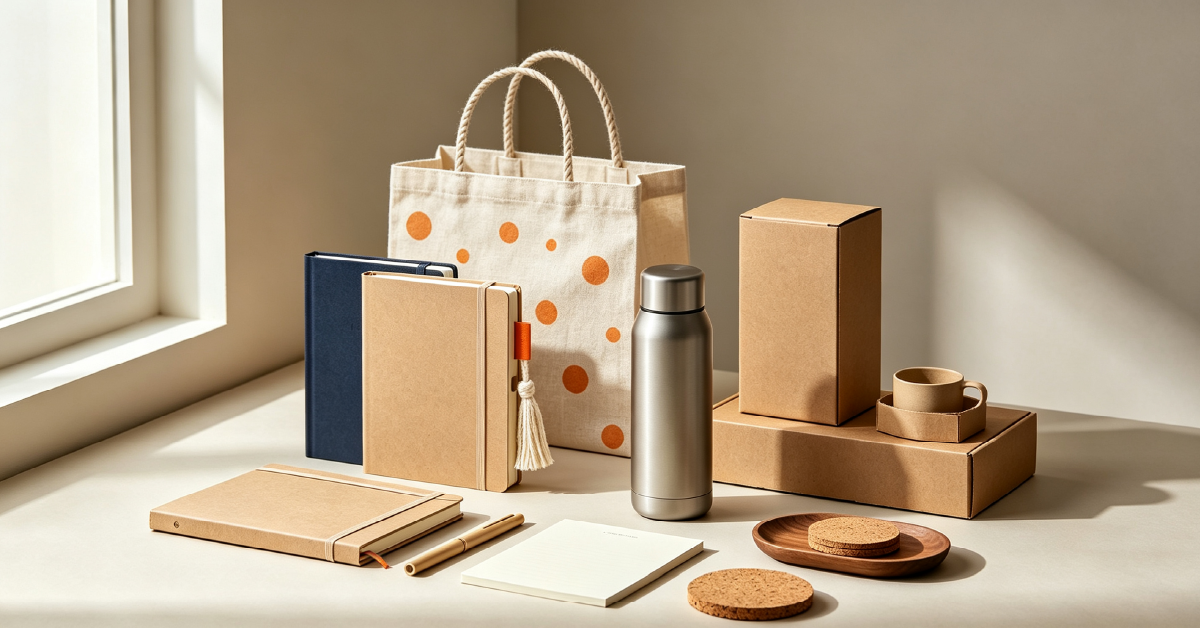
For brands and promotional distributors, sustainable materials provide more than environmental benefits. They create opportunities for stronger storytelling, product differentiation, and deeper connections with customers.
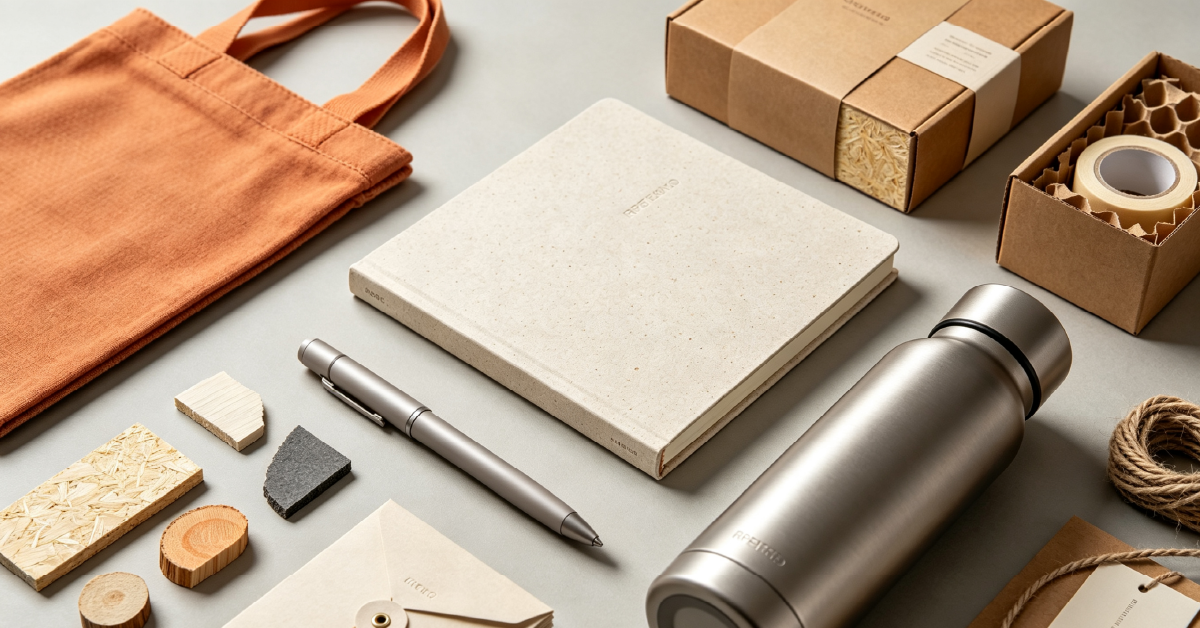
A notebook made from recycled or alternative paper materials can communicate innovation. A bag produced from recycled fabrics can represent circular design concepts. A reusable bottle with sustainable components can reinforce a brand’s commitment to long-term responsibility.
However, choosing sustainable materials requires more than selecting an environmentally friendly label. Buyers need to understand material characteristics, product applications, manufacturing possibilities, and how each material supports the overall brand message.
This guide explores how sustainable materials are transforming promotional products and how global buyers can make better material choices for their projects.
1. Why Material Selection Has Become A Key Decision In Promotional Products
Materials have always influenced product quality and appearance. However, in today’s market, materials also influence brand perception.
Consumers and businesses are becoming more aware of how products are made, where materials come from, and whether products align with sustainability values. As a result, companies are moving away from traditional promotional products that focus only on short-term visibility. Instead, they are choosing products that combine: Responsible material selection,Practical daily usage,Long-lasting product value,Meaningful brand communication A sustainable promotional product creates additional value because the material itself becomes part of the story. For example, a notebook made with recycled paper is not only a writing tool. It communicates a concept of resource reuse. A product using agricultural residue materials demonstrates innovation by transforming waste into functional products. A recycled fabric bag shows how discarded materials can be given a second life.
This shift has made material expertise an increasingly important capability for promotional product suppliers.
2. Recycled Materials: Turning Waste Into Valuable Products
Recycled materials are among the most widely adopted solutions in sustainable promotional products.
The concept behind recycled materials is simple: transforming existing resources into new products instead of relying entirely on new raw materials.
This approach supports circular economy principles while providing brands with meaningful sustainability stories.
One of the most common examples is RPET, which is created by processing recycled plastic materials into new fibers.
RPET has become popular in promotional products because it combines sustainability with practical performance.
It can be used for: -Bags -Backpacks -Accessories -Notebook covers -Textile products
For brands, RPET products provide an opportunity to communicate environmental responsibility while maintaining durability and functionality.
RPET In Promotional Product Applications
| Product Category | Application Example | Brand Message |
| Bags | Tote bags, backpacks, travel bags | Responsible resource utilization |
| Stationery | Notebook covers and accessories | Sustainable office solutions |
| Lifestyle Products | Storage bags and accessories | Everyday sustainable living |
3. Natural Materials Create Stronger Brand Storytelling
Natural materials have become increasingly popular because they create an authentic connection between products and sustainability.
Materials such as bamboo, cork, and natural fibers communicate simplicity, renewable resources, and a closer relationship with nature. Among these materials, bamboo is widely used in promotional products because of its appearance, versatility, and premium feeling. Its natural texture provides a unique alternative to traditional plastic components.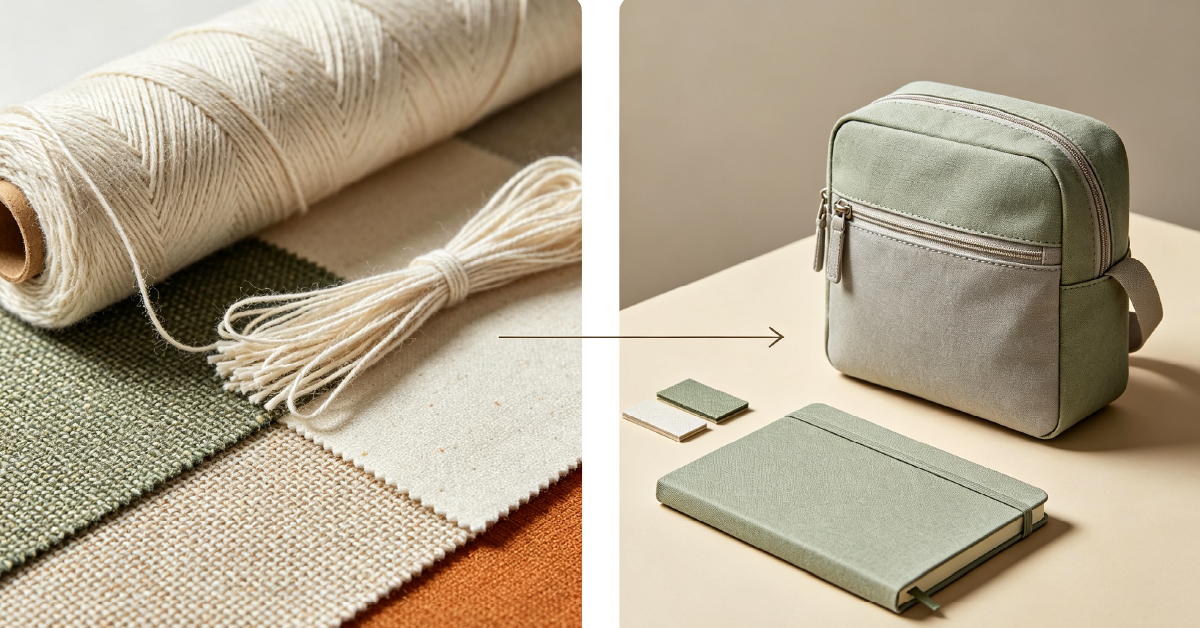
4. Innovative Alternative Materials Are Creating New Possibilities
Beyond recycled and natural materials, innovative alternative materials are opening new opportunities for promotional product design. These materials often provide stronger storytelling because they demonstrate creativity and technological development. These materials transform unconventional resources into practical products.
For example, stone paper creates a unique smooth writing experience while reducing reliance on traditional wood-based paper. Sugarcane paper utilizes agricultural by-products and provides another sustainable option for stationery and packaging. Coffee residue materials and tea residue materials create distinctive textures and stories that connect products with natural resources and circular design concepts.
| Material | Source | Suitable Applications |
| Stone Paper | Mineral-based material | Notebooks, stationery |
| Sugarcane Paper | Agricultural by-products | Notebook covers, packaging,pen barrel |
| Coffee Residue Material | Coffee industry waste | Accessories, stationery,pen barrel,water cup,notebook cover |
| Tea Residue Material | Tea production waste | Lifestyle products ,notebook cover,pen,package and more |
5. Matching Materials With Product Purpose
Selecting sustainable materials requires understanding the relationship between material characteristics and product usage.
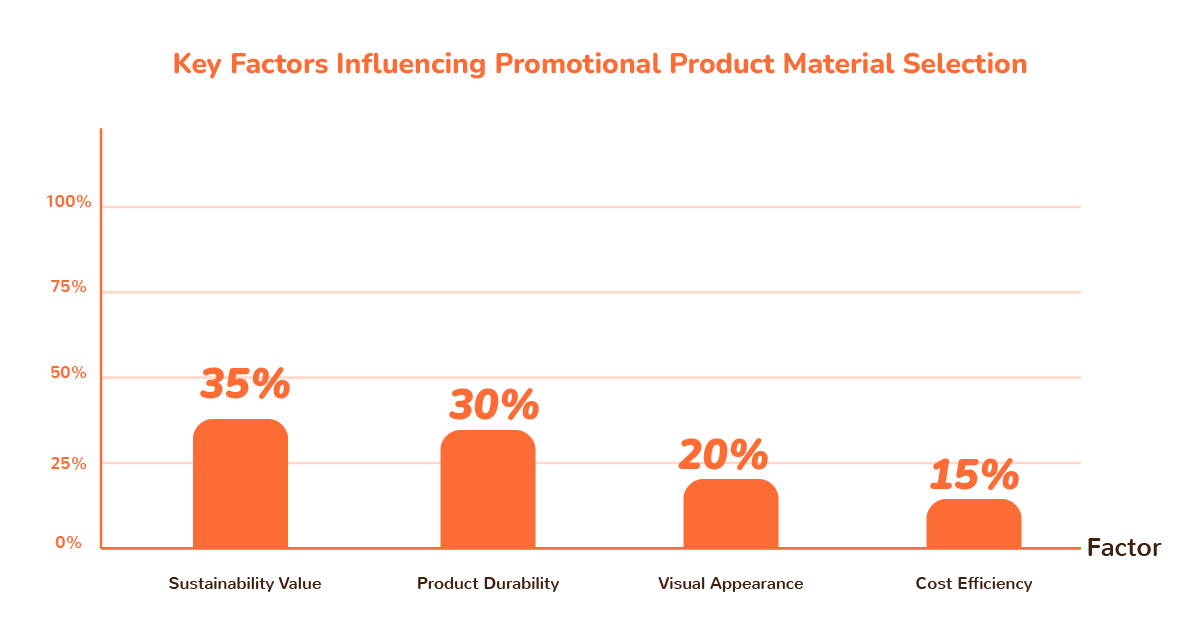
Not every sustainable material is suitable for every application. A successful product development process considers:1.Function requirements 2.User environment 3.Production methods 4.Customization needs 5.Target price range
For example, a notebook intended for premium corporate gifting may focus on unique textures and finishing techniques. A promotional bag designed for daily use may prioritize durability and lightweight performance. A drinkware product may require materials that support long-term use and reliable manufacturing. The best sustainable promotional products are created when material selection and product purpose work together.

6. Sustainability And Product Design Must Work Together
A common misunderstanding is that sustainable products should focus only on environmental features. In reality, successful sustainable promotional products require a balance between responsibility and design quality. A poorly designed sustainable product may not achieve its intended impact because recipients may not continue using it. Modern sustainable product development focuses on creating items that people want to keep. This is why material innovation, product structure, and user experience are equally important.
7. How OKASA Helps Brands Develop Sustainable Promotional Products
At OKASA, we specialize in creating sustainable promotional products by combining innovative materials with practical product development. We work with brands to select suitable materials based on product requirements, campaign goals, and brand positioning. From the initial material discussion to final production, OKASA supports customers throughout the development process. By combining sustainable materials with thoughtful design, we help brands create promotional products that communicate responsibility while delivering real everyday value.
FAQ
1.What are the most popular sustainable materials used in promotional products?
Common sustainable materials include RPET, bamboo, recycled paper, stone paper, sugarcane paper, and other innovative recycled materials.
2.Are sustainable promotional products more expensive than traditional products?
The cost depends on material choice, design complexity, customization methods, and order quantity. Many sustainable solutions can achieve competitive value when properly developed.
3.Can sustainable materials support customized branding?
Yes. Many sustainable materials support printing, embossing, engraving, embroidery, and other customization methods.
Conclusion
Sustainable materials are changing the future of promotional products by creating new opportunities for brands to combine environmental responsibility with practical design.
For global buyers, choosing the right material is not only about sustainability. It is about creating products that communicate brand values, provide long-term usability, and create stronger connections with recipients. As the demand for responsible products continues to grow, suppliers with strong material knowledge and product development experience will play an increasingly important role in helping brands create meaningful promotional solutions. With expertise in sustainable materials and customized product development, OKASA helps global brands transform innovative material concepts into practical promotional products designed for lasting impact.
CTA
Explore Sustainable Promotional Product Solutions With OKASA
From recycled materials to innovative eco-friendly solutions, OKASA helps brands create customized promotional products that combine sustainability, design, and functionality.
Contact our team to discuss your next project.