


A bag material should be selected for the job the finished bag must perform. “Eco-friendly,” “durable” or “premium” are not complete specifications. Buyers need to translate the campaign goal into fabric composition, construction, finish, branding method, documentation and tests.
RPET, nylon and cotton can all be suitable for promotional bags, but they answer different priorities. RPET is often selected when verified recycled content is central to the brief. Nylon is frequently chosen for lightweight performance and technical styling. Cotton offers a familiar natural hand feel and broad decoration possibilities. The final choice depends on more than the fiber name.
Buyer quick answer
- Choose RPET when recycled-content communication and traceability are central requirements.
- Choose nylon when low weight, packability or performance-led styling matters.
- Choose cotton when natural touch, printability or a casual retail look leads the brief.
- Specify fabric construction and finished weight; the fiber name alone does not define strength.
- Test the finished bag, including seams, handles, zippers, coating and branding.
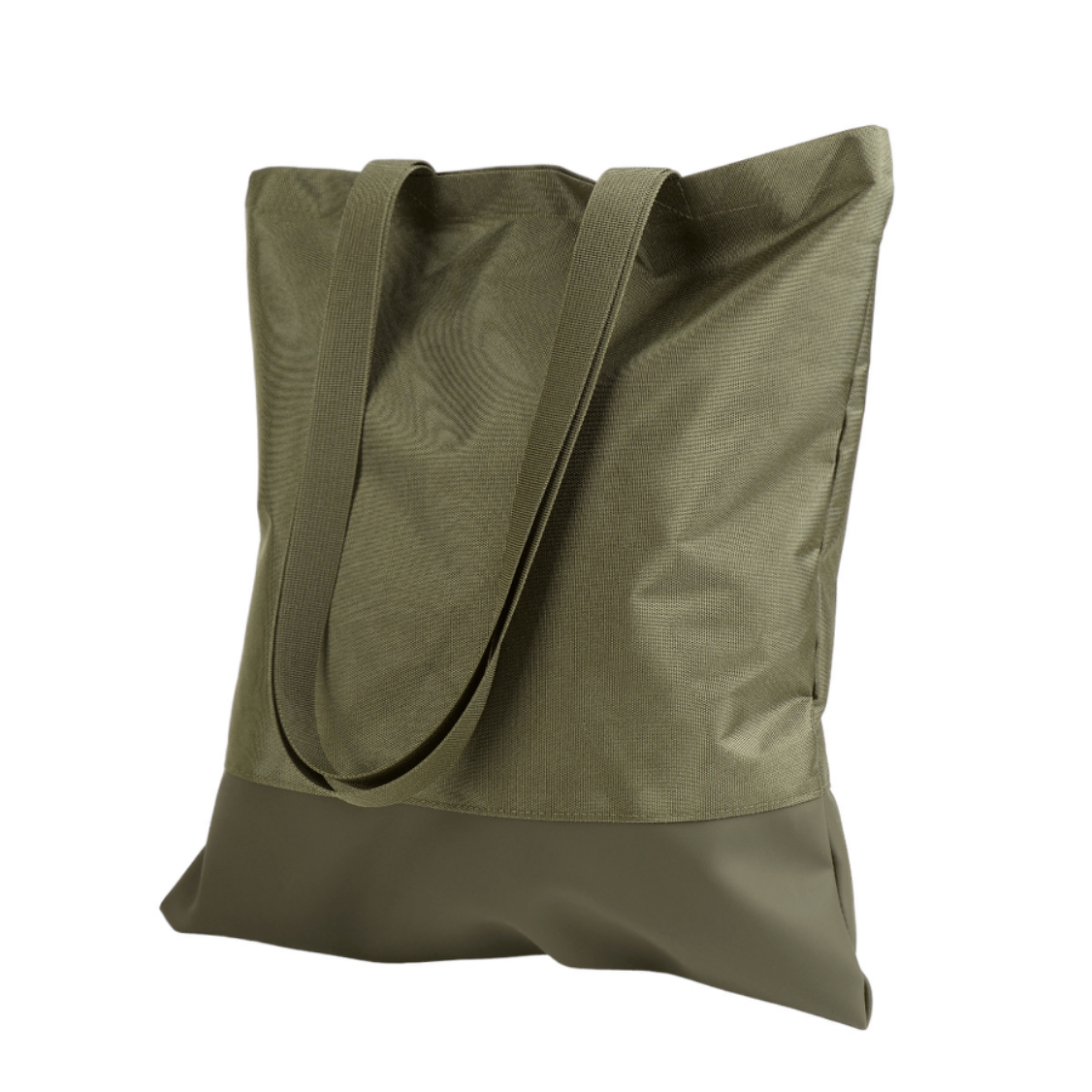
Official OKASA B108 nylon tote product image.
Suggested ALT: OKASA B108 nylon tote with film splicing and reinforced handles
Start with the sourcing objective
Before comparing swatches, write one sentence describing the job of the bag. For example: “A lightweight event tote that carries a laptop and bottle,” “a recycled-content drawstring bag with claim documentation,” or “a cotton welcome-kit bag with a large one-color print.” This sentence makes material trade-offs easier to evaluate.
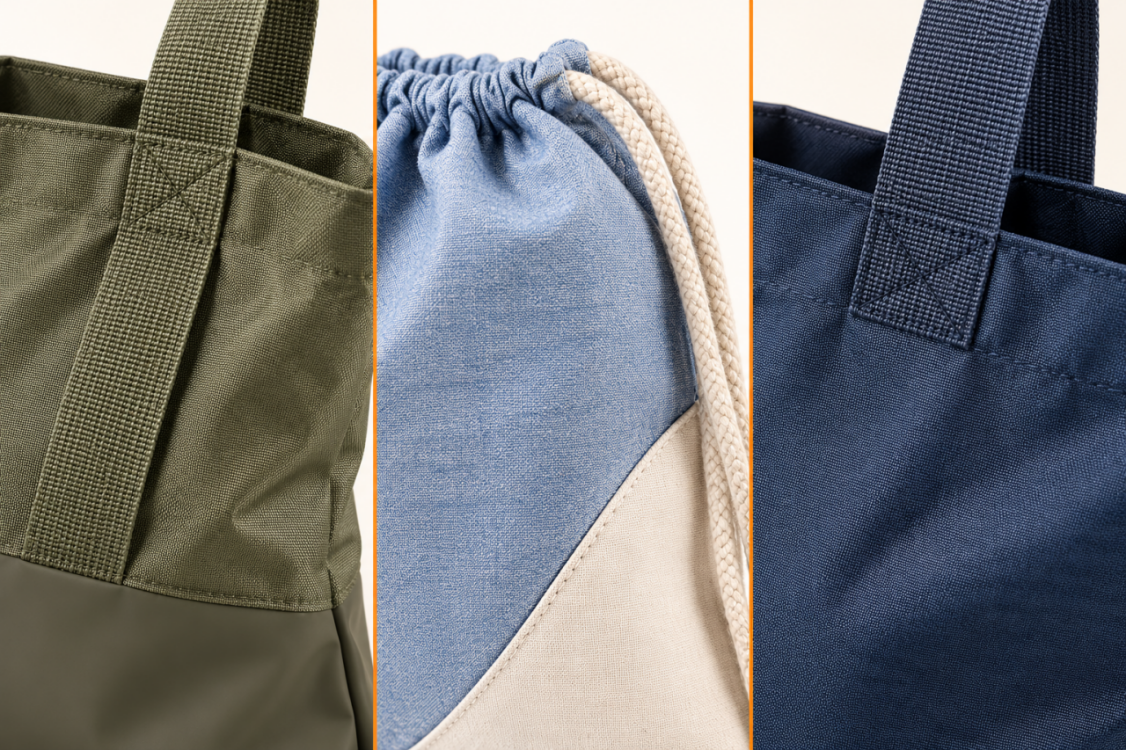
Generated construction close-up based on official OKASA nylon and recycled-cotton bag images. Visual explanation only.
Suggested ALT: Close comparison of nylon recycled cotton and recycled polyester style bag construction
RPET for a recycled-content brief
RPET commonly refers to polyester made with recycled feedstock. For the buyer, the important question is not only whether the supplier uses the term RPET, but how the recycled-content claim is supported for the specific material and transaction.
Ask for the composition, percentage claim, scope of certification or other required records, and the chain of documents relevant to the order. Standards such as the Global Recycled Standard and Recycled Claim Standard are designed around recycled-content verification and chain of custody. A logo printed on a recycled fabric does not by itself verify the claim.
From a design perspective, RPET fabric can be developed into totes, drawstring bags, backpacks, pouches and notebook covers. The weave, yarn, coating and lamination determine much of the finished hand feel and performance.
The OKASA TGS777 RPET gift set includes an RPET-and-cork handbag and can be used as a product reference for discussing material coordination across a bag, notebook and packaging. The exact recycled-content claim and order documents must still be confirmed for the selected configuration.
Nylon for lightweight performance
Nylon is often considered for bags that need low weight, flexibility and a more technical appearance. It can work well for foldable bags, backpacks, totes and travel accessories. But “nylon” does not specify denier, weave, coating, thickness, water resistance or seam construction.
OKASA B108 shows how material and construction work together: a nylon tote with film splicing and reinforced handles. The value is not created by the fiber name alone. Handle attachment, seam layout, opening, pocket design and surface combination determine how the bag carries and how it looks.
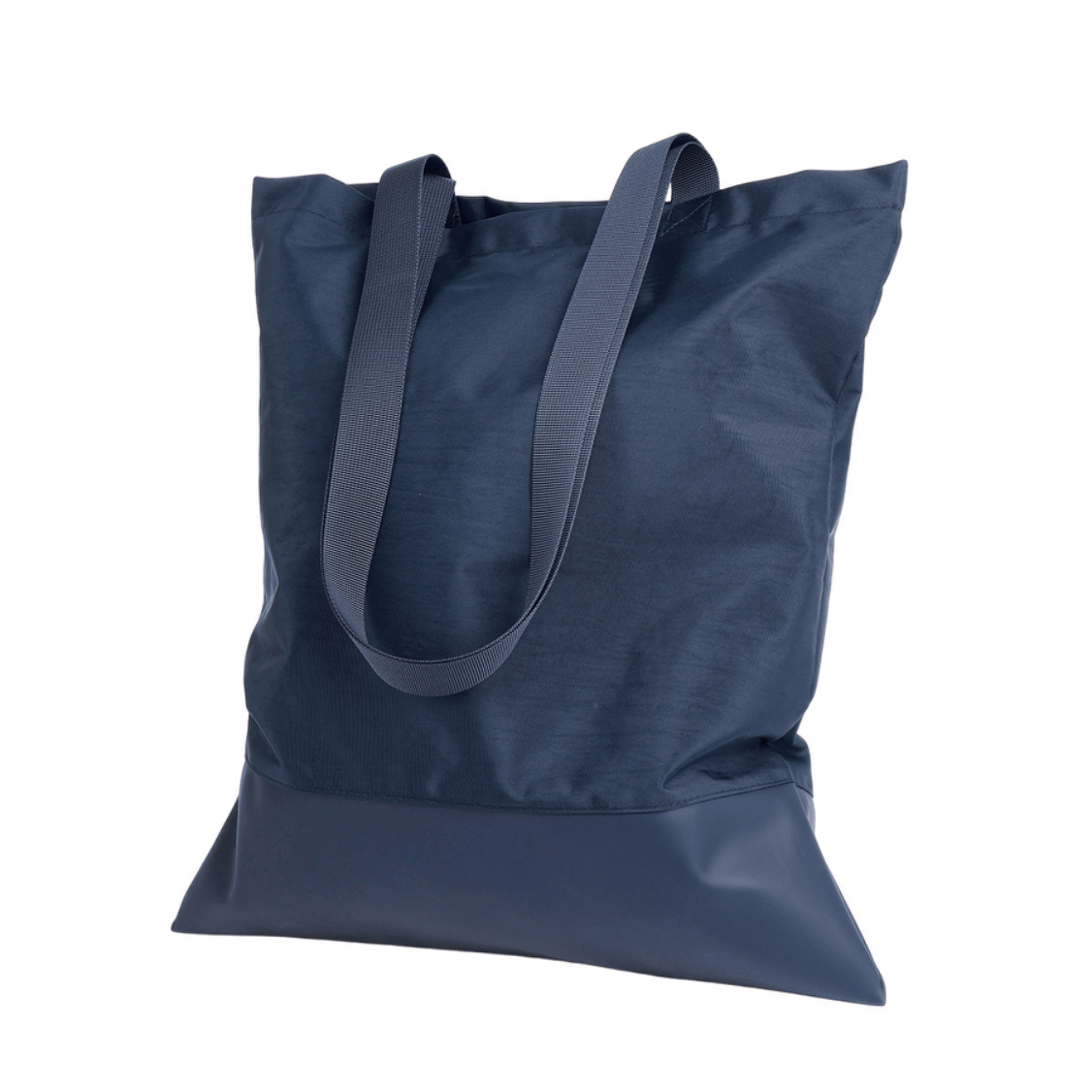
Official B108 image showing the nylon body and lower film-spliced construction.
Suggested ALT: Detail of OKASA B108 nylon fabric reinforced handles and film spliced base
Cotton for natural texture and decoration
Cotton provides a recognizable natural hand feel and can support screen printing, embroidery, woven labels and patches. It is often chosen for totes, drawstring bags, pouches and casual gift packaging. Buyers should specify the weave and finished fabric weight rather than asking only for a “cotton bag.”
Natural fibers can change with washing, moisture and finishing. If washing or repeated care is expected, agree how dimensional change, color and print performance will be evaluated. For heavier loads, review handle material, attachment and seam reinforcement together with the base fabric.
The OKASA B48 recycled-cotton drawstring bag offers a useful visual reference for examining woven texture, cord channels, panel joins and logo-patch placement on a soft bag construction.
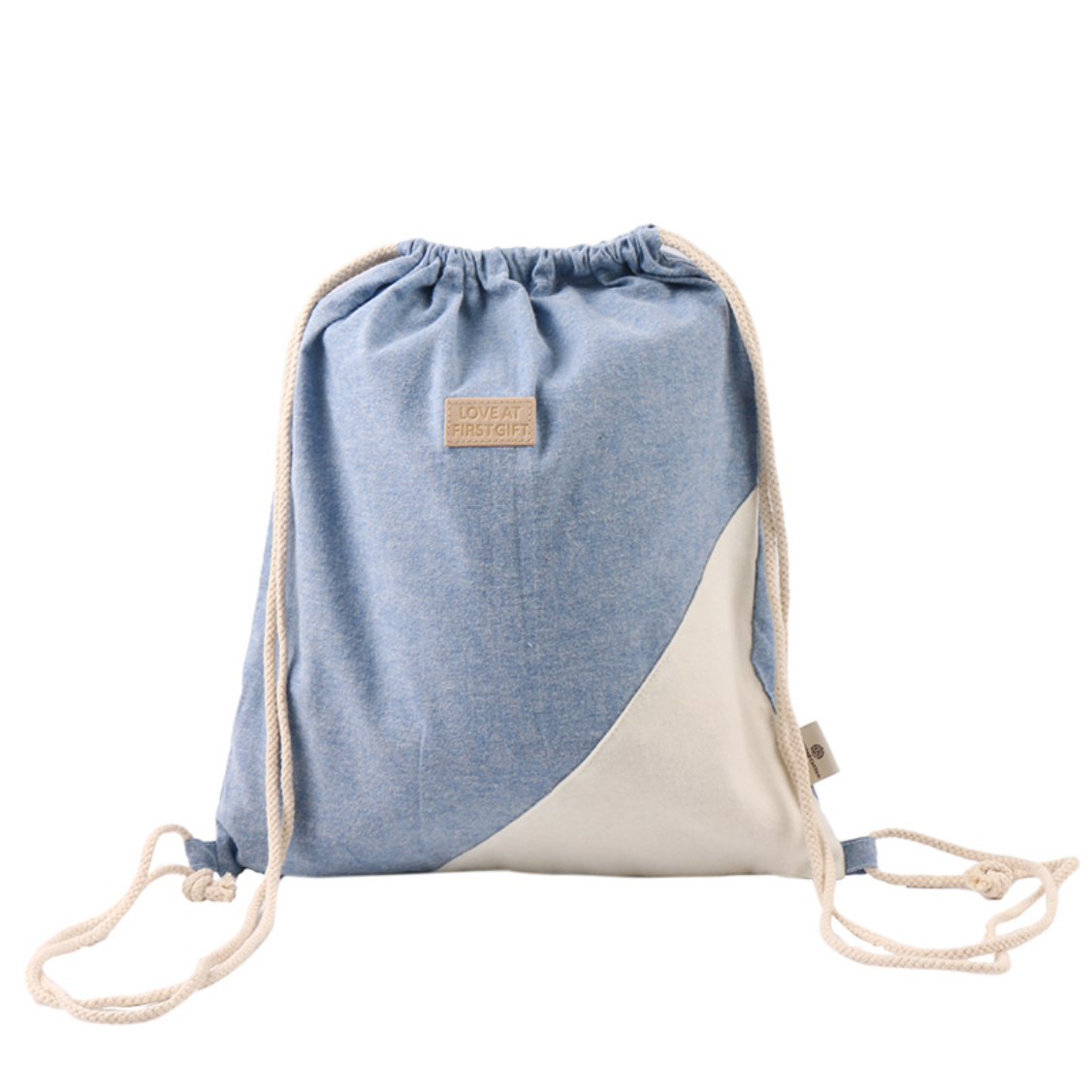
Official OKASA B48 recycled-cotton drawstring bag image.
Suggested ALT: OKASA B48 recycled cotton drawstring bag with contrasting panels and cord closure
|
Factor |
RPET |
Nylon |
Cotton |
|
Best starting goal |
Verified recycled-content story |
Lightweight performance and technical styling |
Natural touch and broad decoration |
|
Specify beyond fiber |
Recycled percentage, construction, finish and claim evidence |
Denier or fabric specification, weave, coating and finish |
Composition, weave, finished weight and finishing |
|
Branding checks |
Adhesion, heat sensitivity, texture and claim wording |
Coating compatibility, press marks and seam clearance |
Ink absorption, bleed, puckering and shrinkage |
|
Construction checks |
Seams, handles, zippers, lining and coating |
Stress points, coating, zippers and edge finish |
Seams, handle attachment, fraying and dimensional change |
|
Documentation focus |
Required recycled-content and chain-of-custody records |
Material and test specification requested by the project |
Composition and any project-specific sourcing documents |
Water resistant is a construction claim
A coated fabric may resist water on a flat swatch while the finished bag still allows water through seams, zippers or the opening. If water resistance matters, define the expected exposure and test the complete bag. Do not use “waterproof” and “water-resistant” interchangeably without an agreed method and result.
Compare branding on the actual fabric
The same artwork can behave differently on a smooth RPET fabric, coated nylon and absorbent cotton. Confirm the decoration method after reviewing texture, stretch, heat response, coating and expected use. Approve color, edge quality, adhesion or stitch quality on the final fabric color.
A seven-part sample checklist
1. Material: composition, fabric specification, color and finish match the approved reference.
2. Dimensions: finished measurements and usable internal space meet the brief.
3. Load structure: handles, seams, base and attachment points support the agreed test.
4. Components: zippers, cords, buckles, lining and pockets operate correctly.
5. Branding: artwork, position, color and durability match the approved sample.
6. Appearance: wrinkles, shade variation, marks and sewing quality stay within agreed limits.
7. Packing: folding and carton pressure do not create unacceptable deformation or damage.
How to avoid misleading material comparisons
Do not compare a lightweight RPET drawstring fabric with a heavy cotton canvas and conclude that the fiber determines strength. Compare constructions intended for the same bag, load and price position. Request fabric swatches first, then finished samples using the proposed seams, handles and decoration.
What to include in the bag RFQ
|
Information |
Why it matters |
|
Use scenario and load |
Guides size, structure and testing |
|
Material goal |
Clarifies recycled-content, performance or natural-touch priorities |
|
Finished dimensions |
Defines usable capacity and component placement |
|
Color and branding |
Determines material availability and decoration route |
|
Pockets and closures |
Changes labor, components and function |
|
Quantity by version |
Affects material, color and logo production minimums |
|
Destination and deadline |
Guides compliance, packing and production planning |
Frequently asked questions
Is RPET automatically the most sustainable choice
No material should be judged by one label alone. Verify the recycled-content claim, then consider durability, intended use, product life, packaging and the actual project requirements.
Is nylon waterproof
The fiber name does not prove waterproof performance. Fabric construction, coating, seams, zippers and openings all affect the finished bag. Define and test the required level.
What cotton weight should I choose
There is no universal weight for every tote or pouch. The suitable construction depends on bag size, load, weave, lining, seams, handles, decoration and target hand feel. Approve a finished sample rather than choosing only from a GSM number.
Build the material choice into a complete bag specification
Send OKASA the intended use, dimensions, load, material priority, fabric reference, color, branding, components, quantity, destination and deadline. The team can propose suitable constructions and prepare samples for a direct comparison before bulk production.