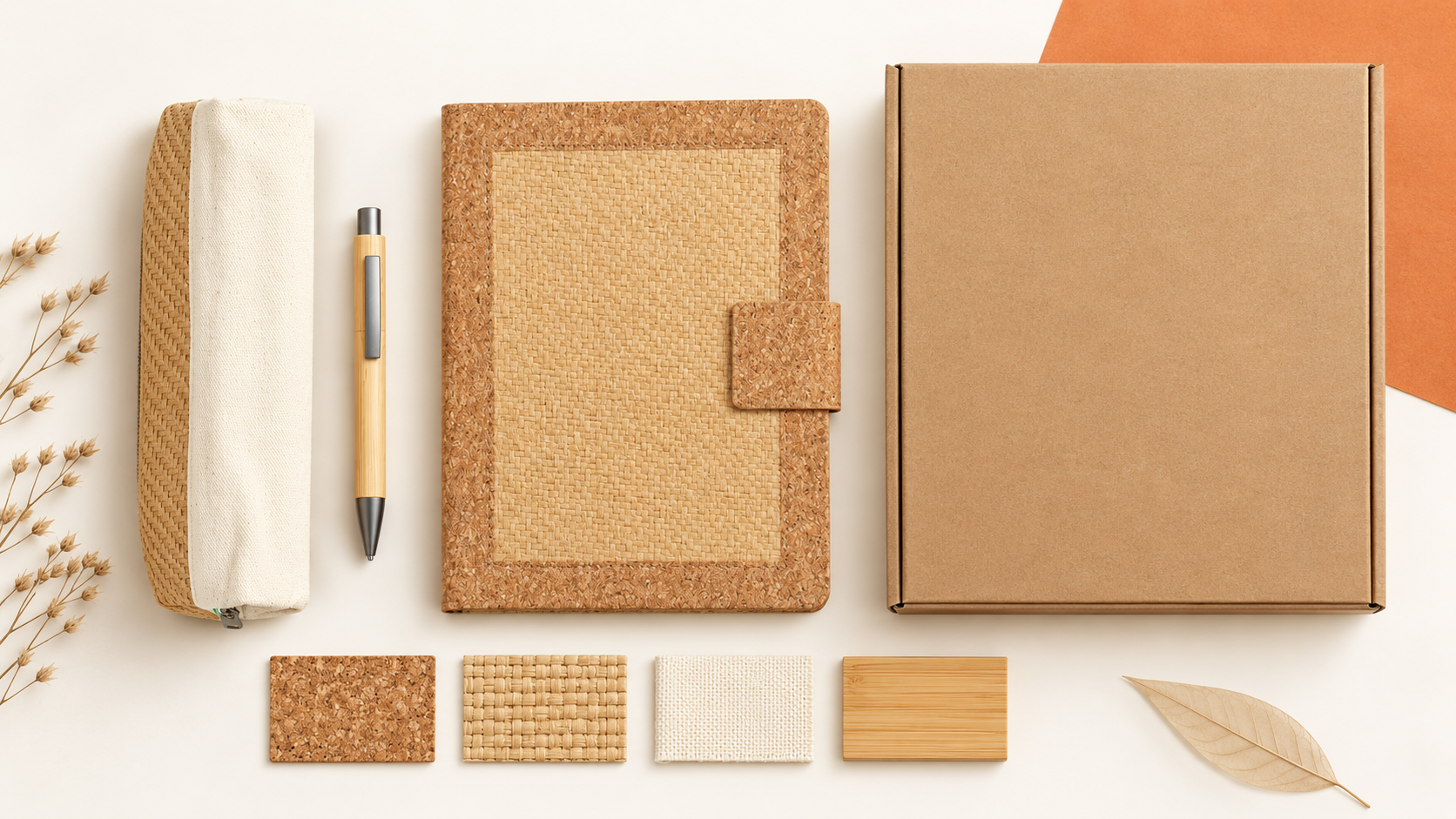


Sustainability has become one of the most important topics in the promotional products industry. However, modern brands are no longer only asking whether a product is recyclable. They are exploring how materials, design, and functionality can work together to create better experiences.
The growing demand for sustainable promotional products reflects a broader change in how companies approach branded merchandise.

Materials Are Becoming Part of Brand Storytelling
Today, materials are not just manufacturing choices. They represent brand values and create emotional connections.
Examples include:
RPET Materials
RPET transforms recycled plastic bottles into useful textiles for bags, notebooks, and accessories. It provides a practical solution while supporting circular material concepts.
Stone Paper
Stone paper offers an alternative approach to traditional paper products, creating a unique writing experience with water-resistant properties.
Sugarcane Paper
Sugarcane paper utilizes agricultural by-products and brings renewable material concepts into everyday stationery.
Design Makes Sustainability More Valuable
Simply using sustainable materials is not enough.
Successful sustainable promotional products combine:
- Responsible materials
- Functional design
- Premium appearance
- Brand customization
A product becomes more meaningful when users understand its material story and enjoy using it every day.
The Future of Green Merchandise
The future of promotional products will focus on balancing environmental responsibility with practical value.
Brands that invest in sustainable promotional products can create stronger connections with customers, employees, and business partners.
Sustainability is evolving from a material choice into a complete design philosophy.
Sustainability has become one of the most important topics in the promotional products industry. However, modern brands are no longer only asking whether a product is recyclable. They are exploring how materials, design, and functionality can work together to create better experiences.
The growing demand for sustainable promotional products reflects a broader change in how companies approach branded merchandise.
Materials Are Becoming Part of Brand Storytelling
Today, materials are not just manufacturing choices. They represent brand values and create emotional connections.
Examples include:
RPET Materials
RPET transforms recycled plastic bottles into useful textiles for bags, notebooks, and accessories. It provides a practical solution while supporting circular material concepts.
Stone Paper
Stone paper offers an alternative approach to traditional paper products, creating a unique writing experience with water-resistant properties.
Sugarcane Paper
Sugarcane paper utilizes agricultural by-products and brings renewable material concepts into everyday stationery.
Design Makes Sustainability More Valuable
Simply using sustainable materials is not enough.
Successful sustainable promotional products combine:
- Responsible materials
- Functional design
- Premium appearance
- Brand customization
A product becomes more meaningful when users understand its material story and enjoy using it every day.
The Future of Green Merchandise
The future of promotional products will focus on balancing environmental responsibility with practical value.
Brands that invest in sustainable promotional products can create stronger connections with customers, employees, and business partners.
Sustainability is evolving from a material choice into a complete design philosophy.v