

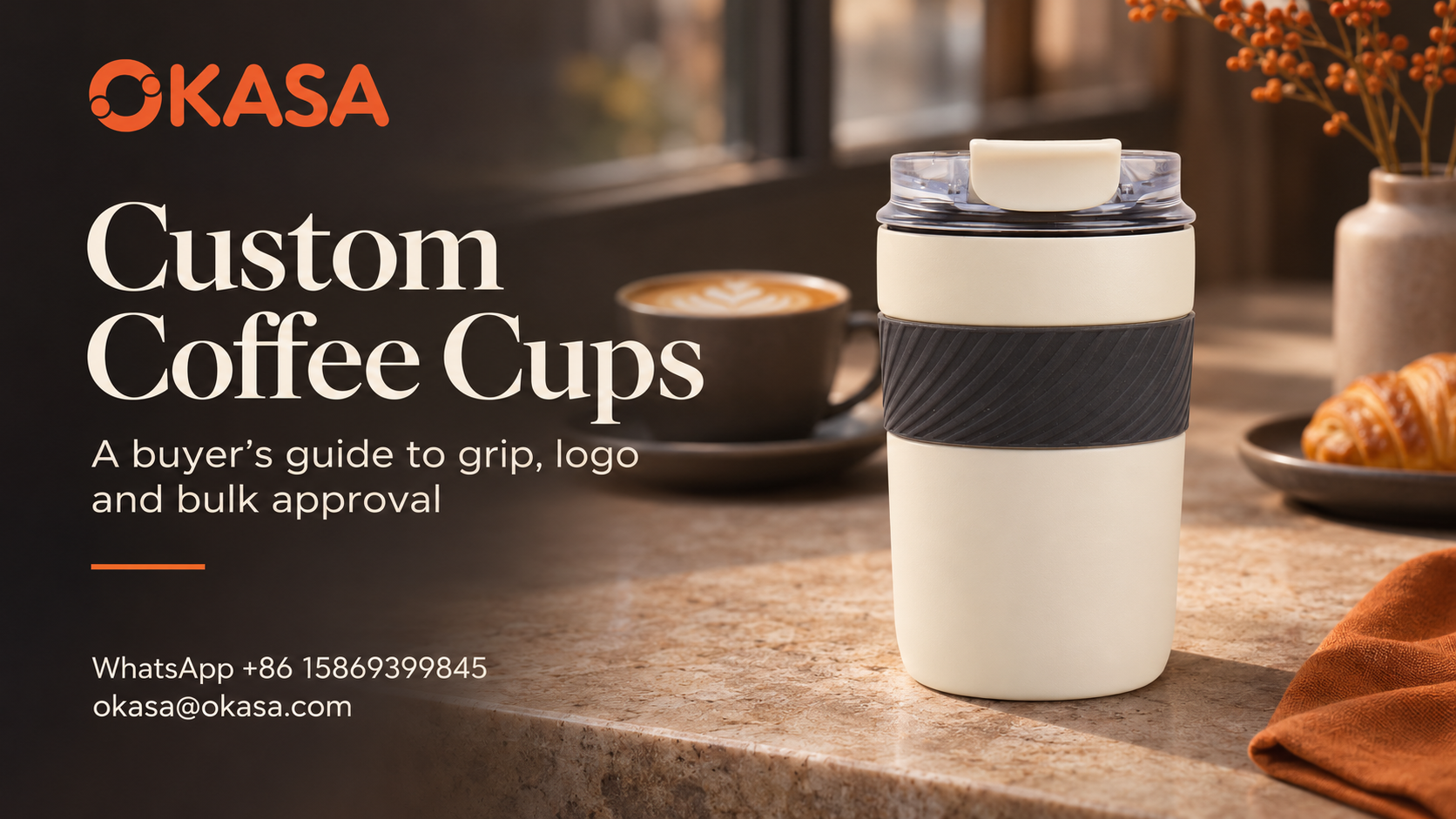
Hero illustration based on OKASA model 25075501. The styled setting and image are illustrative; approve an actual production sample before ordering.
Someone opens a welcome box on Monday morning. They pull out a coffee cup, turn it toward the light and look for the company mark. Then they put a thumb over the textured silicone band, close the lid and carry the cup to the kitchen. Those few ordinary movements tell a procurement team more about the gift than an isolated catalogue photograph. If the band sits across the intended artwork, the logo vanishes in the hand. If the band is loose, the nicest finish in the world will not rescue the impression. If the lid or insert changes after the artwork is signed, the supposedly approved cup is no longer the cup that arrives.
This guide uses OKASA’s 25075501 stainless steel coffee cup as a concrete reference. The published listing says it holds 350 mL, measures 14 × 7 cm, has a 304 stainless steel inner wall, 201 stainless steel outer wall, a powder-coated surface and a threaded silicone grip ring on its cup wall. The listing does not give a verified hot-hold time, a lid leakage rating, a dishwasher claim, a standard order quantity or a standard logo method. Those are project questions, not facts to fill in from guesswork. The photography in this article is an illustrative treatment of the product, not a record of a customer order or a completed laboratory test.
The useful buying question is simple: can the manufacturer make the exact cup people will actually pick up, decorate and pack at the required volume? A serious quote needs enough detail to answer that question. Instead of beginning with a long list of gift ideas, we will follow the object itself from the recipient’s hand to the approved production file.
First encounter: what the hand covers
Look at the cup at its real size, preferably with the intended drink temperature and in the setting where it will be used. A 350 mL cup belongs to a different routine from a large travel tumbler. It may be carried across an office floor, placed near a laptop or set beside a meeting notebook. The silicone ring gives the fingers a designated grip area. It also divides the cup into visible zones: the upper body above the ring, the band itself, and the lower body beneath it. A graphic that looks centered on a flat drawing can end up too low when someone holds the finished cup.
Ask for the physical vertical position and finished height of the band on the decorated sample. Have the supplier photograph the cup from the front, side and three-quarter view with a hand holding it naturally. Do not instruct the designer to align artwork to the edge of the photo: a catalogue crop is not a dimensioned manufacturing drawing. If your mark belongs above the ring, give the decorator a clear minimum distance from the band and the rim. If it belongs below, check that the grip does not cover it in a normal hold and that the lower curvature does not distort the edges. If you want decoration on the silicone itself, request a separate feasibility and durability proof; it is a different surface from powder-coated steel.
For a large employee programme, send artwork in a vector format, identify the actual Pantone or brand color reference if relevant, specify whether the logo is one color or multiple colors, and request a sample on the selected cup finish. A rendered mockup can show placement, but a physical sample shows the coating, the actual edge of the ring and the contrast under ordinary light. Approve the two together. That is the moment a custom drinkware manufacturer can turn a vague “put our logo on the front” instruction into a repeatable decoration specification.
Turn the cup to inspect the ring seam, texture and level. The listing describes an anti-slip grip but reports no measured friction or life-cycle test; define any desired performance criterion in the brief.
A cup should be easy to explain in one sentence
The recipient does not need a material lecture. Procurement does. The public construction is a 304 stainless inner wall and a 201 stainless outer wall with powder coating outside. Copy those component labels into the initial request and ask the supplier to confirm them against the final bill of materials for your specific order. The important noun is *component*: a material declaration for an inner vessel is not a statement about the lid, gasket, silicone band, pigments, adhesives or decoration. If the destination market has its own food-contact requirements, request applicable evidence for the actual finished assembly and intended use.
Do not turn “stainless steel” into an automatic promise of a particular temperature retention time. The listing calls the cup insulated, but the published description does not show a test protocol or a thermal result. If heat retention matters to the programme, agree on a fill volume, starting water temperature, ambient temperature, measurement interval and acceptable endpoint with the supplier. One buyer may need a short meeting-room drink; another may need a commute. A figure without a defined method cannot settle both needs.
Nor does a photo of a closed lid establish leak resistance. Is this cup intended to sit upright on a desk, to travel in a car holder or to lie inside a backpack? Those are three different briefs. Ask whether the proposed lid and seal are designed for the actual use and how to verify that claim on the sample. Check how the lid opens, how easily it can be cleaned, and whether replacement parts are available for the ordered configuration. Photograph any lid marking or care instruction that must survive translation into the recipient’s language.
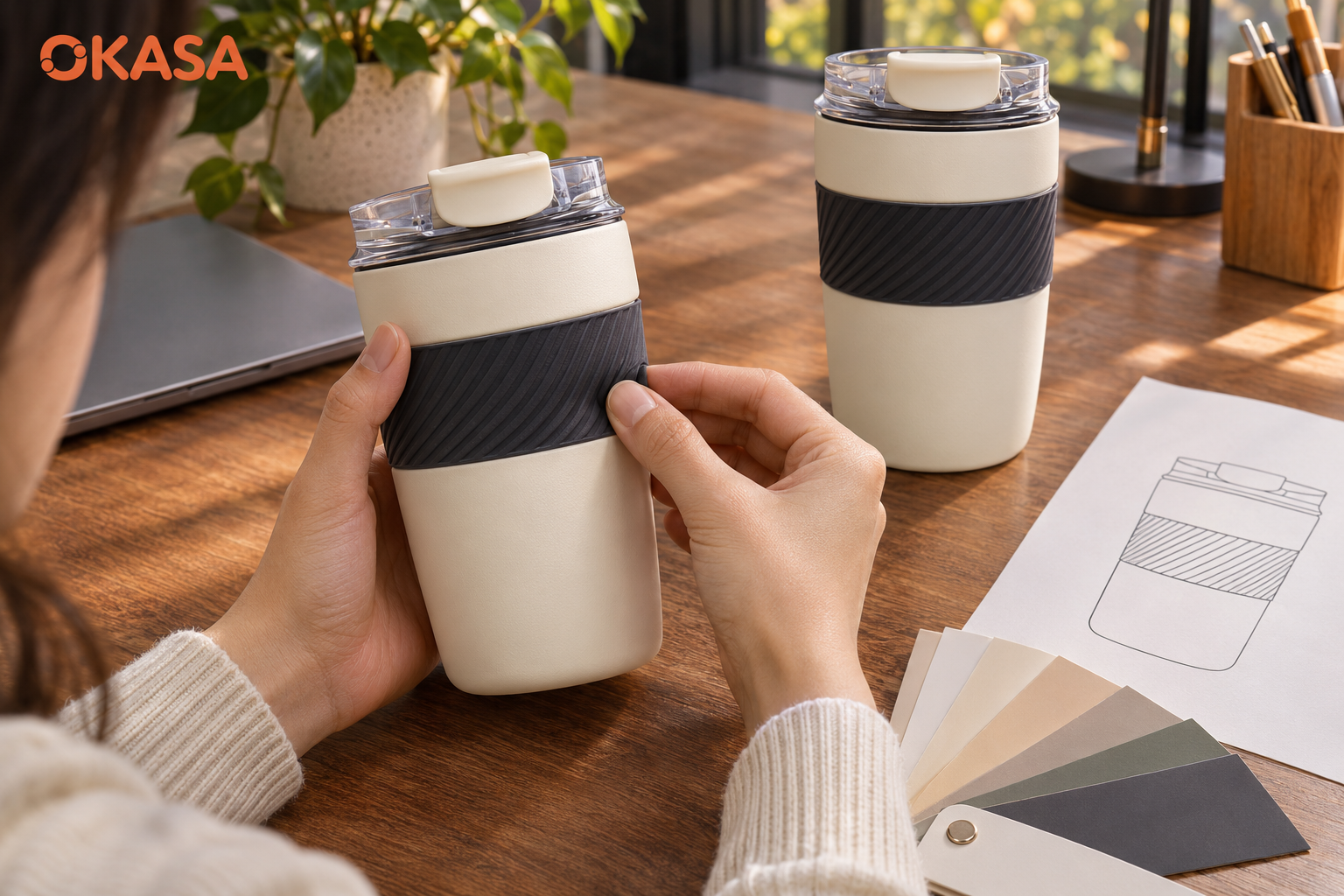
Illustrative sample-review scene. The silicone ring is on the cup wall, outside the drinking vessel; the drawing and color chips are planning props, not approved specifications.
|
Published item |
What the OKASA listing states |
What a buyer should confirm for an order |
|
Reference and capacity |
Model 25075501; 350 mL |
Filled volume definition and target recipient use |
|
Overall size |
14 × 7 cm |
Measurement orientation and finished dimensions with lid |
|
Metal construction |
304 inner wall, 201 outer wall |
Final component specification and relevant evidence |
|
Outer finish |
Powder-coated surface |
Approved color, finish feel and decoration method |
|
Grip |
Threaded silicone ring on the cup wall |
Position, fit, color, retention and inspection criteria |
|
Lid and pack |
Lid shown; packaging not specified on this listing |
Exact lid assembly, individual box, insert and carton plan |
The last column is not a criticism of a product page. A product page introduces a model; a purchase order defines a particular manufactured version. Keep those two documents connected by model number and sample code, then write every approved variation into the order file.
The logo area is a physical space, not a Photoshop layer
Imagine a brand manager asks for a 55 mm-wide mark. On a flat 70 mm-diameter product photo, it seems comfortable. On a curved cup with a textured sleeve, the same mark may wrap farther than expected or crowd the hand-held area. These measurements are an illustration of why to request an artwork proof, not a claim about the printable width of model 25075501. The real safe area must come from the final blank, coating, ring placement and chosen print process.
Request a dimensioned placement drawing showing height from the base, horizontal centerline, maximum width, orientation relative to any seam, and distance from the lid and grip. Put the actual logo file name and revision date on the proof. Ask for a front and a side photograph of the first decorated sample beside a ruler. A logo on the coating should be inspected on the coating you intend to buy. A brand-orange print that looks fine against white can lose contrast against a different cup color; the answer comes from the approved sample rather than a monitor.
For several recipient groups, decide whether variable names belong on the cup or on an insert card. Variable cup printing can change time, minimums and inspection. Price both routes separately and identify which approval changes when a name is edited.
Take care with any sustainability message printed on the cup. A claim about recycled input, reuse, or recyclability needs evidence that applies to the finished configuration and the market where it is sold. A silicone sleeve and mixed-material lid create a different disposal question from a bare steel vessel. A sustainable promotional products manufacturer should be able to discuss specific material documentation and realistic design choices, not merely apply a green icon to a box. If the program does not have evidence for a broad environmental claim, keep the recipient copy descriptive: a reusable stainless steel cup with a silicone grip, subject to the verified final material specification.
The desk test and the carry test answer different questions
Place the sample on a normal desk next to a laptop, not just on a seamless backdrop. Does the lid have a clear opening direction? Can a right-handed and left-handed recipient grip the sleeve without hiding the mark? Does the base feel secure on the intended surface? The point is to observe the interaction and write a clear acceptance question for the supplier. No single staged photograph proves stability, fit or safety, and this article does not imply that such tests have already passed.
Then repeat the review in the likely carry situation. An office welcome gift may only need to move from the lobby to a desk. A field team may want to carry it through trains and cars. For the latter group, the buyer should test cup-holder dimensions against the *actual* vehicle types if fit is a purchase requirement. The public 14 × 7 cm size does not state a base diameter or guarantee universal holder compatibility. Check where the sleeve catches on a holder rim. Observe whether a closed lid remains shut under the supplier’s proposed handling test. Define the procedure before treating “commuter cup” as a promise.
One buyer needs a desk drink and premium logo appearance; another needs portability and repeatable packing. They may start from the same reference yet require different samples and box configurations. promotional products sourcing China works best when the supplier identifies those decisions before the purchase order.
Put the box on the same table as the cup
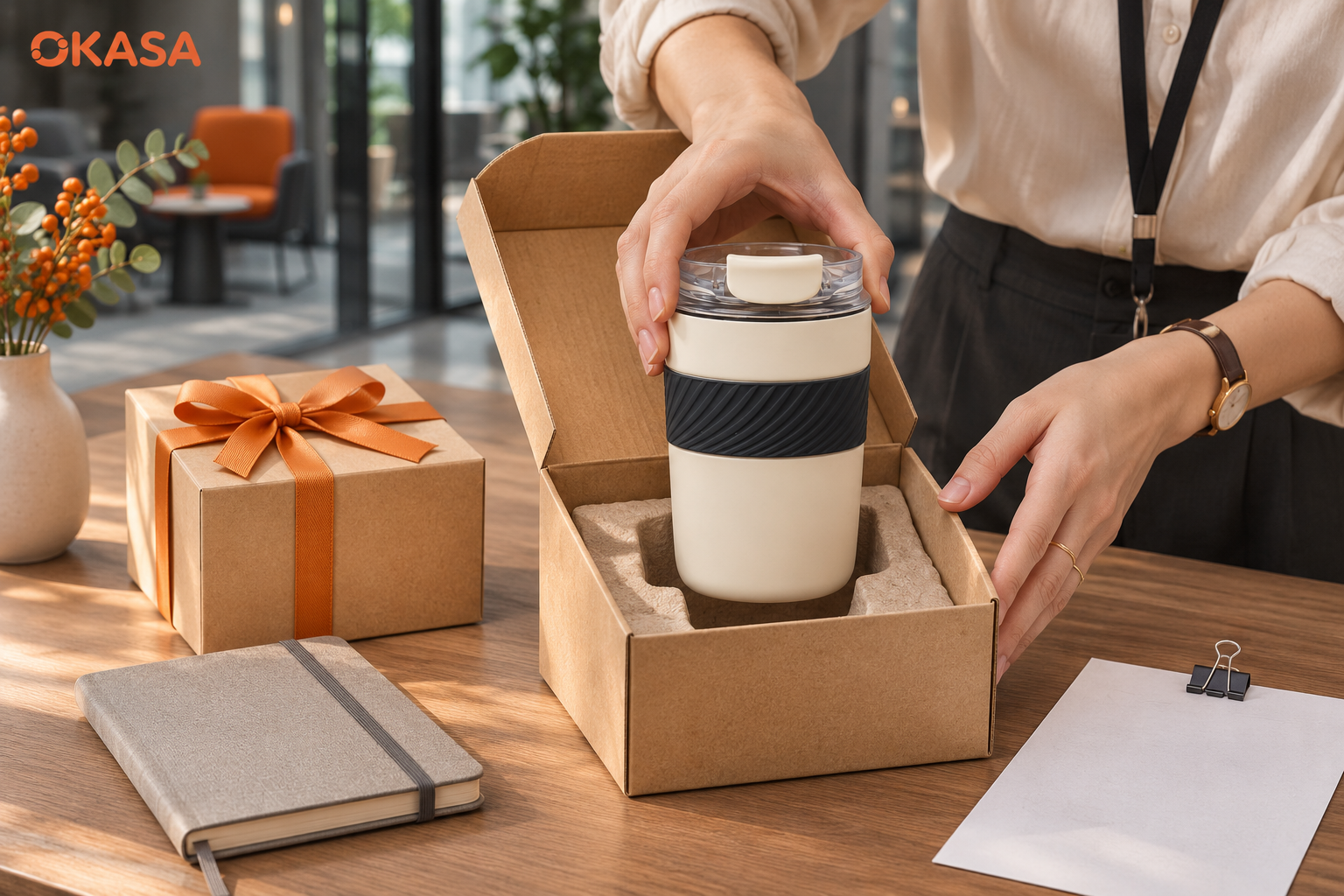
Illustrative corporate welcome-desk scene with a proposed insert. The box and insert pictured are concepts for discussion, not published specifications for model 25075501.
A gift box is part of the product experience, but it is also a piece of engineering. Measure the finished cup with its actual lid and silicone sleeve. Place it in the proposed insert and close the box. The sleeve should not rub off, fold or be forced out of position. The lid should have clearance. The insert should hold the cup without crushing a printed logo. Ship a representative packed sample through the agreed handling check before approving large-scale assembly. Whether the buyer wants a minimal single-unit pack or an elaborate set, the cup and insert need one signed sample reference.
OKASA also has a packaging category for buyers exploring boxes and paper tubes. Ask a custom gift box manufacturer for a dieline, board and surface specification, insert material, assembly instructions, packed dimensions and carton quantities for the *chosen* configuration. A box supplier’s early mockup may use a different blank cup or unprinted lid. Bring the decorated cup sample to that review. A few millimeters lost to an insert lip can change how easily the recipient lifts the gift out.
The same principle applies when the cup sits beside a notebook or pen. A custom notebook manufacturer can provide the writing item, but the packer still needs its finished thickness and closure position. A custom bag manufacturer can offer a tote for distribution, but the bag then needs to take the *boxed* gift, not only a loose cup used in a styling photograph. If you are sourcing through a custom corporate gift set manufacturer, agree which party owns the final assembly sample, printed insert and carton marking. Otherwise each component can be correct on its own while the assembled gift is awkward to use.
Check whether the logo faces up when the box opens, whether the care card is visible, and whether the cup can be lifted without pulling its ring. Individually shipped gifts also need a secure fit. State both delivery situations if one order must serve them.
A quotation that can survive a handoff
Buying teams often transfer a project from marketing to procurement to a fulfillment partner. At each handoff, “the white cup in the picture” loses a little precision. Give the request a single identifying name: OKASA 25075501, proposed customized configuration, revision A. Include the product page link, target quantity, color split, artwork version, decoration location, approved lid, band color, intended pack and destination. State when the finished goods are required and whether that means factory completion, shipment departure or arrival at a warehouse. Ask the supplier to quote the sample and bulk run separately when necessary.
Never infer an MOQ from a different model on the site. Model 25075501’s public page does not state one. Ask for the applicable minimum for the particular color, artwork process and packaging configuration, then ask whether mixed colors can share that minimum. Quantity breaks should be explicit. If you are buying 900 pieces for three offices, the supplier needs to know whether that is one 900-piece logo across three destinations or three distinct artwork versions of 300. Lead time can change accordingly; request a dated schedule tied to final artwork and sample approval rather than a free-floating “fast delivery” claim.
|
RFQ field |
Buyer entry that makes the quote actionable |
|
Product |
OKASA 25075501; confirm selected finish and complete lid |
|
Demand |
Total units, units by color, units by artwork and destinations |
|
Artwork |
Vector file, size, location, approved color reference and revision |
|
Recipient use |
Desk use, office carry, travel or another defined setting |
|
Sample |
Number of decorated samples and checks requested before signoff |
|
Packaging |
Individual pack, gift box, insert, care card and outer carton |
|
Timing |
Required delivery location, date and approval milestones |
|
Evidence |
Applicable material, food-contact and performance records needed for destination |
For bulk corporate gifting solutions, the quotation should identify who supplies each component and where the assembly check occurs. For an OEM promotional products manufacturer, give a technical change its own line: new sleeve color, revised lid, different coating, additional logo or custom insert. A changed component should trigger an updated sample or documented equivalence decision. A unit price without those conditions can be an opening conversation, but it is not yet a comparable production quote.
What an approval sample must settle
One beautifully decorated cup is a useful beginning. It becomes an approval sample only when the team records what it approves. Assign a sample code and date. Keep photographs of the front, back, lid opening, sleeve seam and full packed unit. Note the accepted body color, ring color, logo position, finish, lid version and packaging. Keep a physical sample where possible. Ask the manufacturer to match production to that reference and define how deviations will be handled before bulk production.
Work through a short, practical sequence with the actual sample. Inspect the decorated area under typical office light, then rotate the cup to see the logo’s alignment relative to the sleeve. Remove and replace the lid in the manner a recipient would. Wash or clean it according to the proposed care instruction and verify that the instruction is suitable for the finished decoration. Check how the silicone band behaves during ordinary handling. Finally, put the cup into its proposed individual pack and examine how the packed unit presents after opening. Record the method and result for each check; neither the catalogue description nor these illustrative images provides those results.
For a claim that matters contractually, use a measurable acceptance rule. “Logo looks centered” could become a signed artwork drawing with a stated placement tolerance. “Lid does not leak” needs a specified orientation, duration and handling condition. “Band stays in place” needs a repeatable procedure and an agreed threshold. The exact values depend on product design and project needs; do not copy arbitrary numbers from another cup. If an independent test is required, agree on the laboratory, final component set and report scope before booking production.
An promotional products manufacturer China buyer may ask for preproduction, during-production and final inspection photographs. What matters is traceability: the sample code, artwork revision and components on an inspection sheet should be the same as those on the order. If a requested substitute is proposed because a color or lid is unavailable, document the changed version and who approves it. A careful project file keeps the gift consistent even when the people managing it change.
The recipient’s second week
Marketing sees the handover photo. The recipient sees the cup again after the event. They need to know what to do with the lid, how to care for the finish and whether the sleeve can be cleaned without damage. Put verified care instructions in the pack; avoid generic claims such as “dishwasher safe” if the approved decorated assembly has not been assessed for that treatment. A short card can be more useful than an oversized brand message, especially when the gift is going to multiple countries. Confirm translations, pictograms and any required warnings for the destinations.
Consider replacement and complaints before the goods ship. If a recipient reports a broken lid, which lot can you trace from the individual unit or carton? Can you supply a matching replacement component, and who will respond? Set realistic response and spare-part arrangements with the manufacturer. For repeat programmes, retain the master sample and update it when a component changes. A cup used every morning earns its place in a gifting budget through repeated ordinary use, not through a claim that a box alone can prove.
A small mark away from the grip can remain visible during everyday use. If the team wants a slogan, campaign date or QR code, try the finished artwork at real size in the hand. The usable surface is limited.
Send a brief a manufacturer can price
If you are comparing suppliers, send the same completed brief to each one and request any exceptions in writing. Include the OKASA reference page, proposed quantity and split, desired ship-to country, the actual logo file, the target finish and the lid/packaging expectations. Ask for a decorated sample proposal, testing plan for any performance claims, lead-time milestones, carton specification and an itemized quotation. Invite the supplier to flag a decision that the available listing cannot answer. A good inquiry gives the team something specific to solve; a photograph and the word “price?” do not.
For a cup-led programme, state the purpose in the first line: “We are considering model 25075501 for an office welcome gift.” Add quantity and deadline in the second. Attach the artwork and describe how it should look above or below the silicone ring. If there is a matching notebook or box, attach finished dimensions and pack concept. Ask the supplier to confirm the viable logo area, sample route, minimum quantity, applicable materials documentation and pack design for this exact build. You will get a more useful reply when the open questions are explicit.
The product page is a sensible start; the signed cup, artwork proof and packed sample are the production target. Bring those three objects into agreement and the branded gift has a much better chance of feeling as intentional at the recipient’s desk as it did in the presentation.