

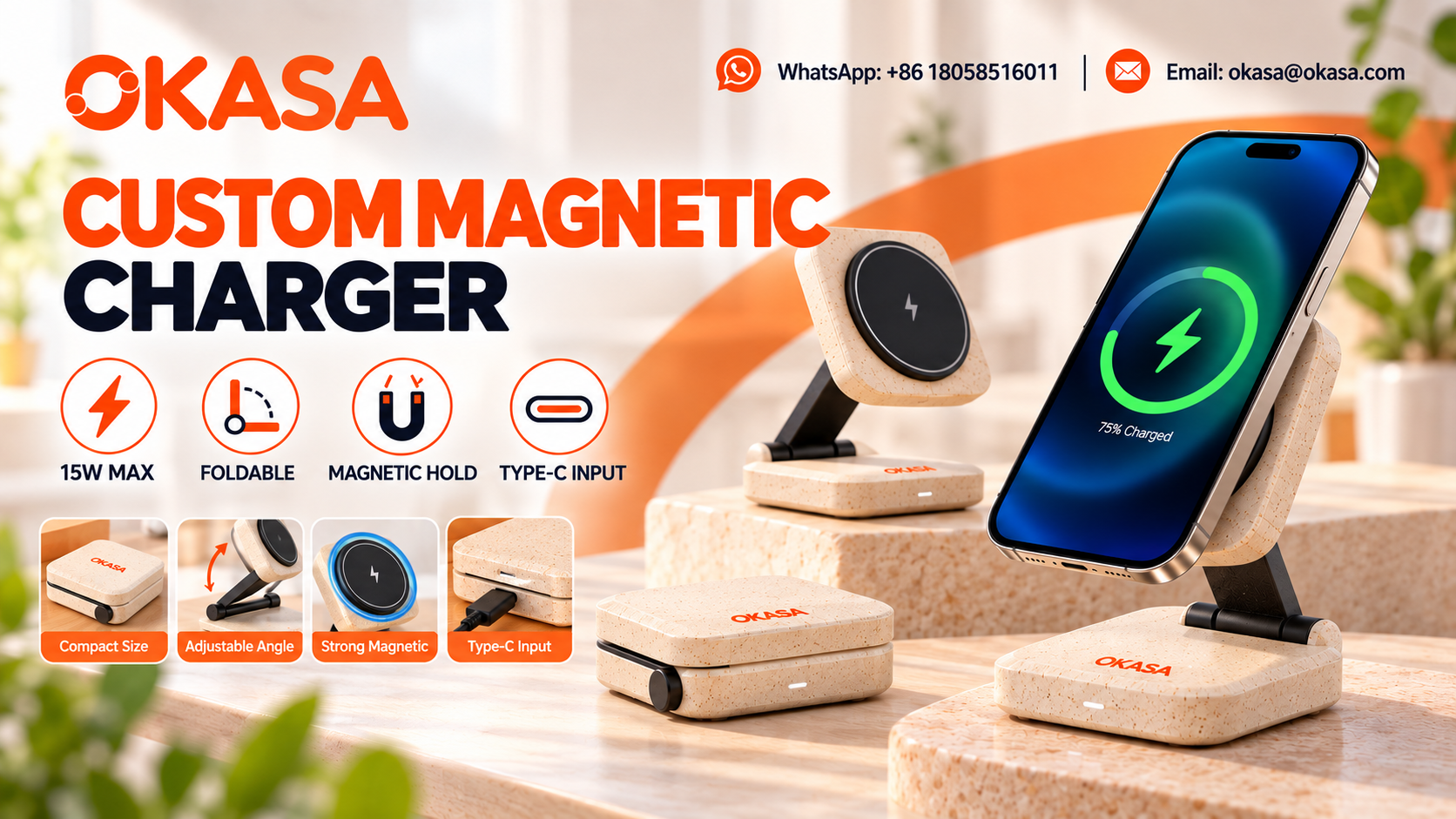
K21 foldable magnetic wireless charging stand for corporate gift programs
A magnetic charging stand can look like one of the simplest products in a corporate gift catalogue. It folds, it holds a phone and it sends power without a cable plugged into the handset. That apparent simplicity is exactly why buyers often underestimate the specification work behind a reliable bulk order.
The difficult questions sit beneath the photograph. Which phones attach securely without an additional ring? What happens when a user keeps a case on the device? Which input adapter is required before the stand can approach its stated output? Does the phone remain stable in portrait and landscape positions? Will the hinge still hold its angle after repeated use? Where can a logo be printed without covering a charging zone, indicator or moving joint? How should a distributor describe charging speed without promising a result that depends on the recipient's phone, case, cable and wall adapter?
This guide is written for promotional distributors, corporate procurement teams, event agencies and private-label buyers considering a foldable magnetic wireless charger such as the K21 foldable magnetic wireless charging stand. It follows nine practical buying steps, from intended use to mass-production inspection. The aim is not to turn a buyer into an electrical engineer. It is to show which decisions must be written down before a supplier can quote, sample and manufacture responsibly.
Why Wireless Charging Gifts Need a Better Brief
Many enquiries begin with a screenshot and a short message: “Please quote this with our logo.” A supplier can respond with a price, but the buyer still does not know whether that price covers a product suitable for the intended market. Two stands that look similar may use different coils, controller boards, magnets, hinge structures, housing materials and input requirements. They may also be packed with different cables and instructions.
The published K21 specification provides a useful starting point. The unit folds to approximately 70 × 70 × 25 mm, uses a wheat-straw material housing, accepts power through a Type-C interface and lists output levels of 2.5 W, 5 W, 7.5 W, 10 W and 15 W. The stated input is 12 V/2.5 A. These details describe the available design; they do not guarantee that every phone will receive 15 W under every condition. Actual performance depends on the receiving device, charging protocol, alignment, case construction, power source, cable and temperature.
That distinction should appear in both the purchasing file and the marketing copy. A careful buyer approves a product configuration and a test method. A careful seller describes a maximum supported configuration with suitable conditions, not a universal real-world speed.
The same discipline applies when this item is part of a wider program. A buyer may be working with a custom corporate gift set manufacturer to combine the charger with stationery, drinkware or packaging. Each component has its own production minimum, approval path and compliance questions. The project only becomes manageable when the specifications are separated and then brought back together in one timeline.
The Nine Step Buying Method
Step 1 Define the Recipient and the Moment of Use
Start with the recipient, not the wattage. A charger supplied to sales representatives who travel every week has a different job from one placed on employees' permanent desks. An executive conference gift may need compact premium packaging. A high-volume event giveaway may need a faster packing method and shorter instructions. A distributor selling into several countries may need one product configuration but multiple language inserts.
Write a short use statement before requesting a quotation. For example: “A foldable desk and travel charger for 1,500 conference delegates in Germany and France, used mainly with current premium smartphones, individually boxed, with a one-color logo and bilingual instructions.” This sentence tells the supplier far more than “15 W magnetic charger.” It reveals quantity, region, device expectation, portability, branding, pack format and language work.
The recipient profile also affects the acceptable compatibility strategy. If devices are controlled by an employer, the buyer may know the main phone models. If the gift will be distributed at a public event, the range is less predictable. The solution might include a clear compatibility statement or an optional magnetic ring, but neither should be assumed. Ask the supplier what is included and test the exact proposed configuration.
For a campaign that includes several product types, define whether the charger is the central gift or an accessory. A custom notebook manufacturer will need paper, binding and cover decisions that have nothing to do with electronic testing. A custom drinkware manufacturer will need capacity, food-contact materials, lid construction and surface-finish instructions. Listing those workstreams separately prevents one late component from hiding inside a vague “complete set” deadline.
|
Use scenario |
Specification priority |
Typical risk to resolve early |
|
Permanent office desk |
Stable viewing angle, cable routing, daily hinge use |
Stand gradually slips or occupies too much desk space |
|
Business travel |
Folded size, weight, surface protection, simple setup |
Product opens in the bag or scratches another item |
|
Conference giveaway |
Broad compatibility explanation, fast pack-out, clear instructions |
Recipients assume every phone attaches magnetically |
|
Client gift set |
Visual coordination, insert design, premium presentation |
Packaging is approved before all component sizes are final |
|
Retail or distributor program |
Claims, labeling, documentation and consistent replenishment |
Product description promises a speed not reached by all devices |
Step 2 Build a Quote Ready Technical Specification
A useful request for quotation does not need a long engineering document, but it must identify the variables that change cost and risk. For K21, begin with the referenced model and record the published construction: folded size, wheat-straw housing, Type-C input and supported output levels. Then add the project-specific requirements.
State the target quantity, destination market, required-in-hand date, acceptable product color, logo method, logo size, cable requirement, instruction languages, individual packaging and inspection level. Specify whether a wall adapter is included. In many promotional orders, the product is supplied with a cable but without an adapter. That distinction affects cost, pack contents, compliance work and the user's ability to reach a higher charging mode.
Do not write “fast charging required” as the complete performance clause. Ask the supplier to identify the input source used for its test, the receiving phone or test load, the cable and the conditions needed to reach each supported level. If the program requires a particular device family, name the exact models and software generation available during approval.
The housing description also needs care. “Eco material” is not a measurable purchase specification. For a wheat-straw composite, ask what the material declaration covers, whether the visible speckle pattern varies, what color tolerance is practical and whether the bulk units will match the approved sample in surface feel. Sustainability language should be supported by relevant documents and phrased accurately. A sustainable promotional products manufacturer should be able to discuss material choices without turning a partial bio-based content story into an unsupported environmental claim.
|
RFQ field |
What the buyer should state |
What the supplier should confirm |
|
Product reference |
K21 or approved equivalent configuration |
Dimensions, material, hinge and charging assembly |
|
Quantity |
Order quantity plus possible reorder volume |
Price breaks and component minimums |
|
Destination |
Country or countries of final distribution |
Relevant labeling, documentation and test discussion |
|
Power input |
Intended adapter and cable arrangement |
Required input and included cable specification |
|
Device scope |
Exact test phones or recipient profile |
Attachment and charging test plan |
|
Branding |
Artwork, size, color, method and location |
Printable area, setup cost and durability expectation |
|
Packaging |
Box type, insert, instructions and language |
Dieline, pack dimensions, print minimum and lead time |
|
Delivery |
Required-in-hand date and shipping basis |
Sample, production and transport schedule |
Step 3 Separate Magnetic Attachment from Wireless Charging
Magnetic attachment and wireless power transfer are related, but they are not the same function. A phone may support wireless charging yet lack the magnetic arrangement needed to stay on the stand without an appropriate case or ring. Another phone may attach well but negotiate a lower charging level. Buyers should test both functions separately.
For attachment, observe whether the phone centers easily, remains secure when the stand is moved and stays in position in portrait and landscape orientation. Repeat the check with the cases recipients are likely to use. A thick case, metal plate, card wallet or poorly positioned accessory may weaken the hold or interfere with charging. Avoid writing compatibility copy from a bare-phone test alone.
For charging, record whether power begins consistently, whether it continues without repeated connection alerts and whether the phone or stand becomes unusually warm during the agreed test period. Compare results using the proposed bulk cable and intended adapter. The test should not quietly substitute a laboratory power source that recipients will never have.
This separation makes troubleshooting easier. If a phone will not stay attached but charges when placed flat, the issue is magnetic compatibility. If it attaches securely but does not charge, examine alignment, receiving capability, case interference, cable, adapter and protocol. One sentence in a product brochure cannot replace this diagnostic work.

Procurement team testing K21 dimensions angle cable and phone compatibility
Step 4 Approve the Fold Mechanism and Viewing Angles
The hinge turns a charging pad into a stand, so it deserves its own approval criteria. A sample may feel firm when new yet loosen after repeated movement. Ask how the factory controls hinge resistance and what cycling check is practical for the project. The goal is not to demand an arbitrary laboratory number. It is to agree on a repeatable check that reflects actual use.
During sample review, open the stand to several useful angles. Test a phone vertically for reading notifications and horizontally for watching content or joining a call. Tap the screen. Rotate the phone. Plug and unplug the Type-C cable. The base should remain stable, and the magnetic pad should not drift downward during normal interaction.
Pay attention to fingers and cables. The hinge should move without an exposed sharp edge or an awkward pinch point in ordinary handling. The cable entry should remain accessible at realistic angles. When folded, the parts should sit evenly without scraping the branded surface. If the item will be carried, review whether the hinge needs a protective sleeve or whether the individual box already prevents movement.
Step 5 Test Power as a Complete System
Charging output is a system result. The stand, receiving device, phone settings, alignment, case, cable, adapter and ambient conditions all influence what happens. This is why a list of supported levels—2.5 W, 5 W, 7.5 W, 10 W and 15 W—must be read together with the input requirement and device compatibility.
Create a small test matrix. Include at least the main device families in the recipient group, the proposed cable, the intended adapter specification, bare phones and representative cases. Record whether charging starts, whether it remains stable, the orientation, any abnormal heat, and the result after a defined period. If precise power measurement is important, use suitable test equipment and agree on the method with the supplier or laboratory.
Temperature requires proportionate attention. Some warmth can occur during wireless charging, but unexpected heat, repeated interruptions or visible deformation needs investigation. Testing should use the intended cable and power source, not an unrecorded substitute. If the project has specific regulatory or corporate safety requirements, share them before quotation. Testing added after production is rarely a pleasant surprise for either buyer or supplier.
A professional OEM promotional products manufacturer should be willing to identify what has been tested, which components are included and where the performance boundary lies. That is more valuable than a catalogue icon by itself.
Step 6 Design Branding Around the Functional Zones
A compact charger offers limited decoration space. The best logo location is not automatically the largest flat-looking area in a photograph. The magnetic pad, charging alignment area, hinge, indicator, cable port and contact surfaces all have functional or wear considerations. Branding must work around them.
Ask for a marked artwork template showing the maximum print area and no-print zones. Approve the logo at actual size. Fine legal text that looks clear on a computer screen may close up during printing. A large solid mark may show minor surface variation more readily on a speckled wheat-straw housing. If a color match is important, approve a physical sample under ordinary light rather than relying on a monitor.
The decoration method should suit both the material and the quantity. The supplier may propose pad printing, screen printing, UV printing or another process depending on the artwork, surface and order. Do not select a method only because it has been used on metal drinkware or paper packaging. Each substrate behaves differently.
Check adhesion and wear on the production-relevant sample. Fold the product, place it on a desk, handle it with clean and slightly oily fingers, and wipe it using the permitted cleaning method. The logo should remain legible without interfering with the product's moving parts. If the gift includes a printed sleeve or instruction card, the brand system can carry more detailed messaging there while the device itself stays clean.
This is also where cross-category sourcing can help. A custom bag manufacturer may supply a travel pouch, while a custom gift box manufacturer develops the presentation pack. However, a shared color name does not guarantee an identical appearance across fabric, molded composite, printed paper and ink. Approve each material separately, then review the assembled set under the same lighting.
Step 7 Engineer Packaging for Protection and Clarity
Packaging has three jobs: protect the hinge and surfaces, present the brand and help the user succeed. A beautiful box that allows the charger to move during transport is unfinished engineering. A secure insert with no useful instructions can still produce avoidable customer-service questions.
Give the packaging supplier final product dimensions, cable arrangement and accessory list only after the product configuration is frozen. If the stand is packed folded, ensure the hinge cannot open and rub against the box. Keep the cable connector from marking the housing. If a magnetic ring or other accessory is included, give it a fixed location and explain its purpose.
The instruction card should cover setup in a few clear steps: connect a suitable Type-C cable and power source, open the stand, align a compatible device, confirm charging and remove objects that may interfere. Add the approved compatibility wording, input information, required market statements and customer-service details. Small type saves paper but can make a technology gift harder to use. Test the insert with someone who has not seen the product before.
For a corporate set, calculate the complete packed dimensions and weight before final freight planning. A charger may be compact, yet a deep presentation box with several components can increase carton volume quickly. Bulk corporate gifting solutions work best when the pack is treated as part of the product rather than an attractive decision added at the end.
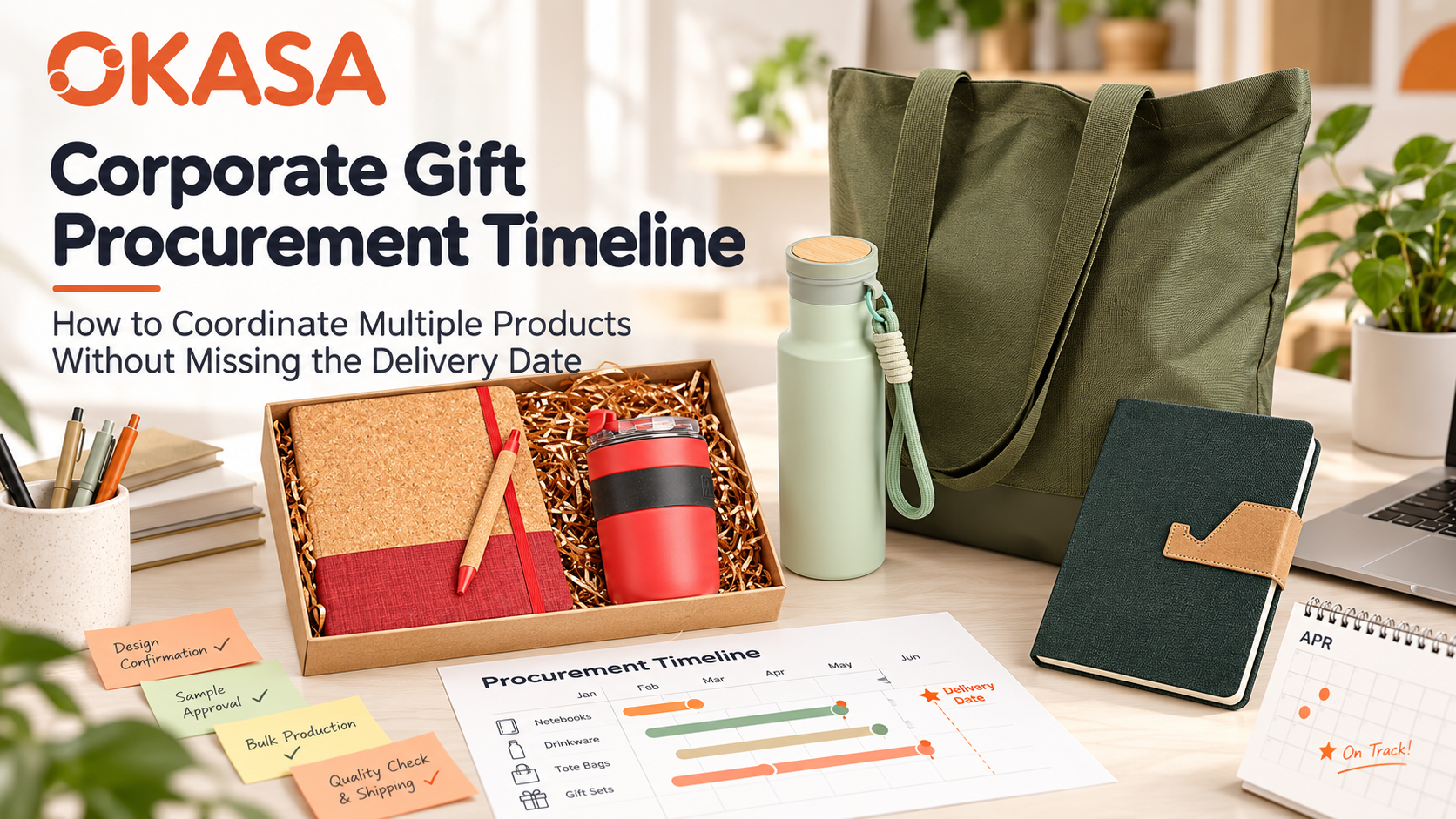
Step 8 Build a Realistic Sample and Production Timeline
Technology gifts need time for more than logo approval. The buyer may review an undecorated product sample, a branded sample, packaging artwork, instructions and a packed pre-production sample. Changes made at one stage can affect another. Moving the logo can alter the artwork template; changing the cable may alter the insert; adding an accessory can change the box depth and shipping carton.
Work backward from the required-in-hand date. Reserve time for international sample shipping, internal stakeholder review, compliance questions, mass production, inspection, export packing and transport.If the event date cannot move, identify the last safe approval date and the decisions that must be frozen by then.
|
Milestone |
Buyer action |
Supplier evidence |
Release condition |
|
Product selection |
Confirm use case, markets and quantity |
Product specification and commercial offer |
Configuration is suitable for project |
|
Functional sample |
Test attachment, charging, hinge and cable |
Sample record and available documents |
Test matrix completed |
|
Branding sample |
Approve logo size, color, position and adhesion |
Decorated sample and artwork proof |
Signed decoration approval |
|
Packaging proof |
Review dieline, insert and instructions |
Digital proof or physical pack sample |
Contents and claims confirmed |
|
Pre-production sample |
Review complete packed unit |
Final reference sample |
No unresolved specification conflicts |
|
Production release |
Issue purchase order and approved files |
Production schedule |
Deposit and approvals complete |
|
Inspection |
Review sampled bulk units and cartons |
Inspection report |
Shipment accepted or corrective action agreed |
When buyers discuss promotional products sourcing China, lead time is sometimes reduced to a single number. A more useful schedule separates approvals from production. The factory controls manufacturing time; the buyer also controls artwork response, sample decisions and specification changes. Both sides need dates.
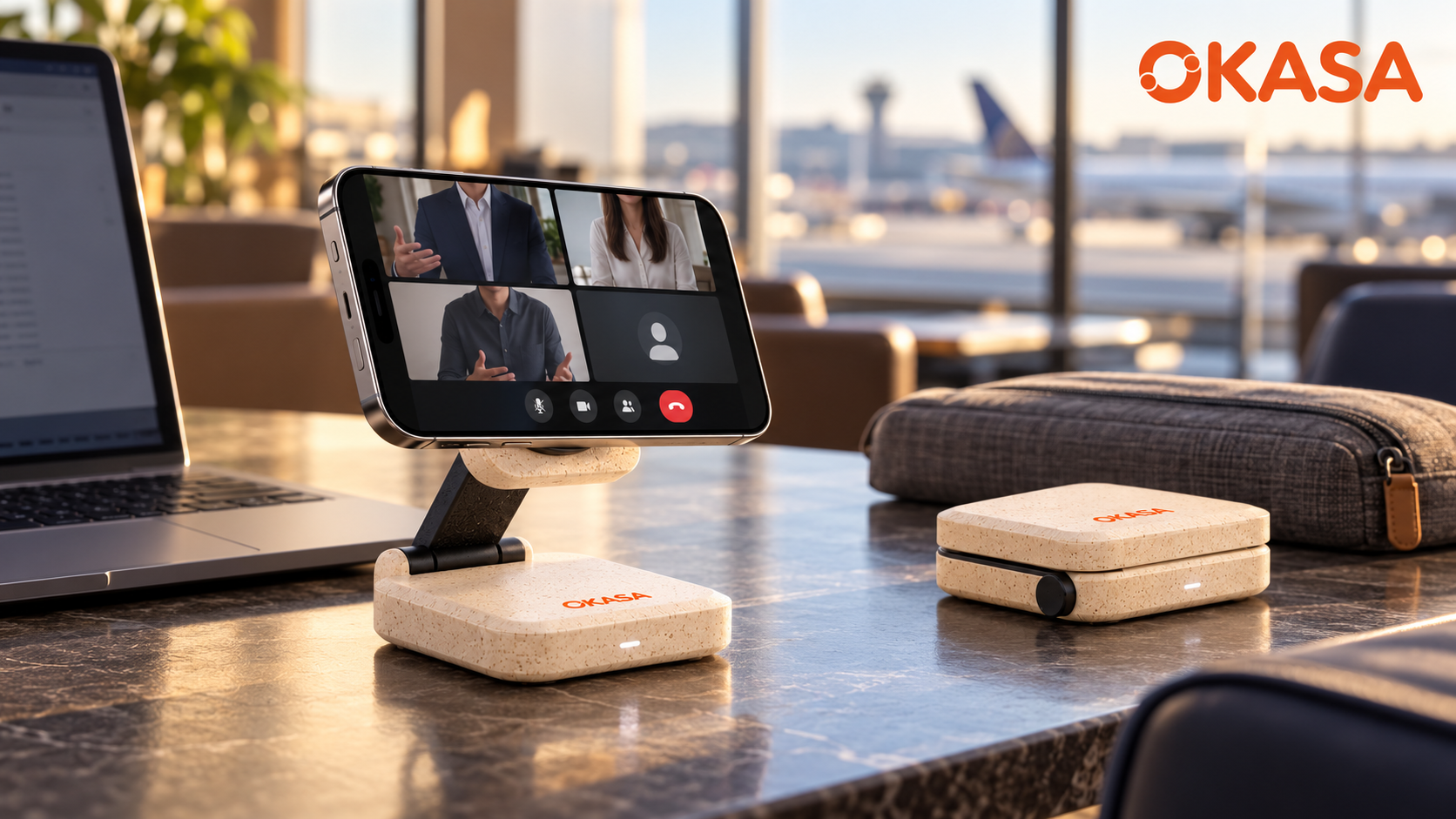
K21 foldable magnetic charging stand used for a business video call while travelling
Step 9 Inspect the Bulk Order Against the Approved Reference
Final inspection should return to the written specification and approved sample. It should not rely on a general impression that the goods “look fine.” Define the sampling plan, defect categories and acceptance criteria before the inspector arrives.
Begin with identity and count. Confirm model, quantity, color, logo, pack contents, instruction version, cable and carton marks. Check dimensions and folded condition on sampled units. Examine the housing for cracks, contamination, uneven fit, sharp edges and unacceptable color variation. Review logo position, legibility and adhesion.
Functional checks should include opening and closing, hinge resistance, base stability, magnetic attachment and charging initiation with the agreed test setup. The inspector should know which reference phone, case, cable and power source to use. A random phone and an unknown adapter do not produce a meaningful pass or fail result.
Inspect packaging as a system. The product should be clean, secured and oriented correctly. Accessories and instructions must be present. Individual boxes should close properly, and export cartons should match the approved pack count. If the campaign uses several languages or destination labels, verify the correct version against the shipping allocation.
No inspection can test every unit in a commercial order unless the project specifically purchases 100 percent screening. The sampling plan therefore matters. Agree on critical, major and minor defects. A safety issue, missing electronic function or wrong item may be treated differently from a small cosmetic mark. The purchase specification should make that logic visible before production is complete.
This structured approach is one reason experienced buyers look beyond the lowest quotation. A capable promotional products manufacturer China partner should help turn the brief into checkpoints that can actually be verified. Price remains important, but an unclear low price can become expensive after rework, delay or recipient complaints.
How to Compare Supplier Quotations Fairly
Place offers in a comparison sheet before negotiating. Normalize the included product, cable, branding, packaging, testing, sample cost, tooling or setup, delivery term and lead time. A quotation that includes a printed box and cable cannot be compared directly with one for a loose device. A price based on a standard housing color is not the same as one based on a dedicated color requirement.
OKASA positions itself as a supplier across gift sets, drinkware, notebooks, bags, packaging and tech gifts. For a buyer seeking a custom branded merchandise manufacturer, the advantage of a broader range is coordination: one project can align decoration, packaging and delivery across categories. Coordination still requires separate specifications. A single purchase order should not blur the technical responsibilities of each item.
Common Buying Mistakes and Better Alternatives
Mistake 1: Assuming every wireless charging phone is magnetically compatible. Wireless charging capability does not automatically mean the device will attach securely. Define the intended phones, cases and any included magnetic accessory.
Mistake 2: Publishing “15 W fast charging” without conditions. Use wording that reflects the supported maximum and the required compatible device and input configuration. Approve claims with the technical and compliance teams responsible for the destination market.
Mistake 3: Testing with a different cable or adapter from the bulk pack. The approved system includes the accessories recipients will receive or reasonably be expected to use. Record them.
Mistake 4: Approving the logo from a screen proof only. Compact products need actual-size artwork review and, where practical, a decorated physical sample.
Mistake 5: Ordering the gift box before freezing the product and cable. Final pack dimensions should follow the approved contents. Otherwise the insert may need rework.
Mistake 6: Treating wheat-straw appearance as perfectly uniform. Natural-looking composite surfaces can show controlled variation. Define the acceptable range using physical samples.
Mistake 7: Leaving inspection until the shipment is ready. Agree on defect definitions, test equipment and sample method during order placement.
Questions Buyers Often Ask
Can the K21 charge every smartphone
No universal claim should be made. The phone must support compatible wireless charging, and direct magnetic attachment depends on the device or case configuration. Buyers should test the main target models with the intended cases, cable and power input before confirming marketing copy.
Does a listed 15 W output mean every user receives 15 W
No. It describes a supported maximum configuration, not a guaranteed result for every device. The receiving phone, protocol, alignment, case, cable, adapter and temperature can affect the negotiated power and charging behavior.
What should be included in a sample request
Request the exact housing color and material, intended charging configuration, bulk cable, proposed logo method, packaging concept and instruction language. Provide a device list and ask the supplier to state any differences between the sample and planned production.
Where should the logo be placed
Use the supplier's artwork template and keep decoration away from charging, indicator, hinge, cable and high-wear zones. Approve the mark at actual size on a production-relevant sample.
Can this charger be combined with other corporate gifts
Yes, provided the set is engineered around final dimensions and separate quality requirements. A charger can sit beside stationery, a bag or drinkware, but electronics should not be allowed to move against harder components during transport. The insert and instructions should make the electronic item easy to identify and use.
What information should a buyer send for a serious quotation
Send quantity, destination, deadline, intended users, required device scope, product color, artwork, branding method if known, cable and adapter expectations, individual packaging, instruction languages, test requirements and delivery terms. If some choices remain open, identify them as flexible rather than leaving them unstated.
A Better RFQ Produces a Better Gift
The strongest technology-gift projects do not begin with the longest feature list. They begin with a clear user, a realistic compatibility scope and a specification that a factory can build and an inspector can verify. For a foldable magnetic charger, that means treating attachment, charging, hinge behavior, branding and packaging as separate approval subjects.
K21 offers a compact format for desk use and travel, with a wheat-straw housing, Type-C input, foldable stand and multiple supported output levels. Its value in a corporate program depends on the work around those features: accurate claims, representative device tests, careful artwork placement, useful instructions and consistent bulk inspection.
If you are comparing suppliers, send the same brief to each one. Ask them to state assumptions and exclusions. Test the exact sample configuration. Freeze the pack only after the contents are final. Then place the approved sample, specification and inspection criteria in one order file.
That process may take a little more discipline before production. It usually saves far more time when thousands of recipients begin using the product.
Ready to Source Custom Magnetic Wireless Charging Gifts
Share your quantity, destination markets, device scope, deadline, artwork and packaging needs with OKASA.