

Custom stainless steel bottle buyer’s checklist for procurement teams
The “500 ml” line on a bottle brief tells a factory surprisingly little about cost. One design may be a straightforward promotional piece; another, at the same capacity, may need a more demanding steel build, verified vacuum performance, a complex lid, a special coating, multiple decoration steps, presentation packaging and market-specific tests. Those are different manufacturing jobs. A useful request for quotation therefore begins with a defined bottle and an intended market, not with the question, “How much is a 500 ml bottle?”
For a dependable quote, send the supplier at least eight facts: target quantity, destination country, required-in-hand date, capacity, construction, lid preference, surface finish and artwork. Add packaging, testing and delivery terms if those decisions are already known. A qualified custom drinkware manufacturer can then separate the cost drivers, flag conflicts and offer realistic alternatives instead of protecting itself with a vague estimate.
This guide is written for a buyer who needs to compare factories, defend a sourcing decision and avoid a late budget surprise. It does not publish a universal unit price because no honest factory can do that without a specification. Instead, it explains where the money goes, what commonly raises the minimum order quantity, how to compare quotations on equal terms and which details should be fixed before the purchase order is released.
Why Similar Bottles Produce Different Quotations
A catalogue photograph conceals most of the production decisions. You cannot see wall thickness, the grade of every metal component, the geometry of the vacuum gap, the gasket compound, the number of lid pieces, the coating system or the pack-out method. Nor does the image reveal whether the offer includes logo setup, a decorated sample, laboratory work, individual boxes, export cartons or inspection.
Consider a common buyer brief: “double-wall stainless steel bottle, 500 ml, matte black, one logo.” It sounds precise, yet the factory still needs answers. The inner wall might be 304 stainless steel, but the outer wall also needs its own material callout. “Double wall” must be clarified as vacuum insulated or non-vacuum. The buyer must define any temperature-retention claim. PP, Tritan, stainless steel and bamboo create very different lid constructions. A laser mark through coating is not the same job as a screen print or a logo on a bamboo inlay. The team must also choose between a white box, printed tube or fitted corporate gift set and identify the food-contact rules at the destination.
Each answer changes material use, purchasing, line setup, process time, scrap risk, inspection and documentation. That is why a low opening price and a high opening price may not describe the same article at all. Before negotiating, make the offers comparable.
First Build the Specification That the Quote Will Follow
A buyer does not need to arrive with an engineering drawing, but the commercial brief should contain measurable choices. The following fields are enough to begin a serious conversation.
|
Specification field |
What the buyer should state |
Why it changes MOQ or cost |
|
Intended use |
Office, travel, sport, event giveaway, retail or gift set |
Changes lid, durability, pack and test expectations |
|
Capacity and size |
Target volume plus acceptable dimensional range |
Changes steel consumption, forming tools and carton cube |
|
Wall construction |
Single wall, double wall or vacuum insulated |
Changes forming, welding, vacuum process and performance checks |
|
Food-contact surfaces |
Required material for inner wall, lid contact parts and gasket |
Changes material purchase and compliance evidence |
|
Lid and carry feature |
Screw lid, push lid, straw, handle, loop or lanyard |
Changes part count, tooling dependency, assembly and leak risk |
|
Surface finish |
Raw stainless steel, painted, powder coated or another defined finish |
Changes color setup, curing, handling and reject risk |
|
Branding |
Method, colors, size, locations and artwork |
Changes fixtures, screens, machine time and approval steps |
|
Packaging |
Protective bag, white box, printed box, paper tube or gift-set insert |
Changes print MOQ, dimensional weight and assembly labor |
|
Market and tests |
Destination, user group, required reports and performance tests |
Changes sample count, laboratory scope and document review |
|
Delivery basis |
EXW, FOB, another agreed Incoterms rule, or a landed scenario |
Determines which transport costs and risks appear in the offer |
The specification should also say what remains flexible. If the deadline matters more than an exact shade, allow the supplier to propose stock colors. If the hand feel matters more than the precise capacity, give an acceptable volume range. Flexibility is commercially useful only when it is written down. Unrecorded flexibility turns into argument after samples arrive.
OKASA’s D014 bottle is a practical example of how several choices sit inside one product. In the published specification, the beverage-facing wall is 304 stainless steel, the exterior wall is 201 stainless steel, and a bamboo detail appears on the PP lid. OKASA lists the bottle at 68 × 255 mm and 273 g net. Those facts form a starting specification. They do not, by themselves, define logo coverage, color tolerance, performance criteria, packaging, test scope or delivery terms. A bulk quote still needs those project details.
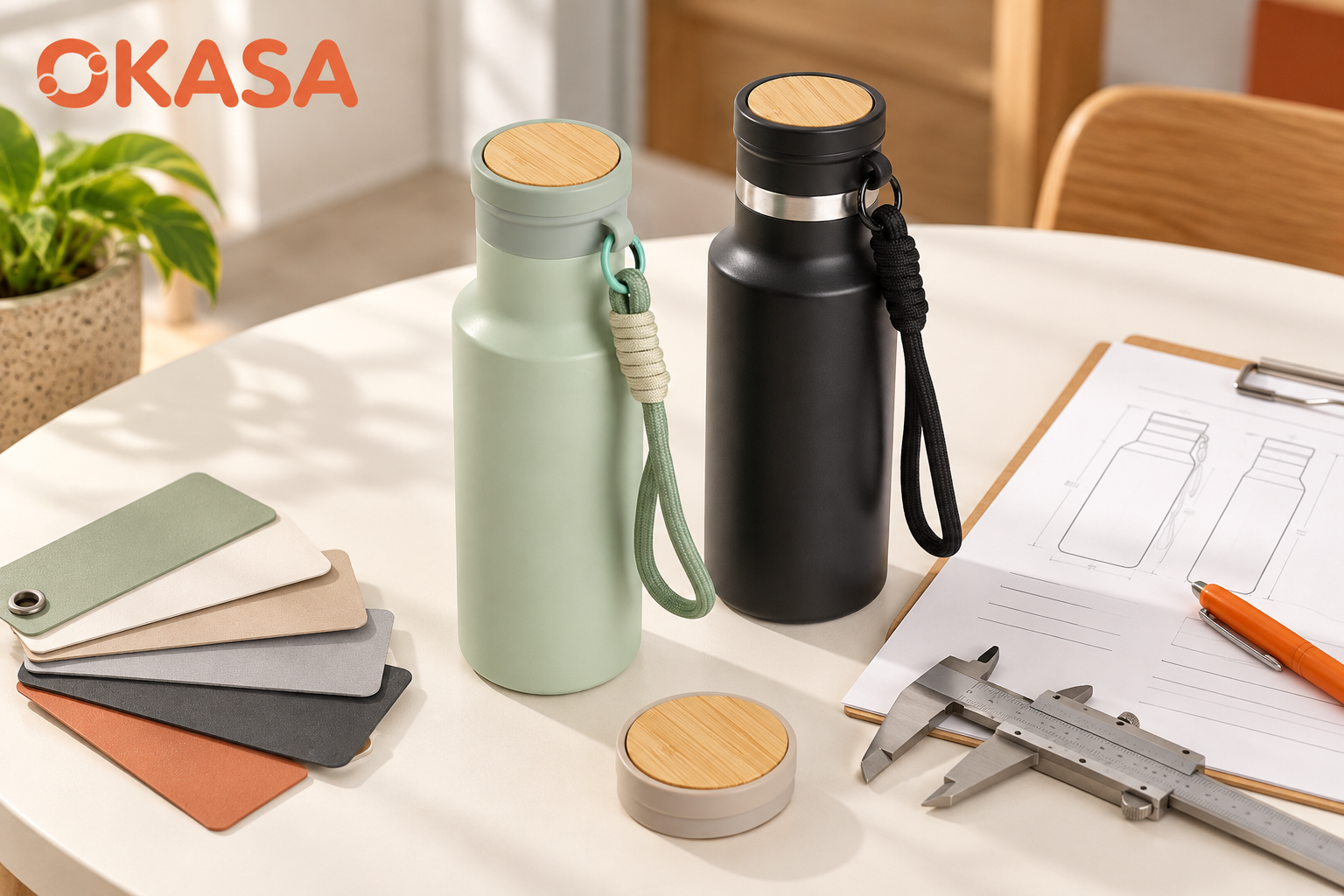
A useful bottle quote is built from material, dimension, finish, artwork and approval decisions
The Nine Cost Layers Inside a Custom Bottle Quote
The clearest way to read a quotation is to open it into layers. Some suppliers combine several layers in the unit price. Others show setup, sampling and packaging separately. Either approach can work, but the buyer must know what is included.
1. Metal Body and Forming
The body begins with material selection and the amount of metal used. Capacity, diameter, height, wall construction and target weight influence consumption. Deep drawing, trimming, neck forming, welding and polishing require equipment time and process control. A narrow neck or unusual shoulder may be less forgiving than a familiar straight-wall shape. If the project modifies an existing model only through color and branding, it normally uses a more established production route than a bottle requiring new dimensions or a new body profile.
Do not reduce this discussion to the words “stainless steel.” Ask which grade is used in each relevant component and whether the quoted sample matches the proposed bulk construction. The D014, D015 and D016 pages are specific: 304 stainless steel on the inside, 201 stainless steel on the outside. That is more useful than a quotation that simply says “SS bottle.” The inner wall, outer wall, neck, base, lid metal and decorative metal band do not automatically share one grade.
2. Insulation and Functional Performance
These three constructions should never be treated as synonyms: single wall, double wall without vacuum, and vacuum insulation. The last option needs the space between the walls to be evacuated and sealed. A display sample can look flawless even when that unseen function is poor. If a campaign promises temperature retention, define the test before approving the claim: starting liquid temperature, fill level, ambient temperature, time interval, lid condition and acceptable result. A phrase such as “keeps drinks hot all day” is not a test method.
Performance requirements can influence price through process yield, test time and inspection. They also influence risk. A visually perfect bottle with weak vacuum performance will fail the end user. Buyers should separate appearance approval from functional approval and keep both in the quality plan.
3. Lid, Gasket and Carrying Parts
The lid is often the most underestimated cost and quality area. A simple screw lid with a proven gasket has fewer dependencies than a multi-part straw mechanism, flip top, lock, hinge, handle and silicone assembly. Natural-looking features also require definition. A bamboo inlay may vary in grain and tone, so the approval should distinguish acceptable natural variation from defects such as cracks, poor fit, glue marks or rough edges.
A lanyard or loop looks inexpensive, but it adds color matching, hardware, knotting or wrapping, assembly and pull-strength considerations. On the D014 design, the lanyard is a visible part of the product identity. If a buyer wants a custom cord color, custom weave or dedicated metal part, that choice may carry a different minimum from the bottle body itself.
4. Surface Preparation, Coating and Color
Surface finish affects both perceived value and factory control. A bare stainless exterior has no paint layer to apply, but poor brushing or polishing remains immediately visible. Add paint or powder and the line must also manage surface preparation, application, oven cure, color matching, handling and adhesion. Matte dark colors may show dust, scratches or oil marks differently from pale colors. Light colors can reveal contamination or inconsistent coverage.
The color brief should name a reference system, define gloss or texture and state where variation will be judged. A digital screen is not a reliable color standard. Use a physical reference or an approved production-relevant sample. If the exact shade is critical, ask whether the supplier must purchase a dedicated coating batch and what quantity that batch supports. This is one reason a custom color can raise the practical MOQ even when the bottle body is an existing model.
5. Logo Method and Number of Locations
“One logo” is incomplete. A laser engraving on a metal band, a screen print on a coated body and a mark on a bamboo lid use different equipment and behave differently in wear. Artwork area, fine detail, color count, curvature and registration all influence feasibility. A wraparound design is not priced like a small front mark. Two locations require two setups and two inspection points even when the artwork is identical.
Ask the supplier to state the logo method, maximum print area, setup charge, run charge, expected appearance on the selected finish and any durability test. Approve actual-size artwork before sampling. A rendering can confirm placement, but it cannot prove color, texture, depth or adhesion.
6. Packaging and Pack-Out
Individual packaging may be a protective bag and plain box, a printed retail carton, a paper tube or part of a multi-product presentation set. Each route has a separate material threshold and assembly sequence. A large, elegant pack also changes master-carton dimensions and freight. If the bottle will be shipped directly to recipients, the presentation package may still need an outer protective mailer so the courier label and transit marks do not damage the branded surface.
Buyers considering premium presentation can review OKASA’s multi-purpose paper tube packaging. The published example was developed for bottles and uses a cylindrical structure with multiple surface-finishing possibilities. It shows why the custom gift box manufacturer discussion should begin early: the bottle dimensions, insert, decoration, export protection and carton cube have to work together.
7. Sampling, Tooling and Approval Work
Sampling is not merely a smaller production order. A stock sample checks shape, hand feel and general function. A decorated sample adds artwork setup. A pre-production sample aims to represent the intended material, color, branding and pack. A new lid, body or custom plastic component may require tooling and engineering work before a representative sample is possible.
Ask what each sample will prove, how it differs from bulk production and whether any charge is credited after an order. Repeated sampling without a written decision list consumes time and money. One focused decorated sample often creates more value than three vaguely reviewed samples.
8. Testing, Inspection and Documentation
The destination market and intended use should drive the evidence plan. An EU project, for instance, should be reviewed against the food-contact framework in Regulation (EC) No 1935/2004 and the good-manufacturing-practice rules in Regulation (EC) No 2023/2006. The European Commission’s food-contact legislation page is a better starting point than a supplier’s marketing claim. In the United States, the FDA maintains information on packaging and food-contact substances, including the conditions and limitations attached to authorized uses.
Do not ask for a generic “FDA certificate” or “EU certificate” and assume the issue is closed. Identify the materials and components in contact with the beverage, the intended conditions of use, the destination and the document or test that the importer expects. Review whether an existing report covers the same construction, material, supplier, colorant and use. When it does not, budget for the necessary work before production.
Final inspection is another separate line of control. ISO 2859-1 provides AQL-indexed sampling schemes for inspection by attributes; the current ISO 2859-1:2026 overview explains the standard’s lot-by-lot framework. The purchase agreement still needs a defect list. “AQL inspection” without definitions for critical, major and minor defects leaves too much open to interpretation.
9. Logistics, Duty and Delivery Risk
A factory unit price is not a landed cost. The buyer may also face inland transport, export handling, freight, insurance, import duty, tax, brokerage, destination delivery and storage. Carton dimensions matter because light but bulky packaging can be billed by dimensional weight. A small reduction in individual box size can sometimes save more than a tiny negotiation on the bottle body.
State the named place and delivery term in every comparison. The International Chamber of Commerce explains that Incoterms rules allocate delivery tasks, costs and risks between seller and buyer. They do not replace the product specification, payment terms or quality agreement. Two quotations using different terms are not directly comparable until the missing logistics costs and responsibilities are normalized.
What Actually Creates the MOQ
MOQ is often described as if a factory chooses one round number. In practice, a project can have several minimums, and the highest inflexible one controls the order.
· Bottle body minimum: the economic run for forming, vacuum processing, polishing and normal line setup.
· Dedicated material or color minimum: the supplier’s batch for coating, cord, silicone, plastic resin or another custom input.
· Minimum logo: the practical run after screens, fixtures, color matching or machine setup.
· Packaging minimum: the print, board, tube, insert or carton supplier’s threshold.
· Assembly minimum: the quantity needed to set up a special lanyard, gift pack, label sequence or multi-item kit efficiently.
· Testing minimum in commercial terms: not a factory quantity, but a fixed cost that becomes hard to absorb across a very small order.
This explains why asking, “Can you reduce the MOQ?” produces a better answer when followed by, “Which component sets it?” If a custom coating batch is the constraint, a stock color may unlock a lower route. If a printed tube is the constraint, a standard tube with a printed label or sleeve may work. If a new lid is the constraint, an existing lid combined with custom body decoration may protect the schedule and budget.
The right solution is not always the lowest possible MOQ. A heavily compromised small run can cost more per unit, carry more variation and leave no replacement stock. The buyer should compare a minimum-commitment route with an efficient-production route and decide which better fits demand, cash flow, launch risk and repeat-order probability.
How Quantity Changes the Unit Cost
Quantity affects cost in uneven steps. Fixed setup charges are spread across more units. Material purchasing may improve at certain breaks. Production runs can become more efficient. Packaging and freight may also change once carton or pallet patterns improve. Yet the steel, lid, coating, packing and inspection do not become free at high volume.
A useful quotation shows at least three realistic quantity options against the same specification. Do not request ten arbitrary breaks. Choose quantities that correspond to a pilot, the expected program and a credible repeat or expanded program. Ask the supplier to identify what changes at each break. If the specification quietly changes, the price comparison is invalid.
The table below uses a cost index rather than invented dollar prices. It illustrates how one-time work is distributed; it is not an OKASA quotation.
|
Cost element |
Small pilot run |
Planned program run |
Larger repeat run |
|
Body, lid and normal finish |
High unit sensitivity |
More efficient line use |
May improve further at real material breaks |
|
Logo setup |
Spread over few units |
Lower setup cost per unit |
Small part of unit cost |
|
Custom color |
May require surcharge or stock-color alternative |
More practical if batch is consumed |
Better utilization if demand supports it |
|
Printed packaging |
High unit sensitivity and MOQ risk |
Normal print economics |
Carton and pallet efficiency may improve |
|
Testing and development |
High per-unit effect |
Moderate per-unit effect |
Low per-unit effect, but still project cost |
|
Freight |
Often inefficient, especially by air |
Better carton utilization |
Mode and inventory timing become decisive |
A Worked Comparison Without Fake Factory Prices
Imagine a distributor sourcing a reusable insulated bottle for a client conference. The expected volume is 2,000 units, the deadline is fixed and the brand wants a calm, premium appearance. Three routes are under consideration.
Route A uses an existing bottle, stock coating color, one laser mark and a plain protective box. It has the fewest custom inputs. Sampling focuses on the logo, appearance and function. This route is likely to carry the lowest schedule risk because the buyer is not waiting for a dedicated coating or printed presentation package.
Route B keeps the existing bottle but adds a matched custom color, one body print and a printed paper tube. The visual story is stronger, yet the project now depends on color approval, coating-batch economics, print proof, tube fit and additional carton space. The effective MOQ may be set by the coating or packaging rather than by the steel bottle.
Route C changes the lid, cord, body color, two logo locations and a fitted gift-set insert. It offers the greatest differentiation. It also adds component development, more approval points, higher inspection complexity and a longer critical path. If the campaign date cannot move, this route should begin earlier or be simplified before the order is accepted.
The decision should not be “A is cheap, C is expensive.” The buyer should score each route against the campaign: visual distinction, useful life, proof requirements, delivery confidence, landed cost, inventory exposure and repeatability. Route B may be the right answer if the package carries the campaign message and the quantity comfortably fits its input minimums. Route A may be smarter when the deadline is the main constraint. Route C may justify itself for a long-running retail or private-label program with repeat demand.
Sampling Plan: Give Every Sample a Job
Start with the cheapest sample that can answer the next unresolved question.
1. Digital layout: confirms artwork scale, location, color intention and general visual hierarchy. It does not prove physical color, material or durability.
2. Stock sample: confirms bottle size, grip, weight, lid operation, lanyard position and general build. Record any difference from the proposed order.
3. Decorated sample: confirms the chosen logo process on the actual or closest available finish. Inspect small details, alignment, contrast and wear.
4. Packaging prototype: confirms fit, protection, opening sequence and carton dimensions. Test it with the real bottle, not an empty package.
5. Pre-production sample: becomes the signed reference for bulk production when it represents the intended construction. Record every approved deviation.
Photograph the approved sample from defined angles and attach the specification revision. A handwritten “approved” on a courier box is not enough. If stakeholders approve by email, consolidate their comments into one controlled response. Conflicting feedback causes rework and can make the supplier follow the last message rather than the correct one.
Quality Control for Bulk Stainless Steel Bottles
A final inspection should cover appearance, dimensions, function, branding and packing. The exact tests depend on the product and contract, but a useful checklist usually includes the following areas.
|
Inspection area |
Examples of checks |
Examples of defects to classify in advance |
|
Body and finish |
Dimensions, weight, dents, scratches, color, gloss and coating coverage |
Sharp edge, exposed metal, severe color mismatch, visible dent |
|
Lid and gasket |
Fit, thread engagement, opening force, gasket presence and assembly |
Missing gasket, cross-threading, cracked lid, insecure part |
|
Leak resistance |
Defined orientation, duration and liquid condition |
Leakage beyond agreed criterion |
|
Insulation |
Defined temperature-retention method on agreed sample quantity |
Result outside approved requirement |
|
Logo |
Size, position, color, registration, engraving tone and adhesion |
Wrong artwork, reversed logo, major shift, peeling print |
|
Lanyard or handle |
Color, attachment, appearance and agreed pull check |
Loose connection, damaged cord, incorrect hardware |
|
Packaging |
Correct box, protection, labels, barcode, count and carton marks |
Wrong label, crushed presentation pack, missing protection |
Inspection cannot repair an unclear specification. Decide defect severity before production, especially for safety, leakage, wrong artwork and packaging errors. Keep measurement methods practical. If inspectors cannot reproduce the test at the factory, the requirement will be disputed at the worst possible moment.
A More Reliable Production and Approval Schedule
A single lead-time number hides dependencies. Ask for a milestone plan with owners and starting conditions. The sequence commonly includes brief confirmation, quotation, artwork, stock or decorated samples, material purchasing, component production, coating, decoration, assembly, packing, final inspection and shipping. Some steps can overlap. Others cannot begin until the buyer approves a sample or supplies final files.
Define when the production clock starts. Deposit alone may not be enough if artwork, color, packaging dimensions or a compliance decision remains open. For a fixed event, work backward from the required-in-hand date and include time for sample courier, review, correction, inspection, rework if needed, export handover, customs and destination delivery. A supplier cannot protect a date that the buyer keeps changing.
There is a commercial advantage to freezing decisions early. Late color changes can waste coating. Late logo changes can invalidate samples or screens. Late package changes can alter carton dimensions after freight was estimated. A disciplined approval calendar is a cost-control tool even though it never appears as a material line in the quote.

Corporate gifting works best when the bottle is useful, portable and consistent with the brand
How to Lower Cost Without Making the Bottle Look Cheap
The most dependable savings come from removing complexity that the user will not value.
Use an established body and lid. Custom color and branding can create distinction without changing every component. New tooling should solve a real functional or brand problem, not merely prove that the product is “custom.”
Give one element the visual lead. A quiet laser mark on the bottle and a stronger printed story on a sleeve may look more deliberate than large marks on the body, lid, cord and box. It also reduces setup and alignment points.
Use stock colors when time or quantity is tight. A well-chosen existing color can be more consistent and commercially sensible than forcing a dedicated coating batch into a small program.
Engineer packaging around transport. Reduce empty space while preserving protection. Confirm the assembled dimensions before committing to freight. Premium does not require a heavy or oversized box.
Approve with a decision list. Ask reviewers to comment on defined items: shape, lid, color, logo, pack and function. “Make it more premium” is not actionable and usually creates another sample round.
Plan repeat orders. Keep tooling ownership, color references, artwork files, sample records and specification revisions organized. A repeat order becomes cheaper to manage when the factory does not have to reconstruct the first project from scattered messages.
When the Bottle Is Part of a Larger Promotional Program
Drinkware often sits inside a broader sourcing brief. A procurement team may need a notebook, bag, gift box and final kitting under one visual system. The supplier model matters more in that situation because the buyer is managing several material and production streams.
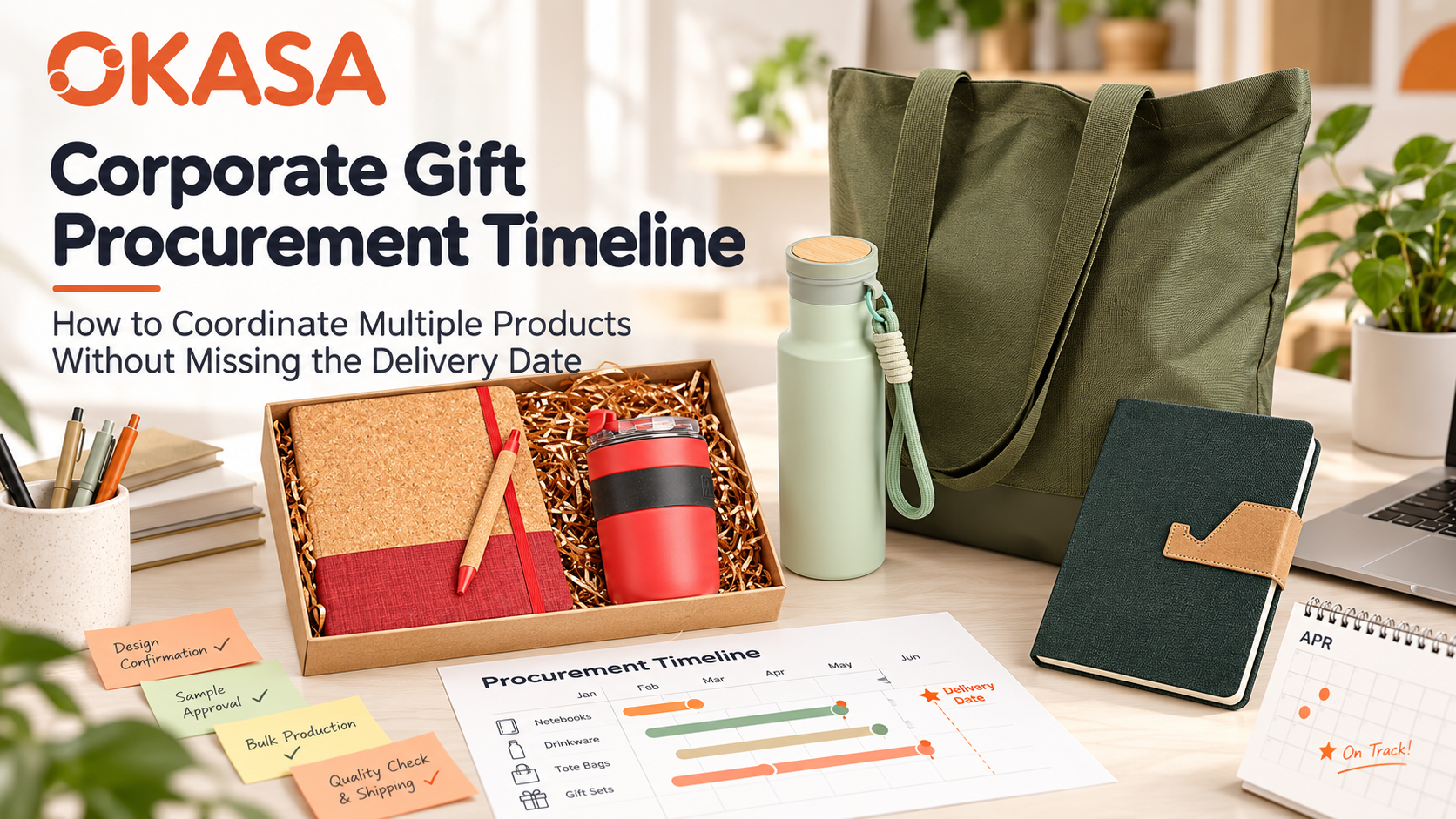
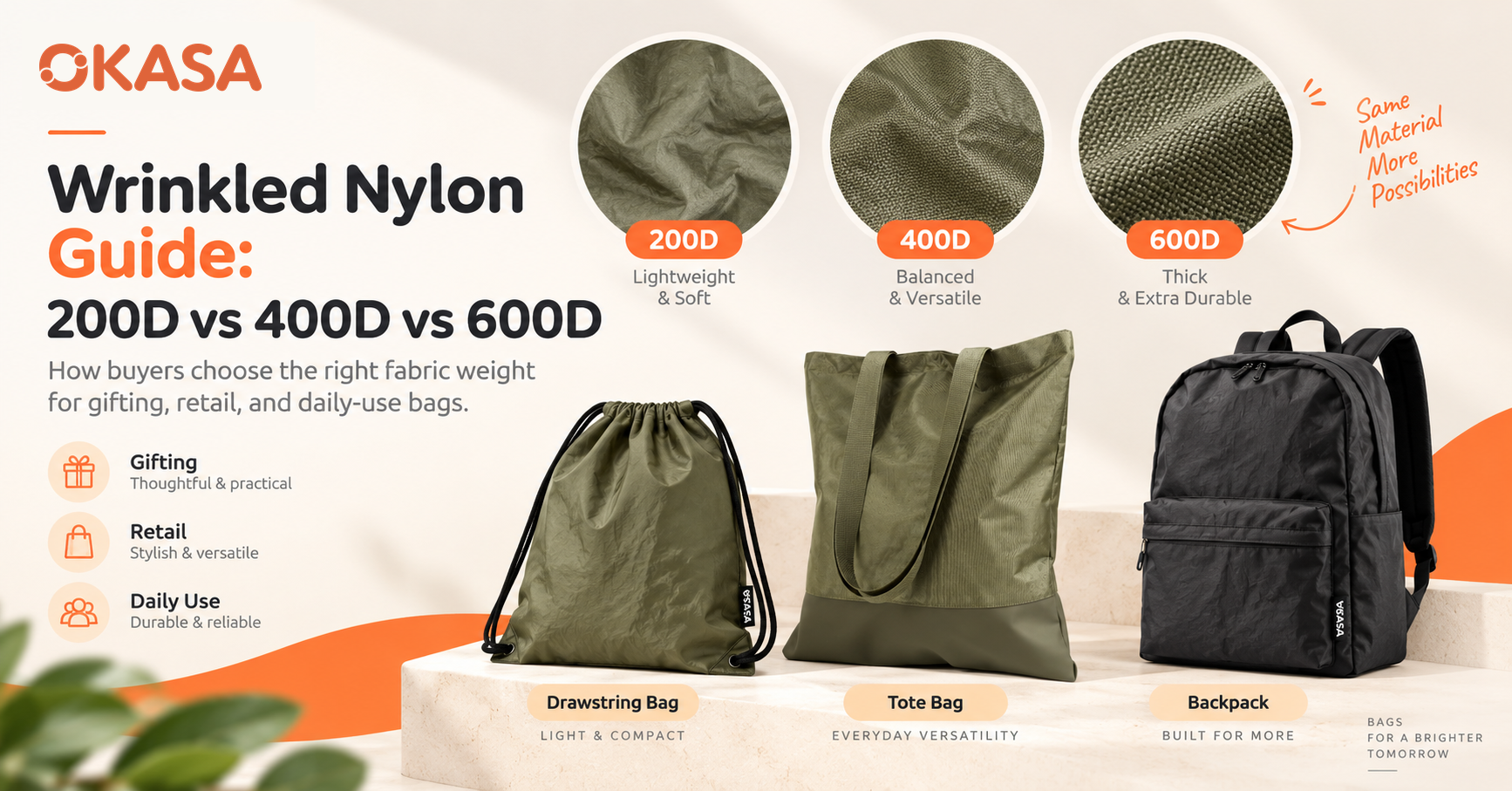
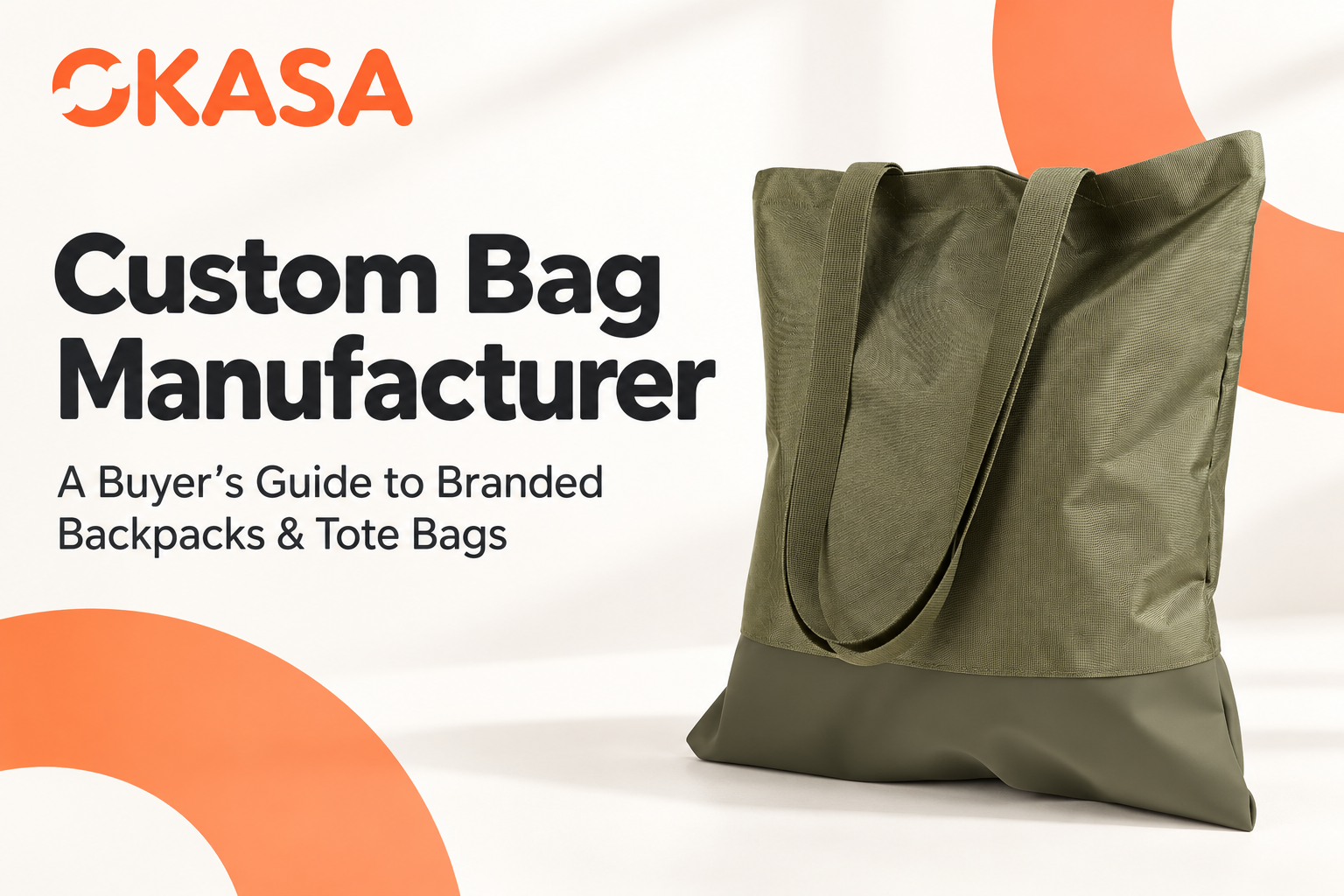
For a coordinated set, a custom corporate gift set manufacturer should explain which component controls the final MOQ, how colors will be matched, when all parts converge for assembly and how the finished set will be inspected. If the program includes stationery, a custom notebook manufacturer should define the cover, board, paper, binding, ruling and decoration rather than quoting from a cover photograph. If a carry item is involved, a custom bag manufacturer should document fabric, weight or construction, seams, reinforcement, hardware and load expectations.
Environmental claims need the same discipline. A sustainable promotional products manufacturer should identify the exact component, material and evidence behind each claim. The word “eco” is not a specification. When several items are combined, the claim for one notebook cover or fabric should not be stretched into an unsupported claim about the whole set.
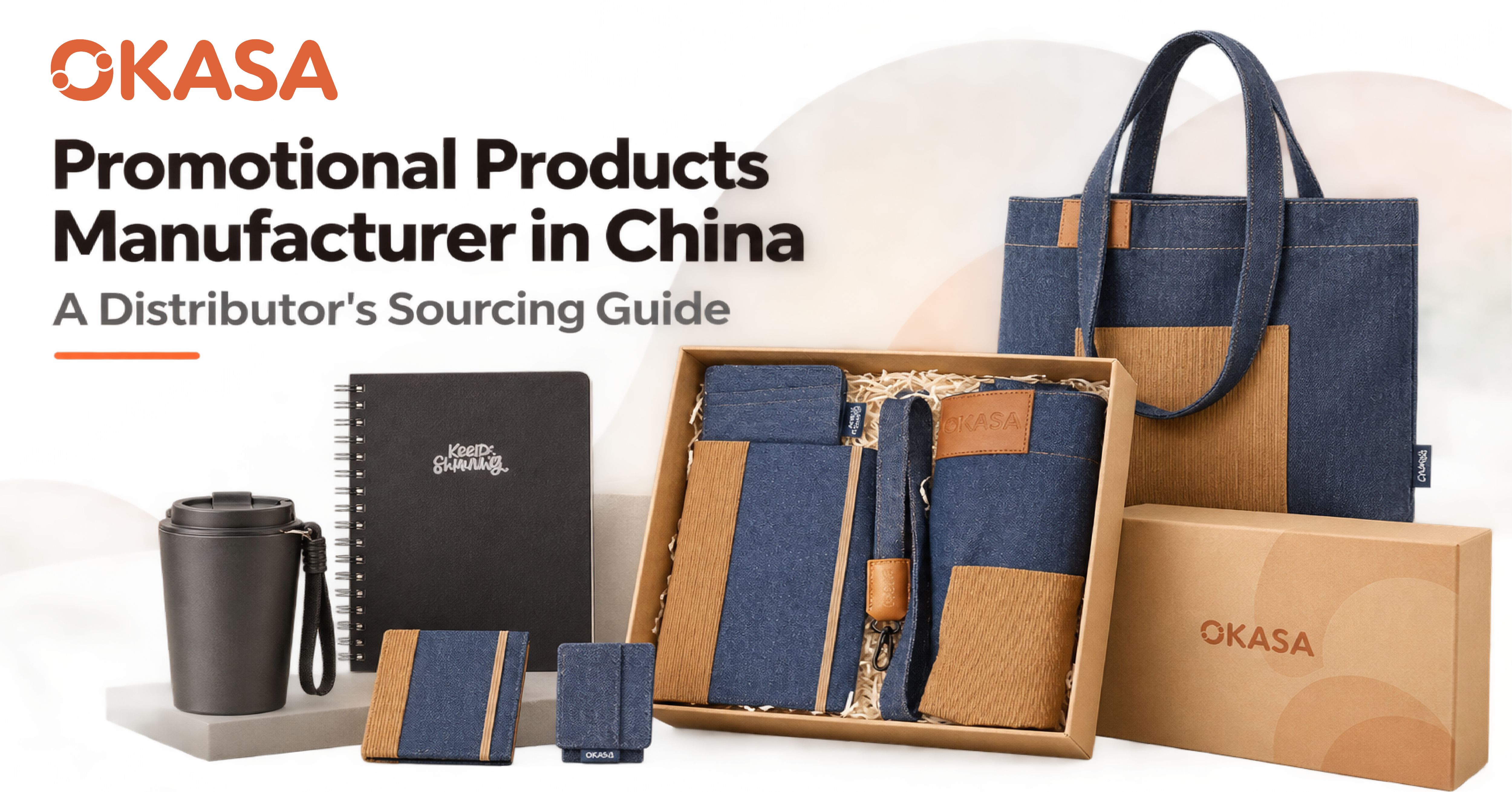
Private-label and multi-category programs may benefit from an OEM promotional products manufacturer that can coordinate development, branding, documentation and assembly across products. Buyers conducting promotional products sourcing China should still audit responsibility at component level. One account manager does not eliminate the need to know who controls the bottle, notebook, bag, packaging and final quality release.
For campaigns serving employees, clients or events, bulk corporate gifting solutions should be designed around the recipient, delivery route and in-hand date. Finally, distributors seeking a promotional products manufacturer China partner should compare response quality, specification control, sample discipline, corrective-action process and repeat-order records alongside the opening price.
The Quote Comparison Sheet Buyers Should Use
Place every supplier on one comparison sheet. Do not copy only the headline unit price.
|
Comparison line |
Supplier A |
Supplier B |
Supplier C |
|
Product model and specification revision |
|
|
|
|
Quantity and allowed overrun or underrun |
|
|
|
|
Inner and outer material construction |
|
|
|
|
Lid, gasket and carry parts |
|
|
|
|
Finish and color reference |
|
|
|
|
Logo method, size and locations |
|
|
|
|
Individual packaging and master carton |
|
|
|
|
Sample type, price and timing |
|
|
|
|
Tooling and ownership |
|
|
|
|
Test and document scope |
|
|
|
|
Inspection basis and defect criteria |
|
|
|
|
Production starting conditions |
|
|
|
|
Lead-time milestones |
|
|
|
|
Incoterms rule and named place |
|
|
|
|
Freight and landed-cost assumptions |
|
|
|
|
Payment terms, validity and exclusions |
|
|
|
If one column contains more blanks, its lower price may simply exclude more work. Send questions back in writing and ask the supplier to revise the quotation. A clean comparison is more valuable than a fast negotiation based on mismatched assumptions.
Frequently Asked Questions
What is the MOQ for a custom stainless steel bottle?
There is no universal MOQ. The bottle body, dedicated coating color, lid components, lanyard, logo process and printed packaging can each have a different minimum. Ask the supplier which element controls the quantity. A lower-volume route often uses an existing model, stock color, low-setup decoration and standard packaging. A deeply customized body, lid or pack normally needs a larger commitment and more development time.
Why is my custom color more expensive than a stock color?
A stock color may fit an existing production or material plan. A custom color can require a dedicated coating purchase, color matching, application setup, approval sample and tighter sorting. The added cost is not only the pigment. It includes the work and risk needed to make the color repeatable on the chosen surface.
Is laser engraving cheaper than screen printing?
Not always. The result depends on artwork size, substrate, coating, fixture, run quantity, number of colors and machine time. Laser engraving avoids ink and can create a durable, restrained mark on compatible surfaces, but a large engraving can take substantial time. Screen printing may be efficient for suitable spot-color artwork, yet each color and location adds setup. Compare actual-size artwork on the selected bottle.
Do I need a pre-production sample?
Use one when the project combines custom color, decoration, lid parts, packaging or important performance requirements. A stock sample cannot approve those variables. The pre-production sample should be tied to the latest specification and artwork. For a simple repeat order with controlled records, the parties may agree on another approval route, but the decision should be explicit.
Which tests should I request for drinkware?
Start with the destination market, intended user, food-contact materials and conditions of use. Add product-specific functional checks such as leakage and agreed insulation performance. Do not purchase a generic test package without confirming that its materials, construction and scope match the order. The importer or qualified compliance adviser should confirm the applicable requirements.
How can I compare an EXW quote with an FOB or landed quote?
Normalize the offers. Add every cost and responsibility missing between the named factory or port and the final destination. Confirm the Incoterms rule, named place, carton assumptions, freight basis, duty and tax treatment, insurance, brokerage and destination delivery. Keep estimated freight visibly separate until final packaging data is available.
What information helps a factory quote faster?
Send quantity, destination, required-in-hand date, bottle capacity, construction, lid, finish, color, logo artwork, packaging, market requirements and delivery term. Mark every item as fixed, preferred or open to alternatives. That lets the supplier spend time solving the project rather than guessing what the buyer means.
Can OKASA combine bottles with notebooks, bags and gift packaging?
OKASA presents drinkware, notebooks, bags, packaging and gift sets across its product range. For a specific project, submit the recipient, quantity, destination, date, preferred components, artwork and evidence requirements. The team can then review whether an existing combination, a modified set or a new coordinated route is the practical fit.
Final RFQ Checklist
Before requesting a formal quotation, prepare the following:
· Buyer company, target market and delivery destination.
· Intended user and use scenario.
· Expected order quantity plus possible repeat quantity.
· Required-in-hand date and non-negotiable approval dates.
· Capacity, dimensions or acceptable range.
· Inner and outer material requirements.
· Insulation and leak-performance expectations.
· Lid, gasket, handle or lanyard requirements.
· Surface finish, physical color reference and acceptable variation.
· Vector artwork, logo size, locations and preferred method.
· Individual packaging, gift packaging, labels and barcode needs.
· Food-contact, testing and documentation requirements.
· Inspection basis and critical product features.
· Preferred Incoterms rule, named place and freight scenarios.
· Sample route, decision owners and approval method.
A useful inquiry does not have to be perfect. It has to reveal the constraints that cannot move. Send those first. OKASA can then compare an existing-model route, a deeper customization route and, where appropriate, a coordinated gift-set option. You will receive a more useful answer than a single number detached from the product, market and deadline.
Authoritative References
· European Commission: Food-contact materials legislation
· U.S. FDA: Packaging and Food Contact Substances
· ISO 2859-1:2026: Sampling procedures for inspection by attributes
· International Chamber of Commerce: Incoterms rules
Ready to Discuss Your Custom Bottle Project?
Share your quantity, market, deadline, artwork and preferred specification with OKASA.