



Image 1. Illustrative OKASA remote-team gifting concept; confirm final items, artwork and packing against approved samples.
A gift for a remote colleague has a different finish line from a gift handed out at an office event. The order is not complete when a pallet reaches headquarters. For this program, the delivery list matters as much as the purchase order: each person needs the right version, in one piece, at a usable address. The team must therefore settle the carton design and address cut-off alongside the contents, then decide who will handle a parcel that comes back.
The logo proof and unit-price negotiation may be familiar work. Direct-to-recipient programs add hundreds of small delivery decisions. One address is missing an apartment number. A colleague moves between the roster export and dispatch. A regional welcome card is packed into the wrong market's kit. A replacement goes out without anyone recording whether the first parcel was returned. None of these problems is solved by choosing a prettier box.
This guide is for HR, people operations, brand teams, procurement managers and distributors ordering branded kits for employees in multiple locations. It explains how to brief an OEM promotional products manufacturer on the physical kit while building a separate, disciplined recipient and delivery workflow. It also shows which questions belong in the RFQ before anyone promises an arrival date to staff. The goal is an order that can be quoted and executed, rather than a mood board with no shipping plan.
1. Decide where the kit is assembled and who owns the last mile
Start with the route, not the product list. There are three common patterns. A supplier can assemble all kits and send master cartons to one distribution center. The distribution center then labels and dispatches individual parcels. Alternatively, a local fulfillment partner can receive components in bulk and assemble them near recipients. In some programs the supplier may be asked to pack individual parcels and coordinate dispatch from origin. The right route depends on destination mix, customs arrangements, order size, available fulfillment partners and the supplier's confirmed capability. Do not assume any one route is included in a product quotation.
A useful first sketch has four columns: production site, kitting site, parcel dispatch point and owner of recipient support. Write an actual company or team next to each. If the fourth column says “to be decided,” the program is not ready for launch. That owner will have to answer a late joiner on Monday, a carrier exception on Tuesday and a crushed-box report on Wednesday.
Imagine a 600-person roster with entries in the United States, Germany, Singapore and Australia. The product may come off one line cheaply, while the label and customs work on hundreds of origin-to-home parcels outweighs the simplicity; two regional handoffs may deserve a quote. The example is a planning exercise, not a promise about freight prices or feasibility. Ask the forwarder and destination partners for lane-specific options before choosing the route.
For a bulk corporate gifting solutions request, tell the supplier whether it is quoting finished retail-style units, flat-packed packaging, or components that another party will assemble. The difference changes carton dimensions, handling time, breakage exposure and the quantity of spare units needed. A low kit price can cease to be low once a distant warehouse has to rebuild each box.
|
Fulfillment model |
Best question to ask before quoting |
Operational owner to name |
|
Bulk finished kits to a regional hub |
Can the sealed kit survive another handling and parcel stage? |
Hub receives, labels and handles exceptions |
|
Bulk components, local assembly |
Who provides the pack sequence, artwork files and approved sample? |
Local partner assembles and checks each kit |
|
Individual parcels from origin |
Which destinations and service levels are actually supported? |
Named dispatch and recipient-support teams |
The matrix is a briefing aid, not a ranking. Ask for landed and fulfillment costs in the same comparison, with the same quantity and destination assumptions. A quote for one master carton cannot be compared fairly with a quote that includes hundreds of individual labels and parcels.
2. Build a recipient file that can survive real life
People move. They type addresses differently. Some use a company office even when they work from home. Set up the recipient file as a controlled operational record rather than an email thread full of copied spreadsheets. Give every recipient an internal order ID that remains stable if their name, address or kit variant changes. Keep the version number and date of every export. A dispatch team needs to know which file supersedes which; otherwise an apparently harmless “final-final” sheet can cause duplicate shipments.
The fields should follow the carrier and destination requirements. For the first file, put the internal ID beside the name and country. Give street lines, locality and postal code their destination-appropriate places. Add a variant code and a working status. A phone number, email or requested window belongs there only if the selected delivery service needs it. A department field is useful only when it changes routing or the message in the box. Do not collect birthdays, personal notes or other data simply because a form has room for them.
The Universal Postal Union describes country-specific address templates and notes that full, accurate addresses are vital for cross-border delivery. Its S42 framework separates address components from country formatting rules. That is a sound reason to validate destination-specific fields rather than forcing every country into a US-style city/state/ZIP form. See the UPU addressing guidance when building the intake template; the final carrier's rules still govern the label that is printed.
If a recipient's home address is involved, privacy is part of the operating plan. The European Data Protection Board identifies names and location data as personal data and explains data minimisation, accuracy, storage limitation and security in its data protection basics. For a program involving EEA recipients, take the proposed roster flow to the responsible privacy and legal teams. They can decide the lawful basis, employee notice, processor terms, transfer arrangements and deletion date for the actual countries and partners. If a factory is packing unlabeled kits for a regional hub, for instance, it may need variant totals but no home-address file. The data arrangement needs a project-specific legal decision; the packing plan alone cannot supply one.
One roster owner can open a private intake form, give employees a correction window, freeze the file on a stated date and route later requests through an exception queue. Ask employees to review the displayed address before submission. The fulfillment partner needs a defined transfer method and a date for deleting or returning its copy after the last case is reconciled. Keep the unmasked home-address roster out of group email threads. Keep the gift message separate from address data unless the packer needs both.
|
Recipient-field decision |
Why it matters |
Control before dispatch |
|
Stable internal recipient ID |
Names can duplicate or change |
Match kit, label and exception log to one ID |
|
Local address fields |
Countries format addresses differently |
Validate against destination and carrier rules |
|
Kit variant code |
One roster may contain several designs |
Lock an approved variant-to-recipient map |
|
Contact detail, if required |
Carrier may need delivery coordination |
Limit access and use it for delivery only |
|
File version and freeze date |
Old exports can resurface |
Reject superseded files at the packing station |
Do a small address pilot before the full release. Send a few test records from different destination types through the intended label workflow, without exposing more personal data than necessary. Inspect the rendered labels. A long street name may fit the sheet but clip on a four-line label; a name in another script may change when exported to the carrier.
3. Choose useful products and test the parcel
Picture the employee opening the parcel beside a laptop, with no event staff to explain the assortment. A notebook can live by the keyboard, the bottle can travel between rooms, and the tote can go on a commute. These jobs give the items a reason to remain in use. The buyer still needs to check parcel volume, weight, product protection and destination restrictions. A delicate presentation that looks excellent in a photo may need a stronger outer shipper for individual delivery.
OKASA's TNB790 corduroy A5 hardcover notebook provides one tangible notebook reference: the site describes a ribbed corduroy cover, sewn embroidered-logo label, 80 sheets of ruled ivory paper, elastic strap, pen loop and ribbon. The B113 recycled cotton and washed kraft-paper tote gives the buyer a soft, foldable bag reference. The site lists 16 oz recycled cotton canvas, a washed kraft-paper panel, lining and a woven label. The site describes D016 drinkware with a 304 steel inner layer, 201 steel outer shell and Tritan lid. Use the current product sheet to confirm that construction in the quote. A buyer would have to brief and approve the combination as a proposed kit; the three listings are independent catalogue items.

Image 2. Illustrative home-desk scene using OKASA catalogue references; approved samples and product specifications govern the delivered goods.
Ask a custom notebook manufacturer for the cover, paper, trim and logo placement choices that will actually be sampled. With a custom drinkware manufacturer, check the lid, fit, coating, decoration and protective insert. With a custom bag manufacturer, check folded dimensions, handles, label placement and how fabric colors look under ordinary light. These checks serve both brand quality and packing accuracy: a packer should be able to recognize the correct approved variant without guessing from a vague SKU name.
The products also determine how the box opens. Put heavy drinkware where it cannot crush a notebook corner. Keep a fabric bag clear of ink transfer from a printed insert. Test the actual packed unit with its outer shipper, not just the empty presentation box. Take one overhead photo and one side view of the closed approved packout, with its insert visible in a separate frame. Weigh and measure the closed shipping parcel. Give both numbers to the freight partner, which can explain how its selected service treats volume as well as scale weight.
Say exactly which component contains recycled cotton and what the protective insert is made from. Avoid a blanket carbon-neutral or everywhere-recyclable claim for the whole parcel. When comparing a sustainable promotional products manufacturer, ask for the quoted bag’s material breakdown, the evidence available for its recycled-content claim and a list of packaging components. The bag is one component; the bottle, fabric label, coatings and cushioning have their own end-of-life routes. The country, local collection systems, decoration and protective materials all matter.
4. Make destination variants visible, few and controlled
A one-size-fits-all kit sounds efficient until a local language card, country-specific insert, color choice or shipping restriction appears. Variants are reasonable; uncontrolled variants are costly. Define a base kit first. Then list only the changes that truly depend on recipient group or destination. Use short codes such as BASE, DE-CARD or APAC-NO-BOTTLE in the bill of materials, but write the plain-language definition beside each code. The example codes are illustrative, not OKASA stock codes.
Create a variant matrix before artwork approval. Each row should identify the product assortment, logo version, language card, packaging, destination group, quantity, overage and approval owner. If one recipient can choose between two colors, decide whether the choice is collected before the address freeze and whether it affects MOQ or production timing. Do not ask the factory to infer a color split from a pie chart in a presentation.
|
Variant |
Contents and presentation |
Recipient rule |
Approval evidence |
|
BASE |
Approved core kit and standard message |
All eligible recipients unless superseded |
Signed physical sample and pack photo |
|
LOCAL-CARD |
Core kit with market-specific printed card |
Destination mapping in frozen roster |
Card proof and language approval |
|
NO-BOTTLE |
Alternate item mix without drinkware |
Only confirmed restricted or requested group |
Revised BOM, weight and sample |
The table should be copied into the supplier brief with real codes and quantities. When a recipient changes group after the file freeze, the roster owner records the decision and updates the exception log. A silent spreadsheet edit is not a change-control process. If the next batch has already been packed, the team may need to hold and relabel a unit or plan a replacement; that decision should be visible to both sides.
A custom corporate gift set manufacturer can help align the item mix, branding and assembly sequence. A custom gift box manufacturer should be briefed on the actual assembled dimensions, insert cavities, printed message, outer shipping protection and whether the packer must reopen the box for a recipient card. Confirm the linked collection's current availability and the exact box structure in the RFQ. A handsome rigid box that must be damaged to add a final card is a poor choice for late personalization.
5. Turn the approved sample into a packer's instruction
The sample approval is more than a design milestone. It should become the physical reference at the packing station. One master sample for each variant, a bill of materials with component counts, photos of each packing layer, a clear seal position and a final weight range create a usable instruction. If the kit has three items and a card, the instruction should say which item goes in first, which side faces up, how the card is positioned and whether the tote is folded or rolled. Do not rely on “pack neatly.”
Ask the supplier to show a pilot packout with real components and final artwork. Watch for a lid that scuffs the bottle, a ribbon that traps the notebook, a card hidden under the insert or a box that bulges after the outer shipper closes. The pilot is the moment to discover that a product has been measured without its sleeve or that a carton count assumed empty space. Record changes in a revised BOM and photograph the corrected result. A verbal change at the station may be forgotten by the second shift.
At full assembly, separate the work into component preparation, kit pick, visual check, seal and label. The same person can perform several steps for a small run, but the record must still distinguish what was picked from what was checked. For a larger run, use a distinct verification point. A barcode or scan workflow can help where available, but a disciplined printed pick sheet and clear variant bins can also work. The important part is that the operator never chooses between nearly identical variants from memory.
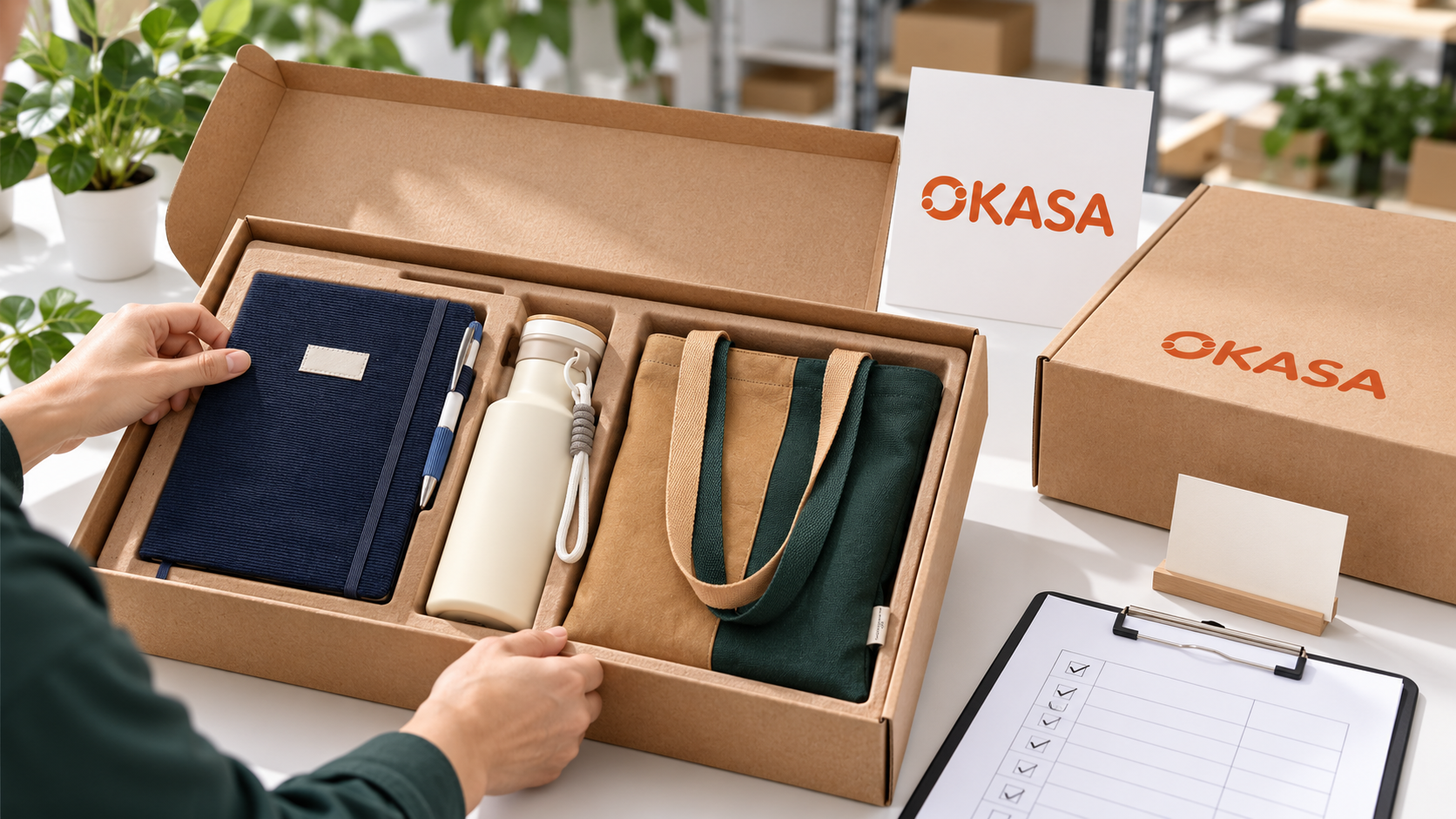
Image 3. Illustrative OKASA-branded packout and verification scene; confirm the production method and inspection plan with the supplier.
Give the packer a disposition rule for every mismatch. If the physical kit weighs outside the agreed tolerance, or the label's variant code disagrees with the box's variant code, hold it. Reopen, verify, correct and record it before the parcel enters the outbound cage. A misplaced card found after dispatch is no longer a packing correction; it becomes a recipient-facing exception.
6. Reconcile three counts before and after dispatch
Remote-team programs generate at least three numbers: approved recipients, completed kits and parcels accepted by the carrier. They should never be treated as interchangeable. The 600 names in a roster may include people who declined, addresses still awaiting correction and replacements from an earlier batch. A production report may include overage, samples and damaged units. A manifest may omit a parcel that missed the pickup. Reconciliation connects these lists through the stable recipient ID and kit variant.
Before packing, freeze an eligible-recipient count by variant and destination. Add a separately identified spare quantity; do not disguise spares as named employees. After packing, record accepted finished units, holds and rework. At dispatch, match every active recipient to exactly one current tracking number or a documented hold reason. If a parcel is re-sent, preserve the original tracking number in the exception log rather than overwriting it. That history helps a service agent avoid sending a third kit to someone who already received the second.
Make the daily report one page that the dispatch owner can use before the pickup window closes. Put eligible names beside packed units and accepted parcels for each lane; underneath, list the IDs still on hold and the reason for each. Investigate gaps while the packing team and cartons are still available. Waiting until a satisfaction survey arrives may turn a simple missing label into a costly emergency shipment.
|
Count at gate |
Source of truth |
Question that closes the gate |
|
Eligible recipients |
Frozen, approved recipient file |
Is every recipient assigned one variant and destination? |
|
Finished units |
Packout and quality records |
Are holds, rework and spares counted separately? |
|
Dispatched parcels |
Manifest plus carrier acceptance |
Does each released recipient have a traceable shipment? |
|
Delivered or resolved |
Tracking and exception log |
Are returns, replacements and undelivered units closed? |
Agree the acceptable evidence with the fulfillment partner. A label created in software is not always proof that the carrier collected a parcel. A delivery scan is also not always proof that the named employee personally opened it. Use the status to decide the next action, and avoid pretending the data shows more than it does.
7. Price the entire delivery job, not just the kit
The RFQ should separate product manufacturing, decoration, packaging, kitting, bulk freight, local parcel dispatch, duties or taxes where applicable, storage, address corrections, returns and replacement handling. Some costs are fixed, some depend on each destination and some arise only when a recipient is unreachable. A blended “all-in” number can be useful for budgeting, but ask for the assumptions beneath it. Otherwise a late change in destination mix can erase the comparison between two proposals.
List the destinations and approximate quantities by country or region. For every import lane, name the party that will appear as importer of record where that role is required. The forwarder should review the actual item list and route, then tell the team which documents, descriptions and values to prepare. The contract should state the named delivery point and who pays the applicable tax and duty charges. These choices vary by lane and product; a blog cannot supply a universal landed cost. Ask for quotes with a defined carton size, packed unit weight and service level, then revise once the physical pilot is measured.
For promotional products sourcing China, a supplier can quote the merchandise and its production handoff, while the buyer's carrier or fulfillment partner may own import and local parcel delivery. Put those boundaries in writing. A promotional products manufacturer China search can find a product partner, but it does not by itself establish that the partner operates a recipient-address platform in every destination. Ask what services OKASA will perform for this specific order, which partners are involved, and who communicates tracking and exceptions.
There is a trade-off between a heavy premium box and a compact mailer. The presentation may lift the unboxing experience, while the extra volume raises parcel cost and storage space. Compare two physically packed samples with the same contents. Quote the outer shipper, void fill and printed insert as separate lines. Then decide what the audience will value: a keepsake box, a tidy desk kit, or the fastest credible delivery. There is no single answer for a new-hire welcome gift, a service anniversary and a global event follow-up.
8. Plan exceptions before the first employee asks where the gift went
Use plain exception codes in the log. An incomplete address, a returned parcel and a wrong-language card lead to different owners and next steps, so each needs its own code. Every exception gets an owner, timestamp, next action and closure rule. On a return, the owner first checks whether the address can be corrected. Only then does the team choose a resend, replacement or local hold. A replacement policy is easier to apply when it is agreed before anyone feels pressure to improvise.
Reserve and price spare units by variant in the purchase order, using the lanes and replenishment time to decide how many are sensible. A short-run custom color can need a different reserve from a standard notebook that can be replenished quickly. Keep spare kits by variant, not just one generic stack. If there are market-specific cards, a BASE spare cannot automatically become a LOCAL-CARD replacement without a controlled repack.
Give employees one support route and a realistic update cadence. A people-ops mailbox can coordinate with the fulfillment owner, but should not promise a carrier action it cannot authorize. Draft the response templates before launch: address correction received; parcel handed to carrier; delivery attempt reported; replacement approved; case closed. The messages should use plain language and avoid exposing tracking or home-address details in public team channels.
Review exceptions by cause, not simply by count. Five missing apartment numbers point to the intake form. Five crushed corners point to outer packaging or handling. Five wrong language cards point to variant mapping or packer instructions. Correct the underlying step before the next wave. Remote gifting often runs in cycles, so the first wave can be a practical learning run if the team records what actually happened.
9. Give suppliers a quote brief they can answer accurately
An RFQ for this program needs more than “600 branded gift boxes.” State the campaign purpose, target recipient profile, destination quantities, planned ship window, kit concept, proposed catalogue references, branding method, packaging and fulfillment route. Include the variant matrix, privacy-handling expectations at the role level, sample and pilot requirements, target inspection evidence and the responsibilities for address files, labels, freight and exceptions. Ask suppliers to identify assumptions and exclusions in their responses.
Here is a concise brief that a buyer can adapt: “We are planning an illustrative 600-unit remote employee welcome program across four markets. Please quote a base kit with a notebook, foldable tote and drinkware option, plus any destination variants shown in the attached matrix. Please separate product, decoration, presentation packaging, outer shipping protection, sample, kitting and freight or fulfillment services. Confirm who holds recipient data, who creates parcel labels, where assembly occurs, what evidence is provided at dispatch, and how rework and replacement units are priced. Please do not commit a delivery date until the route and physical packed sample are confirmed.” Replace the sample quantities and markets with the actual program.
For product direction, link each requested component to the specific catalogue page in the brief. A supplier can then respond to the same physical references rather than assuming any “A5 notebook” or “reusable bottle” will do. Request alternative materials or packaging only as separate options. This protects the comparison: if one quote quietly substitutes a cheaper cover, a different lid or a smaller box, the apparent savings may not reflect an equivalent kit.
Ask three final questions on the call. What exactly will be approved as the master sample? What event starts the production clock? What evidence will show that each approved recipient has a correct, released parcel? If any answer remains vague, resolve it before the purchase order. The goal is a quote with visible responsibilities and a launch date supported by the workflow, rather than an attractive unit price surrounded by assumptions.
Frequently asked questions
Should we collect home addresses before choosing the kit?
You can estimate country-level quantities first without collecting individual addresses. Collect the minimum recipient details when the delivery workflow, access permissions and communication to employees are ready. Final carrier requirements may add fields, so test the chosen lane before freezing the intake form. For EEA recipients, route the chosen data flow and employee notice to the responsible privacy team before intake opens.
Is it better to ship finished kits or components to a local hub?
Compare both with the same contents, quantities, packed dimensions and destination mix. Finished kits preserve a single approved packout but may consume more freight volume. Local assembly can provide flexibility for labels or language cards, yet it needs training, a master sample and quality records. The practical answer depends on the actual route and partners.
How do we avoid sending the wrong version to an employee?
Give each recipient a stable ID and one approved variant code. Freeze a versioned roster, label variant bins clearly, put a sample and pack photo at the station, and verify kit code against label before release. Reconcile finished units, manifest entries and exceptions by that ID. A color choice typed into an email does not replace the controlled roster.
Can one supplier guarantee arrival in every country on one date?
Treat a shared date as a planning target until the supplier, forwarder, customs and local carrier confirm the lanes and service levels. Production completion and parcel delivery are different milestones. Leave room for address corrections, customs review and failed delivery attempts. Ask for a country-by-country plan and a named exception owner.
What should we send OKASA to get a useful quotation?
Send estimated quantity by destination, desired products or catalogue links, logo artwork, branding locations, box concept, variant matrix, sample needs, intended kitting location, target ship window and the services you expect OKASA to quote. State which parts of recipient-data handling and parcel fulfillment are assigned to other partners. OKASA can then confirm feasible product and service scope for your actual project.
Request a quote for a remote-team gifting program
Share your destination split, preferred kit contents, branding files and fulfillment plan through OKASA's contact page. Ask for a line-item quotation and a sample plan covering the approved variant, protective packaging and dispatch handoff. If the address workflow is still being designed, say so; a clear assumption is more useful than a guessed delivery promise.