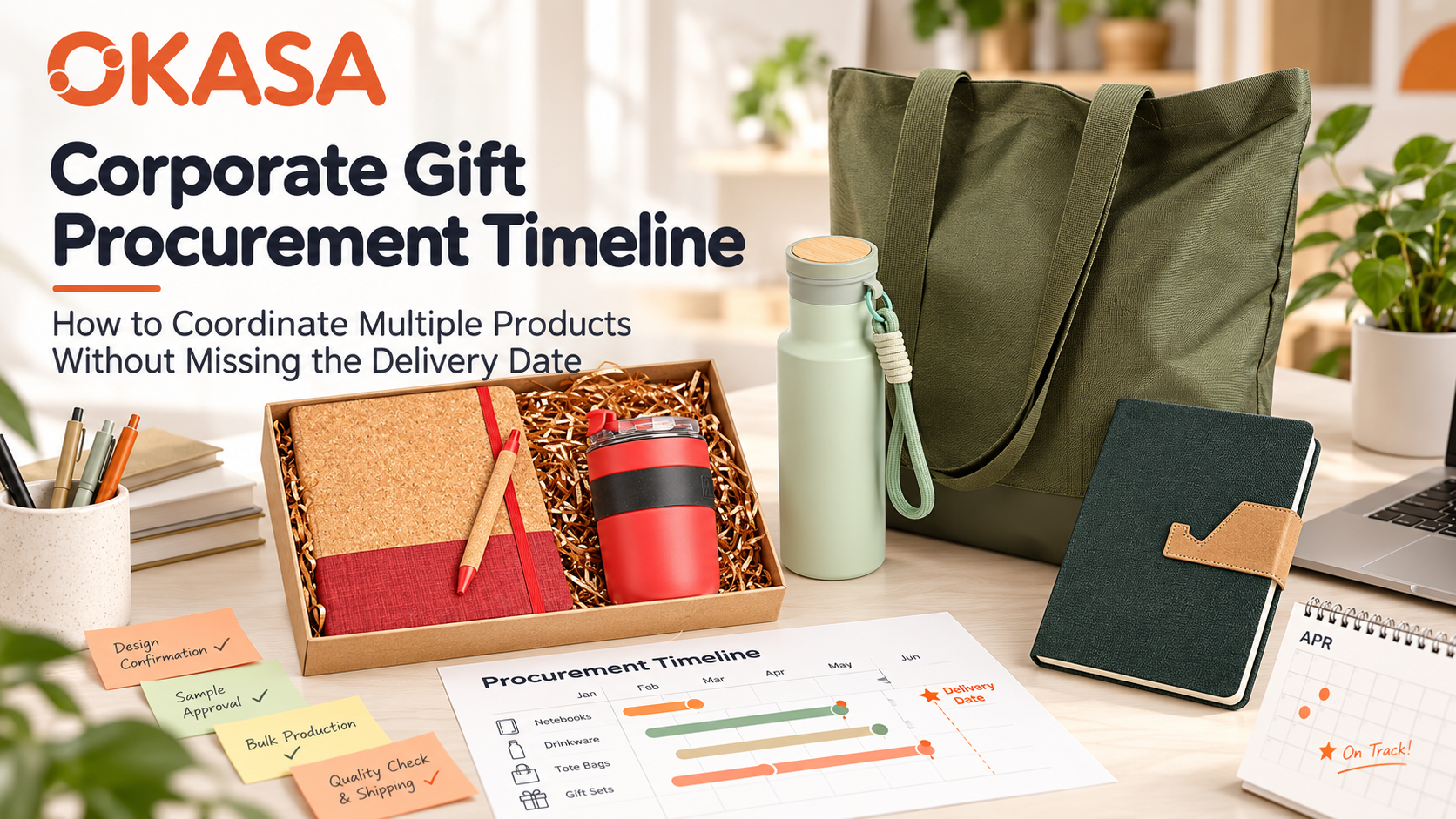


 A buyer may order 2,000 notebooks, 2,000 bottles and 2,000 backpacks for one campaign and believe they have three straightforward purchases. Then the notebooks arrive in the approved color while the bag trim matches an earlier artwork version. The bottles are finished, but their individual cartons do not fit the agreed gift boxes. A final packing count finds 1,982 usable pens for 2,000 kits. None of these problems is especially mysterious. The common thread is the handoff: the bag artwork, bottle carton and pen count were approved or tracked on separate records.
Direct answer: For multi-SKU orders, keep a single register that ties each item to its approved sample, artwork revision, count and destination. Work backward from the arrival date and give one person authority to approve changes. Confirm who owns substitutions, inspection, packing and freight before production starts. Quote the complete delivered program, not only the individual unit prices.
This guide is for procurement teams, promotional product distributors and brand managers coordinating multiple product types or more than one recipient group. Its working examples are illustrative planning exercises, not claims about a completed OKASA customer project. That level of detail gives the supplier something specific to price and gives the buyer a way to compare responses.
1. Define the program before choosing products
“Three products for an event” is a shopping list. A program brief says who receives each item, where it goes, how it is presented, what may change and what absolutely cannot change. It should distinguish a single mixed kit from a campaign in which different destinations receive different assortments. Those are different operational jobs. In a mixed kit, the shortest component quantity limits the number of complete kits. In a regional assortment, a label or language change may create a new SKU even though the physical notebook remains the same.
Start with the recipient and the use case. A sales conference kit needs a bag that is comfortable to carry, a bottle that travels safely and a notebook that can actually be used during sessions. A channel partner gift may put more weight on presentation and repeat availability. Ask the end buyer whether every recipient needs the same combination. That question can remove needless variants before anyone prices them.
A useful one-page brief includes the target quantity by destination, acceptable budget range, delivery location and in-hand date, intended item mix, permitted logo applications, packaging expectation, and required documentation. Mark hard requirements separately from preferences. “Brand orange must match the signed color standard” has a different consequence from “orange zipper pulls would be nice.” Specify whether spare components are needed for replacements, photography, sales samples or local distribution. They must be counted somewhere.
The sales team may call this bulk corporate gifting solutions. Procurement should translate that phrase into a countable assortment. Write a kit code such as KIT-A, list its contents, then give every component its own identifier. A bottle sold alone and the same bottle placed in KIT-A need a shared product identity plus separate packing instructions. Otherwise a seemingly harmless carton change can disrupt one channel while leaving another untouched.
Do not begin with the most attractive product photograph. Begin with the last irreversible date: the date a recipient, event organizer or warehouse needs the goods in hand. Work backward through customs or domestic delivery, transport, packing, inspection, manufacturing, approved sample and artwork lock. Add a buffer based on the actual route and the supplier's confirmed schedule. An estimated factory completion date is not an arrival date.
2. Create a master SKU register that people will actually use
A master register is a short decision log, not an elaborate enterprise system. Without it, two colleagues can order subtly different products under the same familiar name. Give each physical item or packing variant a row. Put the decision maker and approval status next to it. Change the row when a feature the buyer will receive changes, including the material, color, print, pack or destination.
|
Register field |
What to record |
Why it prevents a problem |
|
SKU and kit code |
Unique item code and every kit using it |
Makes component shortages visible |
|
Approved product |
Model, size, material and color reference |
Prevents a photo from replacing a specification |
|
Decoration |
Method, position, size, artwork file and version |
Stops mixed logo versions |
|
Quantity |
Order, sample, spare and per-destination quantities |
Reconciles components with finished kits |
|
Packaging |
Individual wrap, insert, box and carton instructions |
Protects fit and presentation |
|
Evidence |
Approved sample ID, tests and required documents |
Links inspection to the agreed standard |
|
Dates and owner |
Approval deadline, production milestone and decision maker |
Prevents silent delays |
The notebook row needs more than an A5 label. Record its cover fabric and feel, binding, page count and paper, then the ribbon, strap and print details. A custom notebook manufacturer can then explain which options share a production setup and which require a different minimum or sample. The OKASA TNB780 linen A5 notebook is a concrete design reference; its detachable magnetic strap and stand function should be assessed from the physical sample if proposed for a kit.
For a bottle, specify capacity, body construction, inner and outer materials where relevant, finish, lid, gasket, logo method, leak or insulation expectations, and protective packing. A custom drinkware manufacturer needs those details to price and sample a comparable item. Do not treat “stainless bottle” as a specification. A change in lid or coating can change the inspection method, carton space and cost even when the silhouette looks familiar.
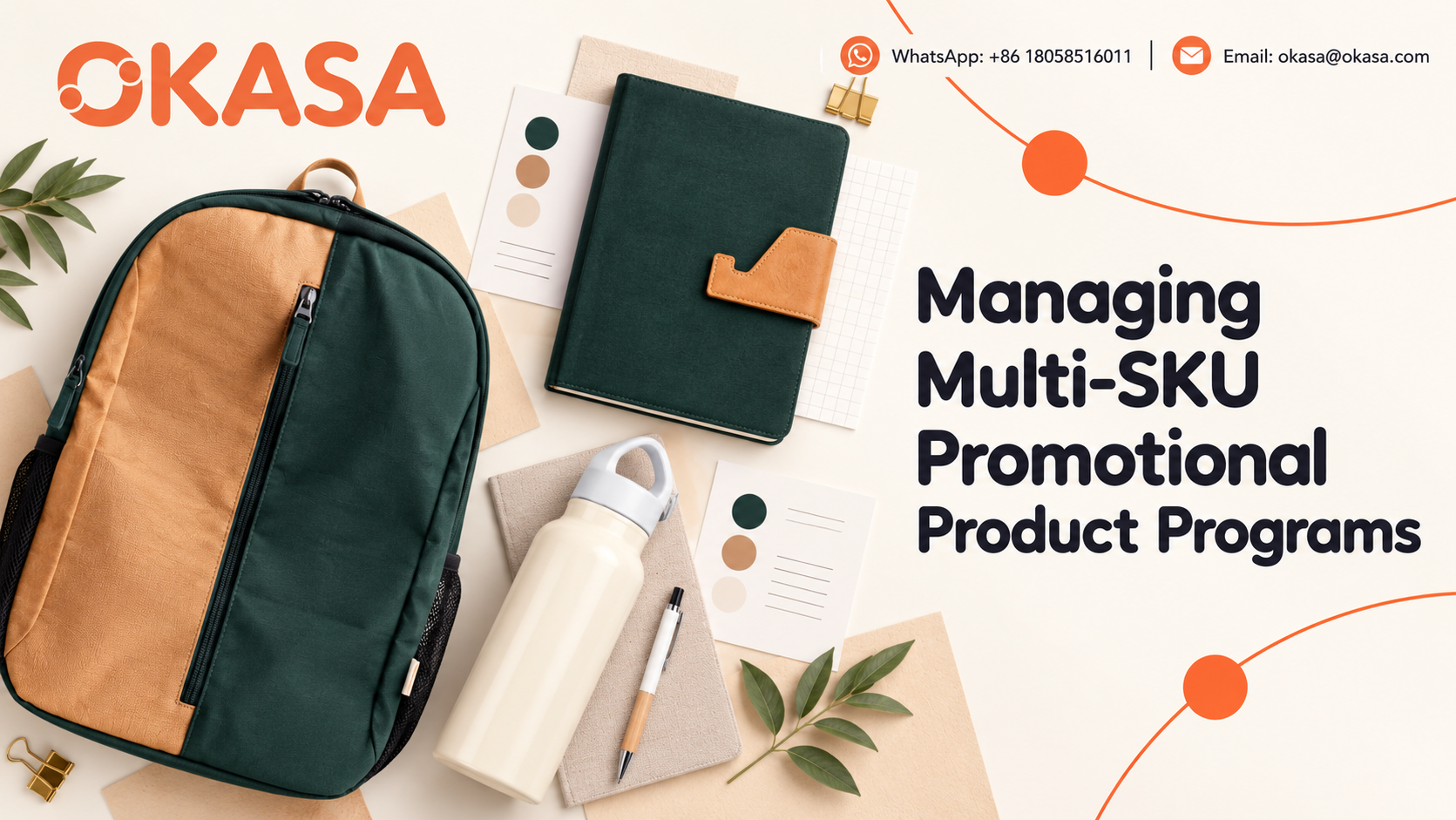
For a bag, measure the actual body and strap. Note its fabric and panels, zipper and hardware, reinforced seams, branding position and the way it is folded for shipment. Consider the B112 backpack. A photograph shows the tan panel and front zip, yet a production order still needs an agreed fabric swatch, panel reference and zipper detail. A custom bag manufacturer should be asked which visible details are standard and which can be customized without altering the product structure.
Name each file with the same code as the row. “final_logo_new2.ai” is not a control method. A dated version such as KIT-A_B112_front-logo_v03.ai can be reconciled against the sample approval record. The exact naming pattern is less important than one rule used by the buyer, designer, supplier and inspector. Keep the previous revision accessible, but clearly withdrawn.
3. Build a product architecture, not a pile of attractive samples
A multi-category assortment works when products support the same use case and fit the same logistical limits. A backpack may be the carrying piece, a notebook the working piece and drinkware the daily-use piece. Add packaging only when it helps protect or present the contents. The most expensive combination is rarely the one with the most components; it is the one with unnecessary component changes after samples are approved.
Choose a base assortment, then define allowable variants. For example, one notebook size and internal paper specification could serve all destinations while the cover imprint changes by region. A shared bottle body may use one of two approved colors. A backpack may stay identical across kits. This arrangement limits the number of samples and inspection standards without making every kit look generic. Whether components can actually share production runs depends on the supplier's setup and minimums, so ask rather than assume.
If the program includes complete gift sets, ask a custom corporate gift set manufacturer to price the components and the assembly as separate, visible lines. OKASA's TGS871 office gift set offers a useful reference for how a corduroy notebook, bottle, pen and box relate visually. It should not be treated as the only possible combination. Confirm which products can be substituted, how the insert changes, and who checks the fit after the substitution.
Packaging is a distinct manufacturing decision. A custom gift box manufacturer may offer a standard size, modified print, an adjusted insert or a fully new structure. A cylindrical paper tube is useful for some single-item presentations but is not automatically appropriate for a flat mixed kit. Ask for internal dimensions and an actual pack-out trial before a render is approved. If a product moves during transit or compresses a soft cover, the photograph of the empty box provides no assurance.
Sustainability claims also need their own record. For a recycled bag or notebook, pin down the claimed component and its share. Ask which document connects that material to the items actually shipped. A sustainable promotional products manufacturer should be able to distinguish a product story from a verifiable material statement. A mixed kit must not imply that all components are certified because one fabric is. If the available evidence is limited, use a narrow, accurate claim.

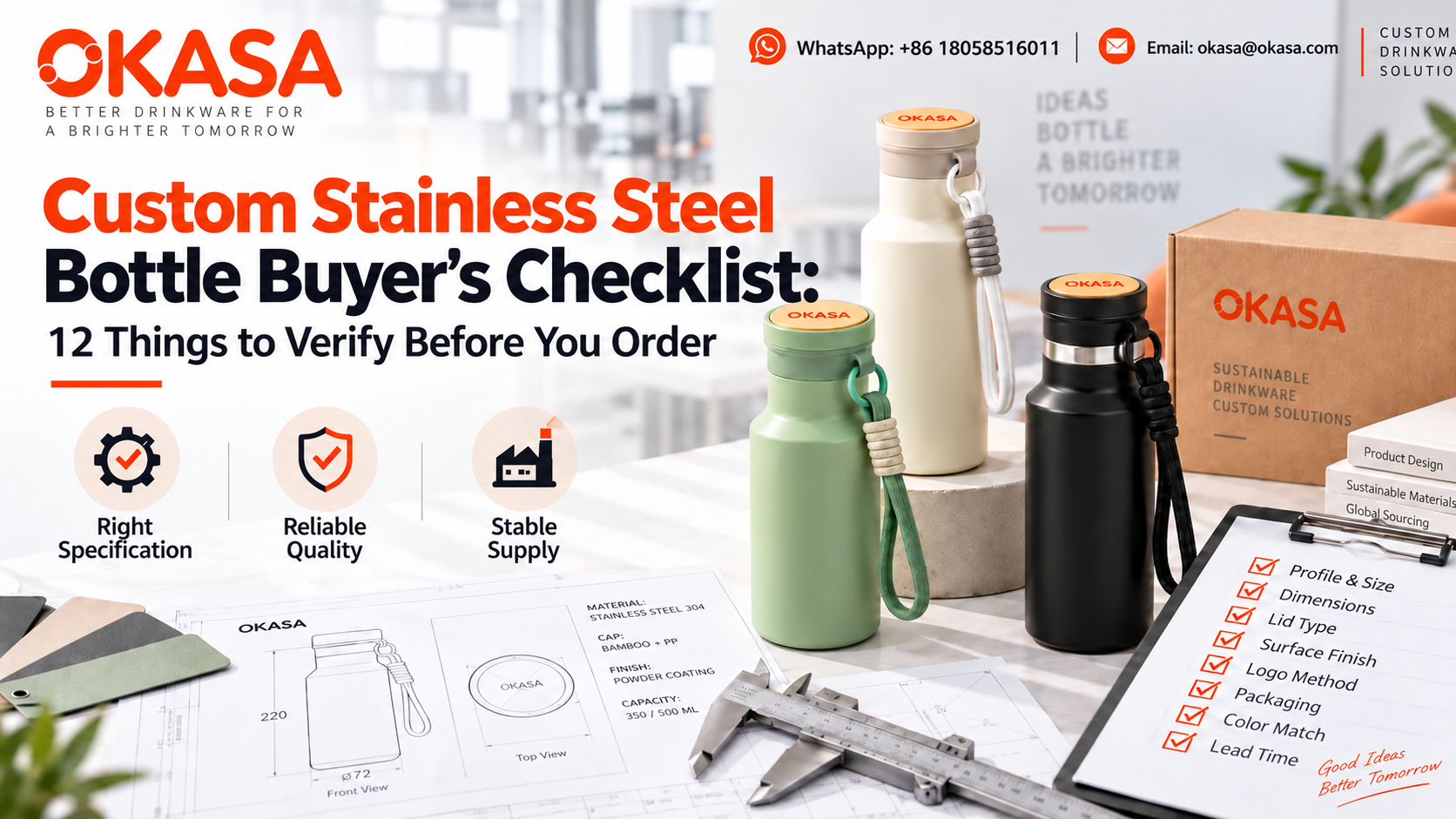
Image 2. Physical product references and color swatches help the buyer approve the visible materials before production. Illustrative composition based on OKASA product images; the signed sample governs the actual order.
4. Ask for quotes that describe the same finished program
A low item price is not a low program cost if artwork setup, tests, individual packing, kitting, master cartons or freight are missing. Send the same brief and SKU register to every candidate supplier. Have the bidder show the product price, then the charges for branding, packing and kit assembly. Testing, inspection and transport should have their own lines. An unknown charge should stay marked “to confirm.” A blank cell or zero can make an incomplete offer look unusually cheap.
|
Quote line |
Question to ask |
Hidden difference to check |
|
Product |
Is this the exact approved construction? |
Different material, capacity or page count |
|
Decoration |
What artwork, method and positions are included? |
Extra setup or additional logo locations |
|
Packaging |
Is the insert, sleeve and outer carton included? |
Presentation and transit costs left out |
|
Kitting |
Who counts and assembles each finished kit? |
Labor and shortage responsibility |
|
Quality |
Which tests and inspections are priced? |
Unspecified sampling or paperwork |
|
Delivery |
What named place, route and term apply? |
Factory price compared with delivered price |
Show both views of the order: quantities and prices for individual SKUs, and the resulting price of a finished kit. A run of 2,000 KIT-A boxes needs 2,000 accepted pieces of each item at the assembly table. Samples, failed units and any spare stock must be planned on top of that figure. State the planning allowance and have the supplier show how it is included. A component-level surplus is not the same as 2,000 complete kits. The bottleneck component defines the finished quantity.
Price alternatives should be controlled experiments. Ask for an option with a different logo technique or box construction while keeping every other input constant. If several inputs change at once, nobody can tell why the number moved. The commercial response should list the quotation validity, currency, tooling ownership if applicable, payment milestones, sample cost, and assumptions about artwork readiness. Each alternative needs a revised specification and a marked price delta.
For promotional products sourcing China, use the same named delivery place and agreed trade term in every comparison. The ICC’s Incoterms 2020 rules clarify who carries specified transport duties, costs and risks at the agreed delivery point. They do not, by themselves, make two quotes equivalent on product quality, testing, import duties or arrival date. Have the freight plan and excluded charges written plainly alongside the term.
A supplier that acts as an OEM promotional products manufacturer may quote a new development path with tooling and iterations. A stock body with new artwork follows a different path. Tell bidders whether a shape is frozen or redesign is permitted. If the buyer wants the lowest reliable cost, ask each supplier to identify one simplification that preserves the experience: fewer colors, a shared notebook interior, an existing insert size or a single bag fabric across markets. Evaluate the proposal before changing the approved product.
5. Treat sample approval as a controlled release
There are several samples in a typical program. A material swatch answers one question; an artwork proof answers another; a functional prototype tests the design; and a pre-production sample should represent the materials, decoration and packing the factory intends to make. A buyer can approve one without approving the others. Write down the sample type and its limits.
The approval record should identify the physical sample, its date, photos of critical views, measured dimensions, color reference under agreed lighting, logo placement, function, packaging fit and any accepted deviations. The buyer and supplier should both hold the same record. A verbal “looks good” in a message thread is inadequate if the final shipment contains 6,000 branded surfaces. For a mixed kit, approve both each component and the assembled, closed pack.
A useful pack-out trial is deliberately mundane. Place the approved bottle, notebook and pen into the actual insert. Close the box without forcing the lid. Move it gently, then open it and look for scuffs, shifted contents or bent edges. Put the boxed item into the proposed master carton. Check the number per carton, carton dimensions and weight. Photograph the unboxing order because an item that fits technically may still obscure the brand message or feel awkward when opened.
Freeze the bill of materials and artwork only after this trial. If a bottle capacity changes later, reopen every dependency that touches it: insert cavity, box depth, freight volume, logo position and functional test. The change form need not be long. Put the reason, revised price, schedule effect and affected SKUs beside the buyer’s sign-off. This is the basic discipline behind an OEM promotional products manufacturer program when several components move through different production steps.
Do not assume that a digital mockup shows material color faithfully. Request physical swatches where color is critical. Fabric, paper, powder-coated metal and printed box wrap reflect light differently. An identical hex code does not guarantee identical appearance on those surfaces. Agree on the acceptable visual relationship across products, not an impossible promise that every substrate will look the same in all lighting.
6. Reconcile quantities before assembly begins
Kitting magnifies small shortages. Take a 2,000-kit order with four items per box. The accepted counts come back at 2,020, 2,011, 1,997 and 2,030. Assembly stops at 1,997 boxes until the short item is replaced or reworked. The arithmetic is simple. The operational mistake is discovering it after the delivery booking has been made.
Set a reconciliation point before final assembly: ordered quantity, received quantity, rejected quantity, approved use, samples consumed, spare quantity and quantity available for kits. Reconcile by physical SKU, color and artwork variant. “2,000 bags received” is not useful if 300 carry the wrong region's logo. Keep any replacements or after-sales reserve separate from inventory available to finish the initial shipment.
A distributor should decide who owns extra stock. If blank components remain, agree whether they will be kept for a future order and for how long. Storage is a service to agree on, not an implied promise. Also decide what happens if one component fails inspection: ship incomplete kits, delay all kits, replace it with a pre-approved alternative, or split the destinations? Agree on the decision rule while there is still time to produce an alternative.
A custom program can share an unbranded component across channels while differing in printed sleeve, label or insert. That can save time, but the assembly record must prevent cross-packing. A scan code, pick list and first completed kit approval may be sufficient. The exact control depends on order volume. For a small run, a signed line clearance and manual count may be practical; for a larger recurring program, barcode controls become more valuable. The principle stays the same: the packer must know what “correct” looks like for this version.
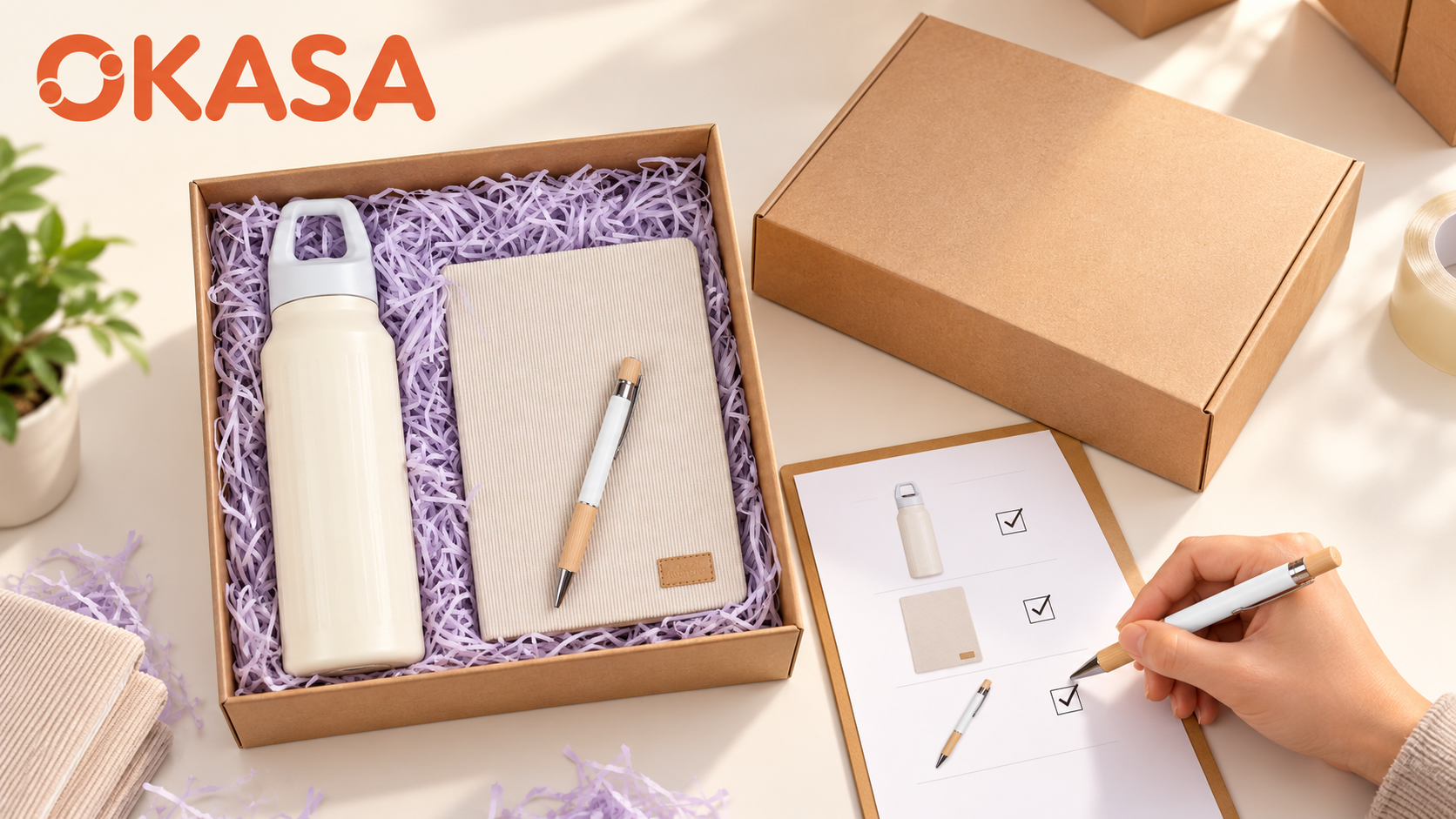
Image 3. Final kit counting should match the approved bill of materials and packing instruction. Illustrative composition based on the OKASA TGS871 product reference; use a real approved sample for production acceptance.
7. Inspect by risk, then inspect the assembled experience
A final random check cannot repair an inaccurate specification. Start with the failure that would matter to the recipient or buyer. A notebook with a missing page section, a cup that leaks, a bag seam that opens or a gift box that crushes in transit presents different consequences. Define critical, major and minor defects in the purchase specification, with photographs where useful. Inspectors should not invent the threshold on the factory floor.
The ISO 2859-1 2026 standard describes sampling schemes indexed by acceptance quality limit for lot-by-lot inspection by attributes. Before inspection, put the lot definition, sampling level, AQL figures and defect examples in the agreed plan. An accepted sample-based inspection does not mean every unit in the shipment is flawless. For performance or safety concerns, specify a suitable test method and the market requirements separately.
Inspect at points where a problem can still be fixed. Incoming or early-process checks can catch wrong paper, fabric, coating or packaging board. First-article approval can catch print placement before the whole run is decorated. Final inspection can examine function, cosmetics, quantities and packing. After assembly, open a sample of complete kits and verify contents, orientation, inserts, recipient-facing print, barcode, carton count and protective packing. A perfect component placed in the wrong kit is still a defective delivered program.
Request a photo record of each relevant variant and a clear disposition for rejected units. Rework needs a second check. When the approved fabric, color or accessory runs out, pause and propose the replacement to the buyer. Record the decision before using it in production. A new material may also invalidate wording or documents prepared for the old lot.
Put the failure procedure in the purchase order: who arranges and pays for another inspection, who releases the goods after correction, and when an independent inspector is involved. No universal rule fits every order. A recurring low-risk notebook reorder may need a different plan from a first production of a redesigned insulated bottle. Use the consequences and history to set the effort.
8. Plan delivery and regional variants from the destination backward
A program can finish production on time and still miss its campaign. For multiple destinations, collect the delivery address, receiving hours, contact, import responsibility, required label language, retail or event barcode, and deadline for each location. Verify whether the buyer wants one consolidated shipment, several bulk shipments or individual recipient fulfillment. These options have different packing, data and cost structures.
Make one milestone calendar with the dependency path visible. Artwork approval may be a predecessor to printing; completed printed boxes may be a predecessor to kit assembly; a passed final inspection may be a predecessor to the freight booking. Ask for a production schedule with actual dates, not only a total of “30 days.” Where the delivery date is immovable, set an escalation trigger before the buffer is exhausted. That leaves a chance to change a decoration method, split the shipment or reduce the number of variants with the buyer's consent.
Regional differences create hidden SKUs. A different instruction card, country-specific product claim, customer name or shipping label should be versioned. Consider what can be printed locally without altering the physical item, but confirm who supplies the files and who checks them. If import or product compliance documents are needed, obtain the destination-specific list early from the buyer and qualified advisers; a general supplier certificate is not a substitute for checking the actual product and market.
When evaluating a promotional products manufacturer China partner, ask who coordinates component arrivals, final assembly and export packing, and who communicates a delay. A single commercial contact helps, but the important evidence is the shared schedule and responsibility map. The person who notices a short component needs authority to stop packing and raise it before incorrect kits are sealed.
9. Preserve the decisions that make reorders easier
The first order creates an asset if the buyer retains the information. Archive the final specification, signed sample photos, artwork source files, color references, bill of materials, approved alternatives, inspection records, box dimensions, carton configuration and delivered quantity by variant. Record changes made during production, even if the finished shipment was accepted. A reorder described only as “same as last time” is vulnerable to quiet drift.
Before a repeat run, check what can actually remain identical. A recycled fabric batch may vary, a bottle lid or notebook paper may have changed, and a box supplier may use a different substrate. Reconfirm availability and request a delta sheet against the approved version. If a material or vendor changes, approve the affected sample again. The point is to avoid paying for an entirely new development cycle while still controlling the attributes recipients notice.
A distributor can use the record to offer a small family of controlled combinations. One backpack and notebook may support an event version with a light sleeve and a client version with a more substantial gift presentation. That is a legitimate way to offer choice without proliferating untested components. A buyer who knows the approved bill of materials can ask for more precise price breaks and realistic replenishment dates.
After delivery, collect useful feedback: damage rates, missing components, recipient response to the size and utility, and sales team requests for the next run. Separate product feedback from fulfillment errors. If users love the notebook but the box arrives dented, replacing the notebook is the wrong response. Feed the findings into the register for the next procurement cycle.
10. Send an inquiry that a supplier can act on
The fastest credible quotation starts with facts, not a request for a catalog. Tell OKASA the program purpose, destinations, quantity by kit and component, target arrival date, budget range, preferred products or references, logo files, expected packaging and documents required by your buyer. State which variables are open to alternatives. An imperfect but complete brief lets a supplier ask focused follow-up questions.
If the products are not fixed, send one reference for each role: a bag that meets the carrying need, a notebook whose form and paper quality are suitable, drinkware with the required capacity and a packaging example. Ask for a base configuration and one lower-complexity alternative. If you already have approved artwork and samples, provide their revision IDs. Do not put sensitive customer artwork into a broad, untracked request chain.
For a new program, request these outputs in the reply: an itemized quotation; a draft bill of materials and quantity reconciliation; logo and material options; sample stages and prices; packaging and pack-out proposal; inspection and documentation plan; and a schedule to the named delivery place. Ask the supplier to identify assumptions it cannot confirm yet. A candid open issue is more useful than a precise-looking quote based on guesswork.
OKASA's catalog covers gift sets, notebooks, bags, drinkware and packaging. If you need one coordinated assortment, use the product references above to explain what you like and what may change. The supplier can then confirm feasibility, minimums, timing and any required testing against your specific order. That conversation is more productive than asking for a universal MOQ or lead time divorced from the construction and artwork.
Ready to brief a multi-SKU project? Send your target quantity, destination, in-hand date and preferred item mix. Ask for a proposed SKU register, sample path and itemized quote for the complete program.
Frequently asked questions
What should be approved before a supplier begins mass production?
Approve the specification, artwork version, material and color references, relevant functional sample and complete pack-out. Record exceptions. Agree on quantities, tests, inspection criteria, delivery terms and who may approve substitutions. An image proof alone cannot establish fabric feel, bottle function or box fit.
How do I compare two quotes with different included services?
Normalize them to the same bill of materials, branding, packaging, tests, inspection, shipment quantity, named delivery place and trade term. Put exclusions and unresolved assumptions in separate rows. Request an alternative only after the base quote is comparable.
What details should I include when contacting OKASA?
Send the recipient and use case, quantities by item or kit, destination, required arrival date, budget guidance, product references, logo artwork, packaging expectation and required documents or testing. State what can change. Those details support a useful quotation and sample plan.
References and product sources: OKASA product catalog; B112 backpack; TNB780 notebook; TGS871 gift set; ISO 2859-1 2026; ICC Incoterms 2020.